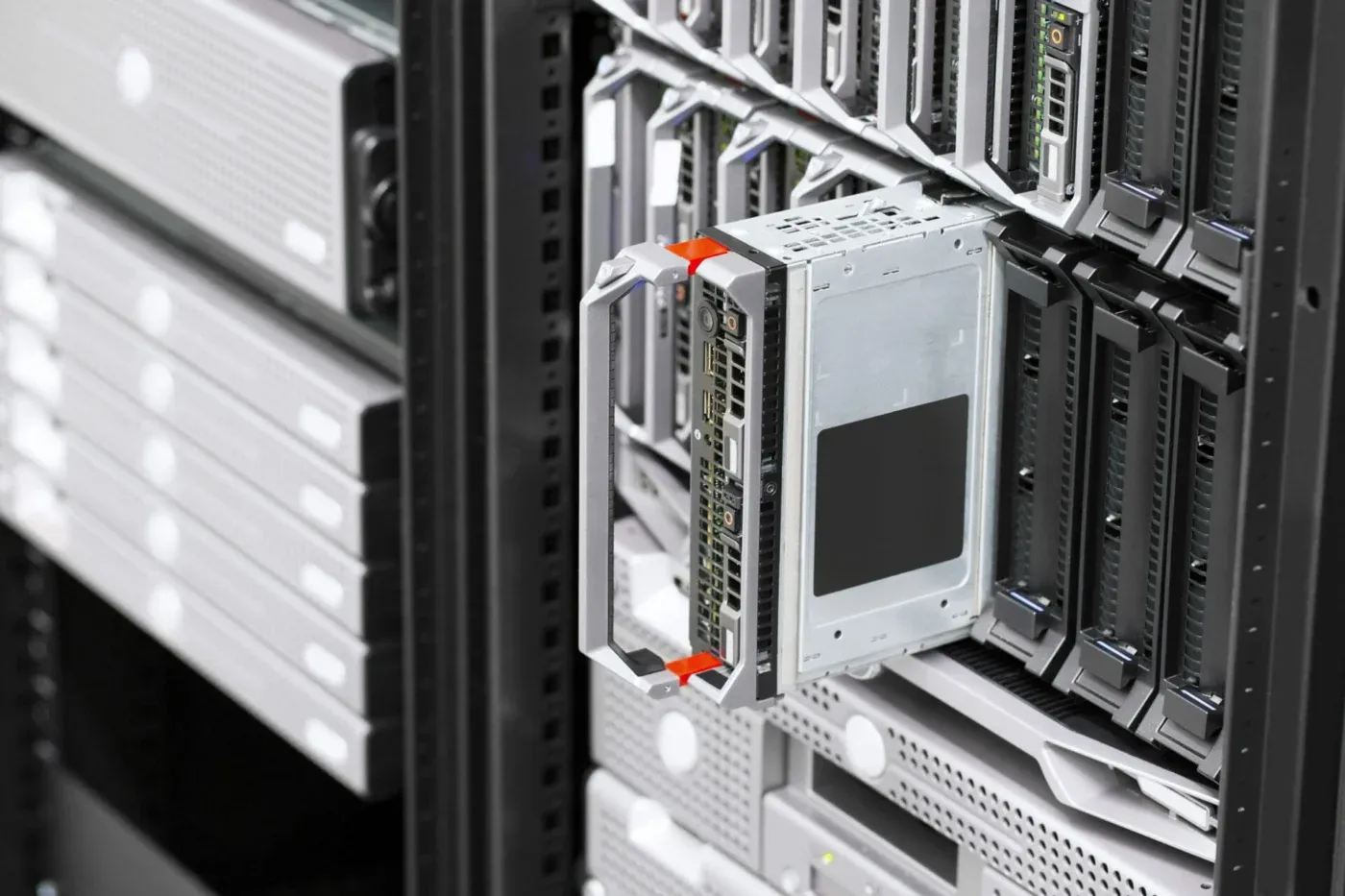

Quantum hardware has finally stepped out of the laboratory and into a real-world economic task: cryptocurrency mining.
A superconducting quantum computer, recently integrated into a small test network, is now generating an experimental currency called Quip more quickly—and at a fraction of the energy cost—than the most efficient classical rigs.
What Makes Quip Different?
Quip’s protocol was designed from the ground up to be quantum-friendly.
Instead of a SHA-based proof-of-work (PoW) puzzle, Quip relies on problems that naturally map onto quantum circuits—specifically, low-depth instances of the Bernstein–Vazirani and Simon’s problems.
A classical computer can still solve these puzzles, but it must brute-force an exponentially larger search space, whereas a quantum processor reaches an answer in polynomial time.
Quantum Advantage in Practice
In the trial network, a 127-qubit superconducting chip mined a new Quip block roughly every 14 seconds.
For comparison, a GPU cluster drawing 2.1 kW of power averaged 53 seconds per block using an optimized classical solver.
The quantum node consumed just 0.4 kW, mostly for cryogenic cooling—an 8× speed gain paired with a 5× energy reduction.
How Does a Superconducting Quantum Miner Work?
• Qubits: Superconducting circuits cooled to ≈15 mK behave as artificial atoms with two energy levels representing |0⟩ and |1⟩.
• Gate Operations: Microwave pulses implement gates that realize Simon’s or Bernstein–Vazirani oracles.
• Readout: After a shallow circuit (≈40–60 ns), the qubits are measured; the resulting bit string directly reveals the hidden key that constitutes proof of work.
• Post-Processing: Minimal classical post-processing is required, keeping total latency low.
Energy Efficiency: More Than Lower Wattage
While the raw electrical draw looks modest, cooling stages amplify efficiency in subtler ways:
1. Duty Cycle: Quantum gates finish in nanoseconds, so the chip spends most of its time idle, allowing dynamic power scaling.
2. No Redundant Hashing: Classical miners expend energy iterating billions of hashes; the quantum approach finds the solution in a single coherent run.
3. Thermal Cost vs. Computational Cost: Dilution refrigerators are power-hungry, but their load scales sub-linearly with added qubits, so larger chips do not proportionally raise total wattage.
Security Questions and Network Governance
• 51 % Attacks: Because quantum miners outperform classical ones by orders of magnitude, maintaining a decentralized network requires capping qubit counts per node and rotating puzzle families.
• Algorithmic Agility: Quip’s protocol periodically switches between oracle-based puzzles to prevent single-algorithm dominance.
• Sybil Resistance: Node identities are anchored to hardware fingerprints measured through qubit calibration data, deterring spoofing.
Limitations & Open Challenges
− The superconducting chip’s coherence time (≈170 µs) constrains circuit depth, restricting the hardness of puzzles that can be deployed today.
− Cryogenic infrastructure is costly and immobile, limiting geographic decentralization.
− Error rates (≈0.2 %) are still high enough to mandate repetition, diminishing some of the theoretical speed-ups.
Implications for the Broader Crypto Ecosystem
If quantum hardware becomes widely accessible, PoW currencies anchored in hash puzzles will face an existential dilemma.
Either they migrate to quantum-resistant consensus (e.g., proof-of-stake) or adopt hybrid schemes that normalize performance disparities between classical and quantum nodes.
Looking Ahead
The Quip experiment is a proof of concept rather than an immediate threat to Bitcoin or Ethereum.
Yet it demonstrates a pathway toward green, high-throughput mining and serves as an early warning that quantum advantage in finance is no longer theoretical.
The next five years will reveal whether the cryptoverse adapts—or whether quantum miners will force a paradigm shift in digital scarcity itself.