
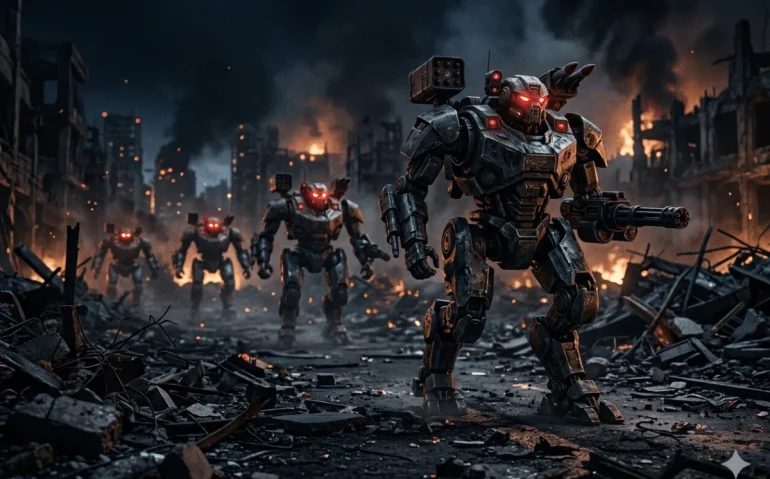
The debate over fully autonomous weapons has moved from speculative fiction to real-world policy rooms. Nations, engineers, ethicists, and activists now face a pivotal decision: prohibit these systems before they proliferate, or accept their integration into the future of warfare. Below is a deeper look at what is at stake.
What Are Fully Autonomous Weapons?
Also known as lethal autonomous weapons systems (LAWS) or, colloquially, “killer robots,” these are military platforms capable of selecting and engaging targets without direct human input once activated. They differ from current remotely piloted drones in two key ways:
1. Decision-making autonomy. Target identification, threat assessment, and the final “kill” decision are delegated to algorithms.
2. Freedom of operation. After deployment, the system can maneuver, adapt, and strike within its programmed parameters—even if communication with human controllers is lost.
Why the Issue Demands Attention Now
Advances in machine learning, computer vision, and miniature sensors have shrunk the gap between laboratory demos and battlefield deployment. Swarming quadcopters, loitering munitions, and AI-driven missile defenses already blur the line between human-supervised and truly autonomous action. Without clear rules, the leap from partial to full autonomy could happen by default rather than design.
Ethical and Humanitarian Concerns
Critics argue that delegating life-and-death decisions to software violates human dignity and erodes the moral agency that underpins the laws of war. Key worries include:
• Lack of empathy. Algorithms cannot understand context, cultural cues, or the nuanced value of human life.
• Bias and error. Training data imperfections can translate into disproportionate targeting of certain groups.
• Lowered threshold for conflict. Removing human soldiers from immediate danger could make political leaders more willing to authorize force.
Legal and Accountability Challenges
International humanitarian law requires distinction, proportionality, and precaution. If an autonomous weapon commits a war crime, who is liable? Possible culprits include the commander who deployed it, the programmer who wrote the code, the manufacturer, or even the state itself. Current treaties offer no definitive answer, creating a gap in accountability.
Strategic and Security Implications
• Arms race dynamics. States may accelerate development to avoid falling behind rivals, echoing the early Cold War nuclear spiral.
• Proliferation risks. Once algorithms are digitized, they are easily copied, making it hard to contain advanced capabilities.
• Escalation speed. Machine-speed decision cycles could compress crisis response time, increasing the chance of accidental war.
Current State of International Negotiations
Discussions under the United Nations Convention on Certain Conventional Weapons (CCW) have been ongoing since 2014. Although a majority of member states favor some form of prohibition, talks have stalled over:
• How to define “meaningful human control.”
• Whether to adopt a preemptive ban or regulate specific functions.
• Concerns from technologically advanced militaries that a ban may restrain defensive innovation.
Possible Paths Forward: Ban, Regulation, or Acceptance
1. Comprehensive Ban. Similar to the treaties on blinding lasers or anti-personnel landmines, this option would outlaw development, possession, and use.
2. Partial Regulation. Mandate human oversight for critical functions while allowing autonomy in navigation, logistics, or non-lethal roles.
3. Full Acceptance. Allow market forces and strategic competition to dictate adoption, with ad-hoc national policies providing minimal guardrails.
Toward Responsible Action
The technology is moving faster than the rules meant to govern it. Whether through an outright ban or stringent regulation, the international community must decide soon how much autonomy machines should wield in matters of life and death. Waiting passively is itself a choice—one that risks normalizing killer robots before society has weighed the consequences.