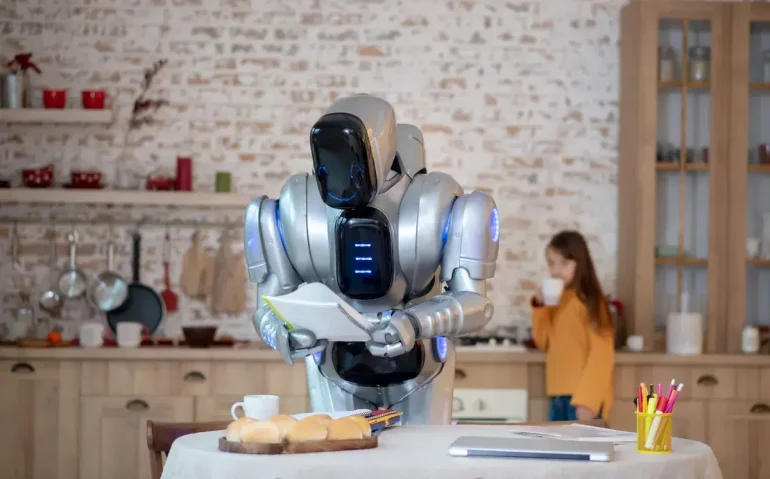
It’s a scene straight out of The Jetsons, but without the flying car. You walk into your kitchen, and there it is: a bipedal machine, humming quietly as it carefully slides a tray of hors d’oeuvres into the oven. Only a few years ago, this was the stuff of high-budget sci-fi or $100-million laboratory experiments. Today, however, the price of a domestic humanoid has plummeted to the point where it costs less than a used Honda Civic.
But before you rush out to put a deposit on your own mechanical butler, let’s take a breath. Buying a robot is a lot more complicated than picking out a new dishwasher. It’s a lifestyle shift, a security puzzle, and a long-term maintenance commitment all rolled into one. Here is the “no-nonsense” guide to what you’re really signing up for.
The “Why” Factor: Is it a Helper or a Hobby?
Let’s be honest: for a lot of people, a robot butler is the ultimate status symbol. But for those with limited mobility or dual-income families drowning in chores, it can be a genuine lifesaver.
The real question you need to ask yourself is: do you have “automation fatigue”? We’ve all been there—the smart light that won’t connect, the vacuum that gets stuck on the rug, the app that needs an update just when you’re in a hurry. If the idea of managing one more complex piece of software sounds exhausting, a humanoid might not be for you just yet.
Decoding the Tech Spec
When you’re looking at the brochures, don’t get blinded by the shiny plastic. You need to look at the “degrees of freedom” (DOF). If you want your robot to do anything useful—like folding a shirt or unloading the delicate glassware from the dishwasher—you’re looking for at least 16 DOF per arm. Anything less, and you’ve essentially bought a very expensive paperweight with “claw” hands.
You also want to look at the “brain.” Aim for a unit with at least 50 TOPS (tera operations per second) of processing power. Why? Because a robot that has to “think” for five seconds before it realizes it’s about to step on the cat is a robot you’ll eventually want to return.
The Sticker Price is Just the Beginning
The marketing will tell you these machines start around USD 18,000. In reality, your “all-in” cost over five years will be significantly higher. Here’s the “hidden” invoice most salespeople won’t lead with:
The “Brain” Tax: Most high-end units require a monthly subscription (anywhere from USD 50 to USD 200) for cloud processing and software updates.
The Wear and Tear: Those high-tech joints aren’t invincible. Expect to replace an actuator every 18 months or so—and those can run you USD 600 a pop.
The Insurance Kick: Don’t assume your standard home insurance covers a 150-pound robot accidentally knocking over an expensive TV—or a neighbor. Expect your premiums to jump by 5% to 10%.
Living With Your New Roommate
Your home wasn’t built for a robot. Before “B-4” moves in, you’re going to need to do some remodeling. You’ll need clear pathways at least 90 cm wide and a dedicated 1-square-meter “charging zone”—ideally on hardwood or tile, as robots and thick shag carpet are notoriously bad at playing together.
More importantly, think about your privacy. These machines are essentially walking towers of cameras and microphones. If you aren’t comfortable with an encrypted stream of your living room living on a corporate server, you need to look for a model that offers “on-device” processing and physical lens covers for when the robot is “off-duty.”
The Bottom Line
We are officially living in the future, but the future is high-maintenance. Buying a humanoid butler today is a lot like buying one of the first motorcars in the early 1900s. It’s exciting, it’s transformative, and it’s occasionally a massive headache.
If you’re willing to do the legwork—the firmware updates, the sensor cleanings, and the privacy audits—you’ll have a front-row seat to the most significant technological shift of our generation. Just make sure there’s a certified technician within a two-hour drive before you sign that check.