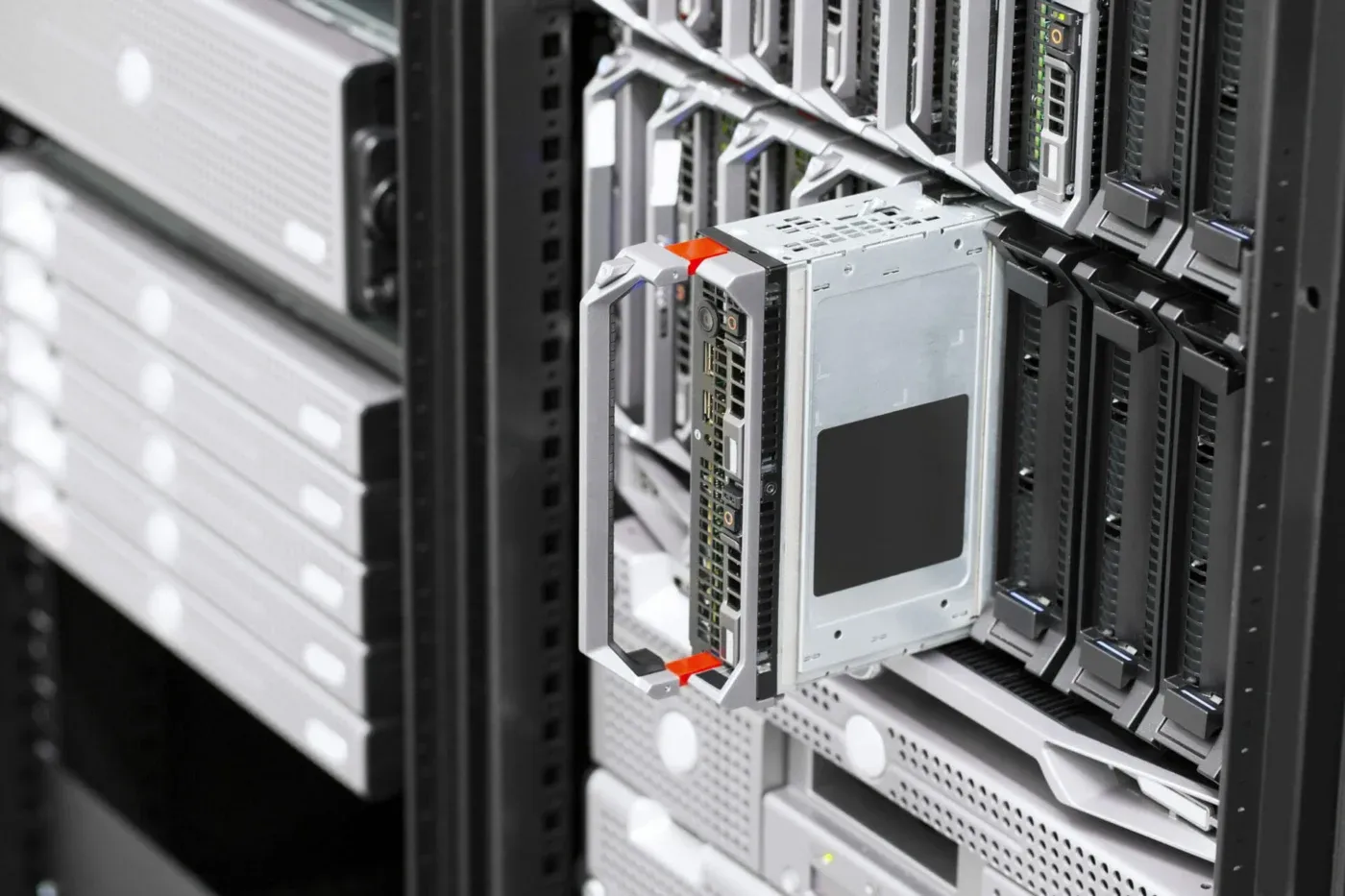
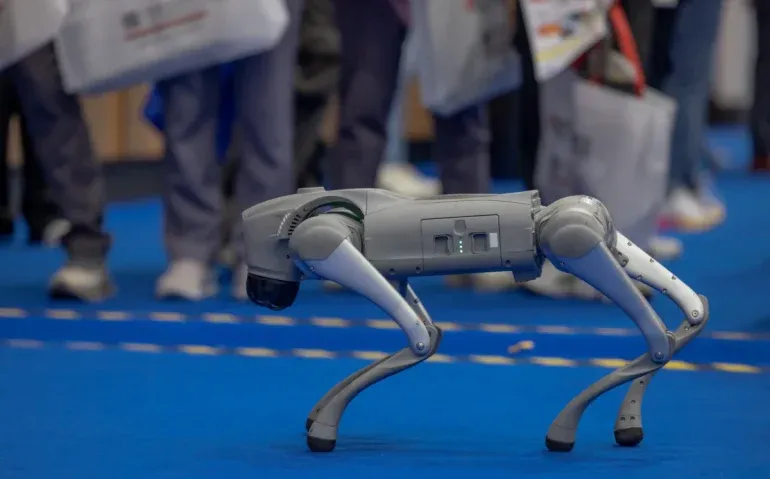
A pioneering biotech–robotics start-up has demonstrated a quadruped robot that is no longer driven by silicon alone. Instead, its “brain” is a biological computer assembled from human blood cells. After first proving the concept by playing the video game Pong, the company is now showing that the same wetware can serve as a real-time robotic control system. Below is a closer look at how this breakthrough works, why it matters, and what questions it raises.
How Does a Blood-Cell Computer Work?
• Cell sourcing and reprogramming: The team starts with peripheral blood cells (commonly obtained via a routine blood draw). Using induced pluripotent stem-cell techniques, they reprogram these cells into neuronal progenitors and then into mature neurons capable of firing action potentials.
• 3-D cortical cultures: The neurons are cultured on a micro-electrode array (MEA) that both records electrical activity and delivers precise stimulation. Over several weeks the cells self-organize into networks that display oscillations and plasticity resembling a miniature cortex.
• Computational interface: A software layer translates the spiking patterns into Boolean logic or control signals, effectively turning the wetware into a processor. Just as a silicon CPU converts voltage changes into binary code, the MEA converts bursts of neural firing into machine-readable data in real time.
From Pong to Quadruped Robotics
The start-up’s first public demo was a neuron-in-a-dish that learned to play Pong faster than many AI reinforcement-learning agents. In their latest milestone, those same neural cultures generate gait commands for a robotic dog similar in design to commercial quadrupeds. The closed loop works as follows:
1. Sensors on the robot stream balance, orientation, and terrain data to the MEA.
2. Patterned electrical pulses encode this data into stimulation sequences for the neurons.
3. The neurons’ response patterns—detected by the MEA—are decoded into motor commands (step length, joint angle, body pitch).
4. The control loop repeats at ~10 Hz, fast enough for the dog to trot, turn, and correct for minor pushes.
Why Use Wetware Instead of Silicon?
Energy efficiency: A dish of neurons consumes microwatts—orders of magnitude less than a conventional CPU performing comparable adaptive control.
On-the-fly learning: Biological networks display innate plasticity, making them naturally good at adjusting to unforeseen perturbations (e.g., slippery floors).
Computational density: Approximately 86 billion neurons fit in the human skull; scaling even a fraction of that offers enormous parallelism without the thermal issues of semiconductor chips.
Technical Challenges
• Longevity and stability: Neuronal cultures can change over days or weeks, potentially drifting away from an optimized control policy.
• Signal-to-noise ratio: Spontaneous neural firing can interfere with deterministic outputs, requiring sophisticated filtering.
• Bio-compatibility and contamination: Maintaining sterile, temperature-controlled conditions in a mobile platform is non-trivial.
• Scalability: Current prototypes involve ~50,000 neurons; scaling to millions while keeping electrode resolution high remains a manufacturing hurdle.
Ethical and Regulatory Landscape
The idea of putting human-derived neurons in charge of machines sparks debate:
• Consent and ownership: Who owns the neural data harvested from donated blood?
• Sentience concerns: At what point does a cultured network achieve a moral status beyond “tissue”? Most bioethicists argue current constructs lack the complexity for consciousness, but guidelines are still evolving.
• Regulation: Agencies may classify the system as both a medical product (because it uses human tissue) and a robotic controller, creating a gray zone for certification.
Applications on the Horizon
• Adaptive prosthetics: Wetware controllers could give prosthetic limbs richer feedback loops with the user’s own physiology.
• Edge devices: Low-power biological processors might replace or supplement silicon in remote sensors where battery swaps are impractical.
• Autonomous exploration: Swarm robots using neural cultures could adapt to unknown terrains on other planets with minimal computational overhead.
Looking Ahead
The fusion of living neurons and robotics remains experimental, but the robotic dog demo marks a tangible step beyond proof-of-concept games. If researchers can solve stability and scale, tomorrow’s autonomous machines might carry wetware co-processors that blur the line between biological and artificial intelligence.