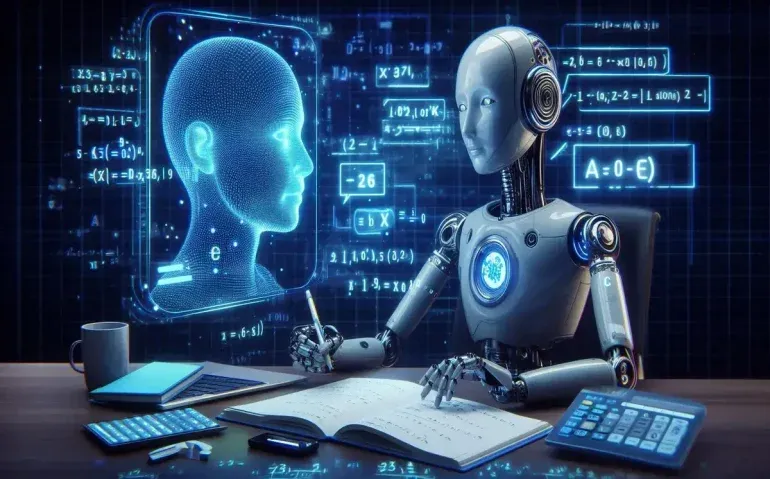
In an unprecedented move, OpenAI recently released the drafts of 722 AI-generated mathematics papers.
While the company frames the dump as a bold experiment to test and refine its most capable models, the sheer scale—and
uneven quality—of the material has left many mathematicians scrambling.
Below, we explore why mathematics became OpenAI’s proving ground, what went wrong with the release, and how the
organization can take meaningful responsibility for the mess it created.
1. Why Mathematics—And Why 722 Papers?
Mathematics is a uniquely attractive sandbox for language-model research:
- Objective evaluation. A proof is either correct or it isn’t, giving researchers clear signals on model performance.
- Compact notation. Dense symbolic language allows models to tackle substantial content without unwieldy token counts.
- High intellectual prestige. Demonstrating competency in “hard” math provides a compelling narrative that the model is approaching genuine reasoning.
OpenAI apparently generated hundreds of drafts across diverse sub-fields—algebraic geometry, analytic number theory,
topology—then released them en masse to showcase progress. Unfortunately, the company did not sufficiently vet the material
or provide guardrails for its consumption.
2. Potential Benefits of AI-Generated Math Research
Before diving into the problems, it’s worth acknowledging the upside that motivated the project:
- Conjecture discovery. Large language models (LLMs) can sift through vast mathematical corpora, spotting patterns that spark new conjectures.
- Proof assistance. Even partially correct outlines can nudge human researchers toward complete arguments.
- Accessibility. Rough sketches of complex ideas might invite early-career mathematicians to engage with leading-edge problems.
3. The Fallout: Errors, Duplicates, and Academic Noise
Mathematicians who opened the trove found:
- Logical gaps and outright errors. Many “proofs” broke down under routine scrutiny.
- Redundancy. Several papers repeated the same results verbatim or with trivial re-wordings.
- Ambiguous authorship. The documents often listed no human co-authors, raising questions about credit and accountability.
- Repository pollution. Preprint servers and citation indices risk being flooded with low-quality material, diluting genuine scholarship.
4. Why This Matters Beyond Mathematics
The episode is a microcosm of broader AI deployment risks:
- Information overload. Mass releases without curation can erode signal-to-noise ratios in any scientific field.
- Reputational harm. If mathematicians lose trust in AI-supported research, adoption slows across disciplines.
- Ethical responsibility. Releasing defective outputs and offloading cleanup to the community shifts costs from the developer to end-users—mirroring concerns about AI misinformation in general.
5. What OpenAI Should Do Now
Cleaning up the mess requires more than a polite post-mortem:
- Withdraw or label flawed drafts. Provide an internal review of each paper, flagging errors and retracting irredeemable work.
- Launch a bounty program. Compensate mathematicians who supply corrected proofs or identify critical logical flaws.
- Open-source evaluation tools. Release code that checks formal proof steps, enabling the community to triage future AI outputs rapidly.
- Publish training and prompting details. Transparency will help researchers understand why certain errors arose and how to prevent repeats.
- Partner with journals and arXiv. Develop submission guidelines for AI-generated research, including disclosure and verification protocols.
6. Lessons for Future AI-Driven Scholarship
The 722-paper dump underscores a fundamental tension: scaling models is easy; scaling responsible deployment is hard.
A sustainable path forward demands:
- Human-in-the-loop pipelines. AI should assist, not replace, experts—especially when the cost of error is high.
- Incremental releases. Smaller, curated batches facilitate community feedback without overwhelming reviewers.
- Formal verification. Embedding proof checkers into the generation loop can catch basic inconsistencies before public release.
OpenAI’s mathematics experiment was ambitious and, in some respects, visionary. But by
prioritizing scale over stewardship, the organization has mired researchers in a time-consuming
cleanup. If AI is to become a true collaborator in mathematical discovery—or any
scholarly domain—its creators must shoulder the full lifecycle of responsibility, from generation
through validation to curation. Anything less risks turning promising technology into yet another
source of academic noise.