The past decade has seen an explosion in artificial intelligence capabilities, from chatbots that write compelling prose to systems that predict complex protein folds. At the core of nearly all these advances is a single architectural innovation: the transformer. Understanding why transformers matter and how they work offers insight into the present—and future—of AI.
What Is a Transformer?
Introduced in 2017 by researchers at Google, the transformer is a neural-network architecture designed to process sequential data such as text, audio, or even biological sequences. Unlike earlier models that handled information step by step (recurrent networks) or in fixed windows (convolutional networks), transformers examine every element in a sequence simultaneously. This shift allows them to capture long-range dependencies with unprecedented efficiency.
Self-Attention: The Secret Sauce
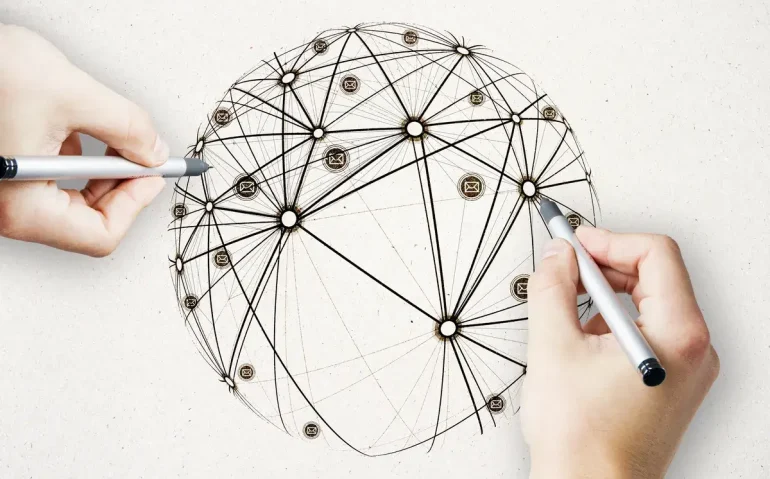
At the heart of a transformer lies the self-attention mechanism. For every token (a word, character, or other unit), the model learns to assign dynamic weights to every other token in the sequence, effectively asking, “Which parts of this input are most relevant to the current position?” Multi-head attention extends this idea by learning multiple sets of relevance patterns in parallel, letting the model capture nuanced relationships—syntax, semantics, and more—simultaneously.
Why Transformers Outshine Previous Approaches
Parallelization: Because transformers process entire sequences at once, they can exploit modern hardware (GPUs, TPUs) far more effectively than recurrent models, which must iterate token by token.
Expressive Power: Self-attention scales quadratically with sequence length, giving the model capacity to model complex interactions that fixed-context methods miss.
Transfer Learning: Pretraining on massive data and fine-tuning for specific tasks has become standard practice. Transformers learn broad representations during pretraining, then quickly adapt—often with far less labeled data than older techniques required.
From Words to Proteins: Applications Across Domains
Language models such as GPT, BERT, and T5 rely entirely on transformers to generate text, answer questions, and summarize documents. Vision transformers (ViT) have successfully challenged convolutional neural networks in image classification. In science, AlphaFold uses a transformer-based architecture to predict three-dimensional protein structures with near-experimental accuracy, opening new frontiers in drug discovery and biology.
Scaling Laws and the Era of Large Language Models
Empirical scaling laws show that increasing model size, training data, and computation yields predictable performance gains. This observation has spurred the creation of ever-larger models with billions (and now trillions) of parameters. Though expensive, the benefits—better reasoning, richer representations, and more reliable outputs—continue to motivate industry and academia alike.
Challenges and Ethical Considerations
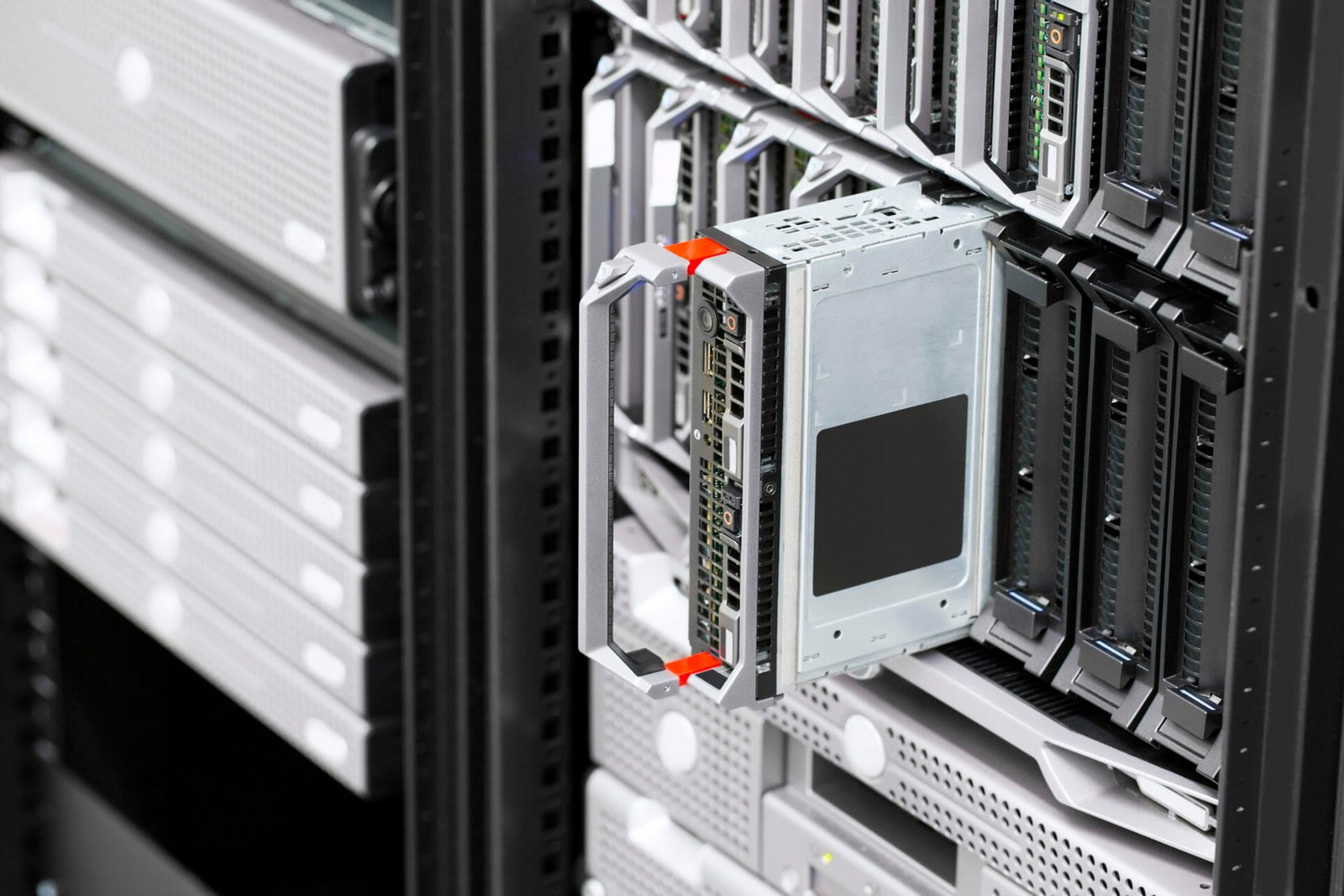
Transformers also introduce challenges. Their computational cost demands vast amounts of energy and specialized hardware. Moreover, models trained on internet-scale data risk amplifying biases, generating misinformation, or leaking private information. Responsible development requires robust evaluation, fairness audits, and transparency about deployment practices.
Future Directions
Research is advancing on several fronts:
Efficiency: Sparse attention, linear transformers, and mixture-of-experts models aim to reduce the quadratic cost of self-attention.
Multimodal Intelligence: Unified architectures are emerging that process text, images, audio, and structured data in a single model.
Alignment and Safety: Techniques such as reinforcement learning from human feedback (RLHF) and interpretability tools help ensure models act in ways consistent with human values and intentions.
Transformers have already redefined the AI landscape, and their full potential is only beginning to unfold. As researchers refine these models and tackle their shortcomings, transformers—or their evolutionary successors—are poised to remain the driving force behind the next wave of intelligent systems.