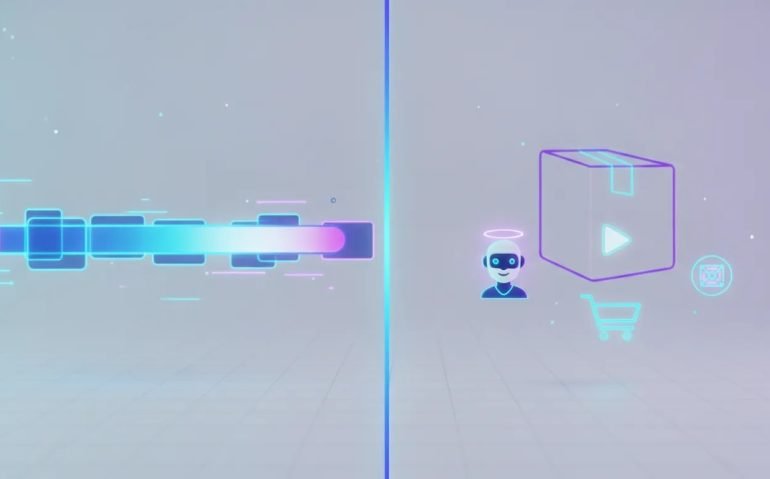
Creating high quality AI video has always had one major problem: consistency. You generate one great five second clip, then you need another, then another, and suddenly your product has changed shape, your character has a different face, and the whole thing feels like a collection of unrelated shots.
That is exactly why Seedance 2.5 is so exciting right now. Through Wizstar AI, it can create native video clips up to 30 seconds long in one generation, giving brands, agencies, and creators a much faster way to produce ad creative without stitching together a dozen short clips.
Wizstar is built around AI-generated content for e-commerce and brand marketing. It brings together AI video generation, product video tools, image generation, video translation, and AI avatars in one place. More importantly, it makes Seedance 2.5 accessible in a workflow that is actually practical for producing content at scale.
If you have a great product but no ad creative, or you are tired of AI generations changing your product every few seconds, this is the workflow to pay attention to.
Why Seedance 2.5 Stands Out for AI Video Generation
Most AI video tools have traditionally forced you into a frustrating process. You generate a tiny clip, try to create the next scene, and then spend time editing everything together. It is slow, expensive, and especially difficult when the video includes a recognizable product, brand logo, or person.
Seedance 2.5 addresses that with longer generation capability and a stronger focus on visual continuity. Inside Wizstar’s AI Video Generator, Seedance 2.5 can produce clips up to 30 seconds in a single segment.
That difference matters because a complete ad needs more than a beautiful opening frame. It needs a believable sequence: an establishing shot, product interaction, movement, closeups, and a clear call to action. Keeping that sequence in one generation helps preserve the elements that make an ad usable.
Core Seedance 2.5 capabilities
- Up to 30-second native clips: Create longer videos without building an entire ad from disconnected five-second generations.
- Product consistency: Keep products recognizable across scenes, angles, and camera movement.
- Character consistency: Maintain a stable-looking person rather than dealing with drifting faces or distorted features.
- Natural camera movement: Produce shots that move with more continuity and intention.
- Light transitions and narrative pacing: Build clips that feel more like a connected sequence than isolated visual experiments.
- Multimodal references: Use up to 50 references, including text, images, video, and audio, in one generation.
- Regional editing: Correct a problematic area instead of regenerating the entire video.
- 4K output: Export high-resolution content directly from the tool without relying on frame interpolation afterward.
- Improved prompt adherence: Wizstar states that Seedance 2.5 delivers 20% better prompt adherence than Seedance 2.0, helping reduce wasted renders.
For product marketing, those capabilities are not just nice extras. They are the difference between an AI video that looks impressive for a moment and an AI video that can actually be used in a campaign.
How to Create a Seedance 2.5 Video in Wizstar
The basic workflow is refreshingly simple. You can start with a product image, a character image, or a written concept. From there, Wizstar gives you controls for duration, aspect ratio, output quality, model choice, and the number of variations you want to generate.
Step 1: Choose the AI Video Generator
Open Wizstar and select the AI Video Generator. This is where you can choose the model powering your project. Wizstar offers Seedance 2.5, Seedance 2.0, and MiniMax H3.
If your priority is the strongest video quality, longer clips, and better consistency, Seedance 2.5 is the obvious choice. MiniMax H3 can be a more credit-efficient option when you want to experiment or produce less demanding concepts.
Step 2: Add a reference image
A reference image is one of the best ways to tell the model exactly what needs to remain consistent. For example, you can upload a photo of a car, a product, a person, or a specific branded item.
In a simple test, I used an image of a Ferrari and asked for a 10-second video of the car driving through New York City. The goal was not just to create a car video. The goal was to see whether the car would remain recognizable from multiple angles while moving through a changing environment.
The result maintained the car’s identity through front, side, and rear perspectives. That is a huge deal for any business that needs to advertise a physical product accurately.
Step 3: Write a direct prompt
You do not need to overcomplicate the first prompt. Start with a clear subject, action, setting, and desired duration. For example:
Create a 10-second video of this car driving down a street in New York City.Once the idea is clear, you can add details such as the camera angle, time of day, mood, speed, visual style, or specific product interactions. The reference image provides the visual anchor, while the prompt supplies the action and environment.
Step 4: Set the duration and format
Wizstar lets you adjust the clip duration up to 30 seconds. You can also choose the aspect ratio based on where the video will be used.
- 16:9: A practical choice for horizontal video placements and broader presentations.
- Vertical formats: Useful for short-form social content and product-focused mobile placements.
- Multiple outputs: Generate several versions when you want creative options to compare.
Generating multiple concepts from the same product reference is especially useful when you are testing hooks, settings, visual styles, or ad angles. Instead of betting everything on one creative idea, you can build a library of variations.
Step 5: Generate and refine only what needs fixing
One of the most practical features is precise regional editing. When most of a video is excellent but one small detail is wrong, the normal AI workflow is painful: regenerate the whole clip and hope the new version does not create a new problem somewhere else.
With regional editing, you can focus on the area that needs correction. That can save time, credits, and creative momentum, particularly when a product shot, logo, or face is otherwise working perfectly.
Use Case 1: Create E-Commerce Product Ads From a Product URL
The e-commerce workflow is where Wizstar gets really interesting. Rather than starting from a blank canvas and manually collecting every product detail, you can give the platform a product URL from supported sources such as Amazon, Shopify, or TikTok Shop.
Wizstar can pull information from the product listing and use it to help build the ad concept. That is a major time saver for brand owners and agency operators who need to create a large volume of fresh product creative.
Example: Turning baseball shorts into a UGC-style ad
Imagine you are selling ice cream print mesh shorts designed for baseball players. You can paste in the product link and provide the core marketing angle:
- Target people who love baseball and ice cream.
- Highlight the ice cream print design.
- Emphasize breathable, quality mesh fabric.
- Include practical features like side pockets and an elastic waist.
- Promote a current 50% discount.
From there, the e-commerce agent can ask a few questions to shape the creative. In this case, the setup was a 15-second standard ad using an athlete UGC talking-review style. The on-screen talent was defined as a young male baseball player.
That is an effective format because it combines product information with a familiar social proof style. The ad can feel like a quick post-practice recommendation instead of a polished traditional commercial.
Why this is useful for brands and agencies
Traditional product shoots involve planning, talent, filming, editing, location coordination, and revisions. That process still has its place, but it can be difficult to justify for every product variation, seasonal promotion, or creative test.
With AI product video generation, you can move from a product listing to a structured ad concept in minutes. The output can include an AI-generated model, a relevant setting, product closeups, spoken messaging, and a promotional offer.
That opens the door to faster testing across:
- Different target audiences
- Different ad styles
- Different seasonal angles
- Different sale messages
- Different product benefits
- Different languages and markets
Once you have a version that works, you can create new iterations from it or translate the ad into other languages. This makes the content more adaptable without starting the process again from zero.
The biggest advantage is speed. Rather than waiting days for a shoot and post-production, you can build creative assets quickly enough to test more ideas while a product launch or promotion is still relevant.
Use Case 2: Create Logos, Images, Carousels, and Social Content
Wizstar is not only an AI video tool. Its image tools can help create the visual materials around a campaign too. That includes logo concepts, social media images, website banners, carousels, image upscaling, and object removal.
The platform offers access to image-generation capabilities associated with leading models from ChatGPT and Gemini. The key benefit is having image and video creation available within the same broader content workflow.
Example: Creating a roofing brand logo
For a modern roofing company called Rob’s Roofing, the prompt can focus on the visual principles that matter most:
- A clean, memorable logo
- A simple and distinctive symbol
- Balanced typography
- A polished colour palette
- A transparent or plain background
You can choose the output resolution, select a square format, and generate several options at once. Producing four versions instead of one gives you a better chance of finding a direction you like. You can then favourite, rate, edit, download, or even use one of those images as the foundation for a future video.
This is useful because brand content rarely exists in isolation. A product ad might need a logo treatment, a campaign banner, social graphics, and several pieces of supporting content. Having a single system for generating those materials can make the creative process much more efficient.
Practical image ideas for marketing
- Product launch banners for a website
- Promotional carousel images for social media
- Brand logo concepts and visual identity explorations
- Product feature graphics
- Upscaled product photography
- Cleaned-up images with unwanted details removed
- Reference images to guide future Seedance 2.5 videos
Suggested visual asset: Include a comparison graphic showing a product reference image, a generated product ad scene, and the finished campaign banner. Use alt text such as: “AI-generated e-commerce product video and branding assets created with Wizstar AI.”
Use Case 3: Turn One Photo Into a Talking AI Avatar
AI Avatar Turbo is another useful part of the Wizstar ecosystem. It can turn a single portrait image into a talking avatar, complete with a chosen voice and lip-synced script.
This is not just a novelty feature. It is a way to create presenter-led content without needing to get on camera every time you need a new video.
How the AI avatar workflow works
- Upload a clear portrait image.
- Describe the video concept or setting.
- Write the spoken script or upload audio.
- Select a voice that fits the character and tone.
- Choose the desired format and generate the video.
For example, a photo of a waitress can be turned into a short hospitality-style clip with the line, “Would you like a glass of champagne?” After selecting an appropriate English voice and generating the clip, the avatar can deliver the script with synchronized lip movement.
Wizstar’s AI Avatar Turbo is designed to work from a single image without requiring training. It also aims to maintain lip sync when hands or products partially cover the mouth, which is particularly relevant for product demonstrations and lifestyle content.
Ways to use talking photo avatars
- Product explainers
- Short social media content
- Restaurant and hospitality promotions
- Customer-style testimonials
- Brand announcements
- Multilingual campaign variations
- Dedicated AI-led content channels
The real opportunity is creative volume. You can build a consistent character, give that character multiple scripts, and produce a steady stream of content without repeatedly arranging shoots or recording new footage.
How to Get Better Results From Wizstar AI
AI tools work best when you give them a strong creative brief. Seedance 2.5 can do a lot, but the output becomes more useful when the input is specific.
Use clear reference materials
When product accuracy matters, add high-quality references. Show the actual product, logo, packaging, colours, and details that should remain stable. This is especially important for items with distinctive patterns, branding, or shapes.
Describe the marketing objective
Do not only explain what should appear. Explain why the content exists. Is the goal to create a product review, announce a sale, demonstrate a feature, make a lifestyle ad, or introduce a brand?
A prompt built around a marketing objective gives the generation more direction than a simple request for a person holding a product.
Match the format to the placement
Choose the aspect ratio before generating. A horizontal ad and a vertical social asset need different framing. If you are planning to test creative in several placements, create variations designed for each format rather than cropping one version after the fact.
Generate variations for testing
AI makes it practical to test more angles. Keep the product and offer the same, then vary one important factor at a time:
- The opening hook
- The creator or athlete persona
- The setting
- The product benefit being emphasized
- The voiceover style
- The call to action
That gives you a more organized way to compare concepts instead of randomly producing content and hoping one version lands.
Seedance 2.5 Makes AI Ad Creative More Practical
The biggest shift here is not simply that AI video looks better. It is that consistent AI-generated product content is becoming practical enough for real e-commerce workflows.
A car can stay looking like the same car as it moves through a city. A pair of printed mesh shorts can remain recognizable while an AI athlete discusses the fabric, pockets, and fit. A single portrait can become a lip-synced spokesperson. A basic written brief can become logo concepts, social graphics, and video assets.
For brand owners and agencies, that means fewer bottlenecks between having an idea and testing it in the market. You can spend less time coordinating production logistics and more time developing offers, angles, and creative concepts that give your product a chance to stand out.
New Wizstar users receive free credits when they sign up. Seedance 2.5 access is promoted from $0.99, and the first subscription is listed at $8.99 for a limited-time 50% discount. The offer includes a complimentary 30-second E-commerce Agent experience.
Category: AI Video Generation
Tags: Seedance 2.5, Wizstar AI, AI video generator, e-commerce ads, AI product video, AI avatars, UGC ads, brand marketing
Build Your First AI Product Video
If your current AI videos lose product consistency, if creating ad creative takes too long, or if you need more concepts to test without organizing another shoot, give this workflow a try. Start with one product image or product URL, choose Seedance 2.5, create a focused brief, and generate an ad concept built around a real marketing goal.
Frequently Asked Questions
What is Seedance 2.5?
Seedance 2.5 is an AI video generation model available through Wizstar AI. It is designed to create longer, more consistent AI video clips, including videos up to 30 seconds in a single generation.
Can Seedance 2.5 create product ads?
Yes. Wizstar’s e-commerce tools can use product URLs from supported platforms such as Amazon, Shopify, and TikTok Shop to help generate AI product ads, including UGC-style creative.
How long can Seedance 2.5 videos be?
Wizstar allows Seedance 2.5 video generations up to 30 seconds long in a single segment.
Can I use an image as a reference for an AI video?
Yes. You can upload a reference image of a product, car, person, or other subject and describe the setting and action you want the video to create.
What is AI Avatar Turbo in Wizstar?
AI Avatar Turbo turns a single clear portrait image into a talking avatar. You can add a script or audio, select a voice, and generate a lip-synced video without training a custom avatar.