I spent seven days replacing ChatGPT with OtterMind AI, and by day two, I had a pretty big realization: I had been using AI the wrong way for a lot of my actual work.
ChatGPT is still incredible. If I need to brainstorm, think through an idea, write something quickly, or get a strong answer to a question, it is one of the best tools out there. But when I need real work completed, I do not just need another block of text. I need a finished presentation, a research report, a formatted document, an automation, or an asset I can actually use.
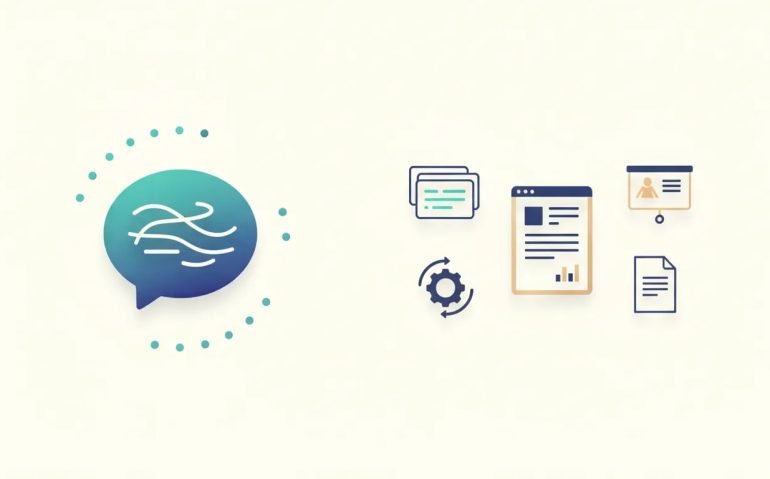
That is where OtterMind AI stood out. It is positioned as an AI-powered workspace built around autonomous AI agents, rather than simply being another chatbot. Instead of making me take an AI response and turn it into something useful manually, it can take files, webpages, prompts, and instructions, then plan, execute, and produce a deliverable.
That difference matters: a great answer is helpful, but a finished output saves time.
Why a Chatbot Is Not Always Enough for Real Work
Here is the problem I kept running into with ChatGPT. I would upload business data and ask for something practical, such as a presentation. The ideal result would be a polished PowerPoint that summarized the important insights without exposing customer names, email addresses, addresses, or any sensitive information.
In one test, I uploaded exported sales data from one of my businesses and asked for exactly that. The result looked like it was preparing a presentation, but the file would not properly download, edit, or open. Other times, I would receive a text-heavy analysis along with instructions to go build the slides myself.
And that is the point. Even if the analysis is good, I am still stuck doing the formatting, presentation design, file preparation, editing, and final cleanup. For a one-off task, that might be fine. For ongoing business work, it becomes a huge time drain.
When I gave OtterMind AI the same prompt and data, it generated an editable presentation that specifically noted no customer-level data was included. It produced a deck with business metrics such as:
- Refund dispute ratio
- Top decline reasons
- Customer activation information
- Business performance insights
The deck was not trapped inside a chat response. I could double-click into text, update fonts, change colors, resize elements, present from the beginning or current slide, use full-screen mode, and export it as a PowerPoint without any issue.
That is the experience I want from an AI agent. Give it the work, explain the goal, review the finished output, and make any final changes. I do not want to start with a wall of text and then spend another hour turning that text into a usable document.
What OtterMind AI Actually Does
OtterMind is not trying to be just one thing. It is designed as a workspace where you can start tasks across several types of work, including slides, websites, images, video, data analysis, and files.
There are suggested prompts and templates to get started, but the more important part is how the platform combines different inputs. You can bring in local files, photos, documents, webpages, and content from connected tools. You can also choose among available models, use voice input through the microphone, and build or manage reusable skills.
This makes it feel less like chatting with a model and more like delegating a project.
Projects, Memory, and Search
One useful feature is the ability to organize work into projects. Each project can isolate its own memory, files, and history by client, campaign, or business initiative. That is important when you are juggling multiple brands or working with different sets of information.
There is also global search, so you can search across work you have created or uploaded. OtterMind is available across web, macOS, Windows, iOS, and Google Play, with the same workspace available across devices. That means a task started in one place does not have to stay trapped there.
Skills, Connectors, and Automations
OtterMind includes built-in skills and connectors for the tools already used in day-to-day workflows. You can use existing skills, create your own, and manage them from the workspace.
The automation area is where things become even more useful. You can create recurring workflows for tasks such as summaries, tracking, reports, and scheduled analysis. Instead of remembering to ask the same question every week, you can have the platform run the work on a schedule.
For more AI workflow ideas, explore our AI agent workflow guides and business automation resources.
Use Case 1: Build an Investor Pitch Deck From Your Website and Sales Data
The first major use case that really made the difference for me was fundraising preparation.
Imagine you want to raise money for a company. You have a website that explains the business and sales data that shows actual customer activity and revenue. Normally, you would need to gather the materials, study the numbers, define the narrative, research investor channels, write the pitch, design the slides, choose visuals, and then revise everything.
With OtterMind AI, I gave it the website for ContentBuddy and a customer sales export, then asked it to create an eight-slide investor pitch deck and suggest ways to promote the company to potential investors.
The tool created a multistep process. It reviewed the information, combined the website and data inputs, performed research, and produced a final output. The high-level summary it generated positioned the company around figures including 6,500 customers, $153,000 in gross revenue, 3,500 paying customers, demand across 147 customers, and a 53 percent repeat-purchase rate.
More importantly, it did not stop at a handful of numbers. It outlined investor outreach paths and strategic preparation, including:
- Warm introductions through relevant networks
- Targeted investor outreach based on the business and market
- Strategic angles for positioning the company
- Accelerators and demo days as fundraising avenues
- Equity crowdfunding as another potential route
- Outreach preparation before contacting investors
Then it created the actual deck. It used branded colors and incorporated screenshots from the website, while also covering market research, operating plans, and use of funds.
That is crazy to me because it moves the job from “help me write an investor deck” to “take these assets and create an investor-ready starting point.” Of course, I would still review numbers, validate the positioning, and refine the final pitch. But I am starting with a real deliverable instead of a blank PowerPoint.
Use Case 2: Research an AI Agent Market and Generate a Polished Report
The next use case is totally different, but it is something I use constantly to stay ahead of what is happening in AI.
I asked OtterMind AI to research the AI agent market and generate a report covering trends, competitors, opportunities, risks, and future outlook. I selected the GPT 5.6 Soul model for that task because it was the model I wanted to use for the research workflow.
The system broke the request into multiple steps and worked through the research while I could continue working on something else. That ability to launch another task while an agent handles a larger assignment is a big deal. It turns AI into something that can operate alongside your work, rather than something that constantly requires your attention.
The completed research report included areas such as:
- An executive summary
- Scope and market definition
- Current market state and growth drivers
- Key trends to track
- Competitor analysis
- Opportunities and risks
- A future outlook
Once the report was done, I could edit it directly and download it. I could also improve it with a simple follow-up request. For example, I asked it to add graphics and charts. It then enhanced the report with visuals designed to make the information easier to understand without weakening the core report.
That is a much better workflow than taking raw notes, copying them into a document, searching for charts, creating graphics, and trying to make the final file feel polished. You can ask for the research, then ask for the upgraded version with visuals.
For foundational information on AI and responsible development, the NIST AI Risk Management Framework is also a useful external resource to keep in mind when assessing AI opportunities and risks.
Use Case 3: Turn Market Research Into a Recurring Automation
A report is useful once. A recurring report can become part of how you run a business.
After generating the AI agent market research report, I turned that request into an automation. The setup was simple: make it recurring, schedule it for 9:00 a.m. every Monday, name it, and create the automation.
Once active, the automation can be managed in several ways:
- Pause it when needed
- Run it immediately
- Review past runs
- Duplicate it for a similar workflow
- Edit the schedule or instructions
- Delete it entirely
This is one of the clearest examples of where an autonomous AI agent becomes more valuable than a chatbot. A chatbot can answer the same question every Monday if you remember to ask. An automation can do the recurring job without you needing to remember it at all.
You could apply the same idea to project updates, weekly summaries, competitor research, recurring performance reports, or tracking information that matters to your business. The key is not just generating content. The key is creating a system that keeps doing useful work.
Bonus Use Case: Create a Professional LinkedIn Headshot
OtterMind is not limited to documents and reports. It can also create images using available image models such as Nano Banana and GPT Image.
I uploaded an old headshot that I had been reusing for years and gave it a straightforward instruction: turn this into a professional headshot suitable for LinkedIn. The workspace used the image input, generated the necessary prompt, and created a more polished result.
That is a small example, but it shows the range of work available inside one workspace. You can build a presentation, research a market, automate the recurring report, and create a professional profile image without jumping between a bunch of disconnected tools.
OtterMind AI vs ChatGPT, Claude, and Gemini
OtterMind belongs in the broader AI agent conversation alongside platforms such as Manus, ChatGPT Agent, GenSpark, Perplexity Labs, OpenAI, and Hermes Agent. I am not saying ChatGPT, Claude, or Gemini are bad. They are all useful tools, and ChatGPT is still one I would open when I need help thinking.
But this is not really about which model produces the prettiest paragraph. It is about the gap between an answer and an outcome.
Chatbot workflow: ask a question, receive text, copy the text, build the file, format the asset, edit it, and distribute it.
AI agent workflow: provide context and materials, describe the outcome, let the agent execute the work, then review and refine the finished deliverable.
That is why I prefer OtterMind AI for tasks that need to become something tangible. It is easy to use, supports files and webpages, handles multistep work, produces editable outputs, and lets you automate recurring processes.
The Real Shift: Architect the Work Instead of Doing Every Step
The most important mindset shift is this: you do not have to use AI only as a tool that writes for you. You can use it as a tool that helps execute the workflow itself.
Your job becomes more about architecting what you want done. You provide the goal, the inputs, the constraints, and the standard for the final result. The agent takes on more of the process between the request and the deliverable.
That does not remove the need for judgment. You should still review sensitive business data, validate important conclusions, check branding, and make sure the final output is accurate. But it does eliminate a lot of repetitive assembly work that usually comes after an AI response.
After seven days, that is where I land. ChatGPT remains incredible when I need to think. But when I need a finished deck, a research brief, a report, a visual asset, or an automation that keeps running without me, I am opening OtterMind AI.
Start Building Deliverables, Not Just Prompts
If you are tired of getting a perfect response and still having to do all the work yourself, try building an actual end-to-end workflow. Upload the data, attach the relevant webpage or files, explain the outcome you need, and see what happens when the AI is responsible for creating a usable output.
You can explore OtterMind AI for free, then share this article with someone who is still manually turning AI text into slides, reports, and weekly updates.
Frequently Asked Questions
What is the main difference between OtterMind AI and ChatGPT?
ChatGPT is excellent for generating answers and helping with thinking. OtterMind AI is designed to take inputs such as files, webpages, and prompts, then create finished outputs such as presentations, reports, images, and automations.
Can OtterMind AI create PowerPoint presentations from business data?
Yes. It can analyze uploaded business data and generate editable slide decks that can be presented and exported as PowerPoint files. Sensitive customer-level information can be excluded when that is part of the instruction.
Can I automate recurring AI research reports with OtterMind AI?
Yes. A completed research prompt can be turned into a recurring automation, scheduled for a specific time and day, and managed through options to pause, run, edit, duplicate, review, or delete it.
Can OtterMind AI work with webpages and local files?
Yes. You can add webpages, files, photos, and device content as task inputs. OtterMind also offers an app that allows it to work with local files.