
OpenClaw can be expensive, fast. In many production setups, token-driven workflows turn into a steady monthly bill that is hard to justify when a large portion of the workload does not actually require frontier models. That is the core issue Canadian tech leaders are increasingly facing: teams are paying for premium model capability when most tasks only need strong but more affordable intelligence.
A pragmatic alternative is emerging for Canadian tech organizations of all sizes, from startups in the GTA to enterprise teams looking for cost control and data governance. The strategy is simple in concept and powerful in practice: keep the most complex decisions in the cloud, but offload the rest to local open-source models running on NVIDIA RTX GPUs or NVIDIA DGX Spark.
This guide explains the “why,” the “what,” and the “how” behind a hybrid approach that can reduce monthly OpenClaw spend, improve privacy, and make workflows more personalized to an organization’s own data. It also provides an implementation blueprint you can adapt to your environment. The goal is not to eliminate cloud intelligence. The goal is to stop overpaying for it.
Table of Contents
- Why OpenClaw Costs Add Up in Canadian Tech Environments
- The Business Case for Local Open-Source Models
- What Hardware You Actually Need (RTX vs DGX Spark)
- Local Models for 90% of Use Cases: The “Right Model, Right Job” Principle
- LM Studio as a Practical On-Ramp for Canadian Tech Teams
- The Hybrid Architecture: Cloud for Frontier, Local for the Rest
- How to Think About When to Use Cloud vs Local
- Implementing the Architecture with GPU Access via SSH
- Adding a Local Qwen Model to OpenClaw: A Practical Example
- Local vs Hosted Speed and Cost: Why It Matters for Canadian Tech Teams
- Real Use Cases to Offload Locally (and Why They Work)
- Quantization and Model Right-Sizing: The Real Tuning Knobs
- How Local Embeddings and Retrieval Drive Privacy Benefits
- Why This Is More Than a Hobby Hack: Enterprise-Grade Thinking
- A Cost Model Canadian Leaders Can Use: Cloud Tokens vs Local Inference
- Canadian Tech Roadmap: Moving Toward Hybrid Inference Without Disruption
- FAQ
- Conclusion: The Future Is Hybrid for Canadian Tech
Why OpenClaw Costs Add Up in Canadian Tech Environments
Modern agentic systems often look like a pipeline, even when they are marketed as a “chat” experience. Under the hood, OpenClaw-style workflows may include:
- Transcription of audio into text
- Embedding and indexing of documents
- Summarization, classification, and extraction
- Tool calling and orchestration logic
- Chat and response generation
When a single hosted model is used for most or all steps, costs scale with the number of tokens processed. For some teams, the monthly bill can rise into the thousands. For others, the spend becomes unpredictable as usage expands across customer support, internal research, and automated reporting.
The key insight is that most production tasks do not require a frontier model. They need good reasoning, reliable formatting, and strong instruction following. Many of these requirements can be met by high-quality local open-source models, especially for tasks like classification, summarization, and embeddings.
Frontier models should be reserved for the moments where they truly provide outsized value. That is where hybrid architectures win.
The Business Case for Local Open-Source Models
The hybrid strategy is built on three primary benefits that matter directly to Canadian tech executives and IT leaders:
- Cost control: Local inference can drastically reduce token usage paid to hosted providers. In one described production scenario, a workflow that previously relied on a frontier model costing an estimated $12 to $20 per month was replaced with a local model running “completely free,” with the system still working as intended. Another example suggests overall local cost can be on the order of $3 per month for electricity versus $300 per month for fully hosted setups, depending on scale.
- Privacy and security: When embedding generation, transcription, and many transformations run locally, sensitive content does not need to leave the organization. That can reduce exposure for customer data, internal documents, and internal communications.
- Personalization: Local models allow teams to build workflows tightly aligned to their own knowledge base and data formats. When the “memory” and retrieval pipeline is local, responses can be more aligned with internal context.
There is also a practical advantage that is easy to overlook: local models reduce reliance on quotas. Hosted models may have rate limits and monthly caps, which can create operational risk during spikes. A local inference layer gives teams a more stable baseline.
What Hardware You Actually Need (RTX vs DGX Spark)
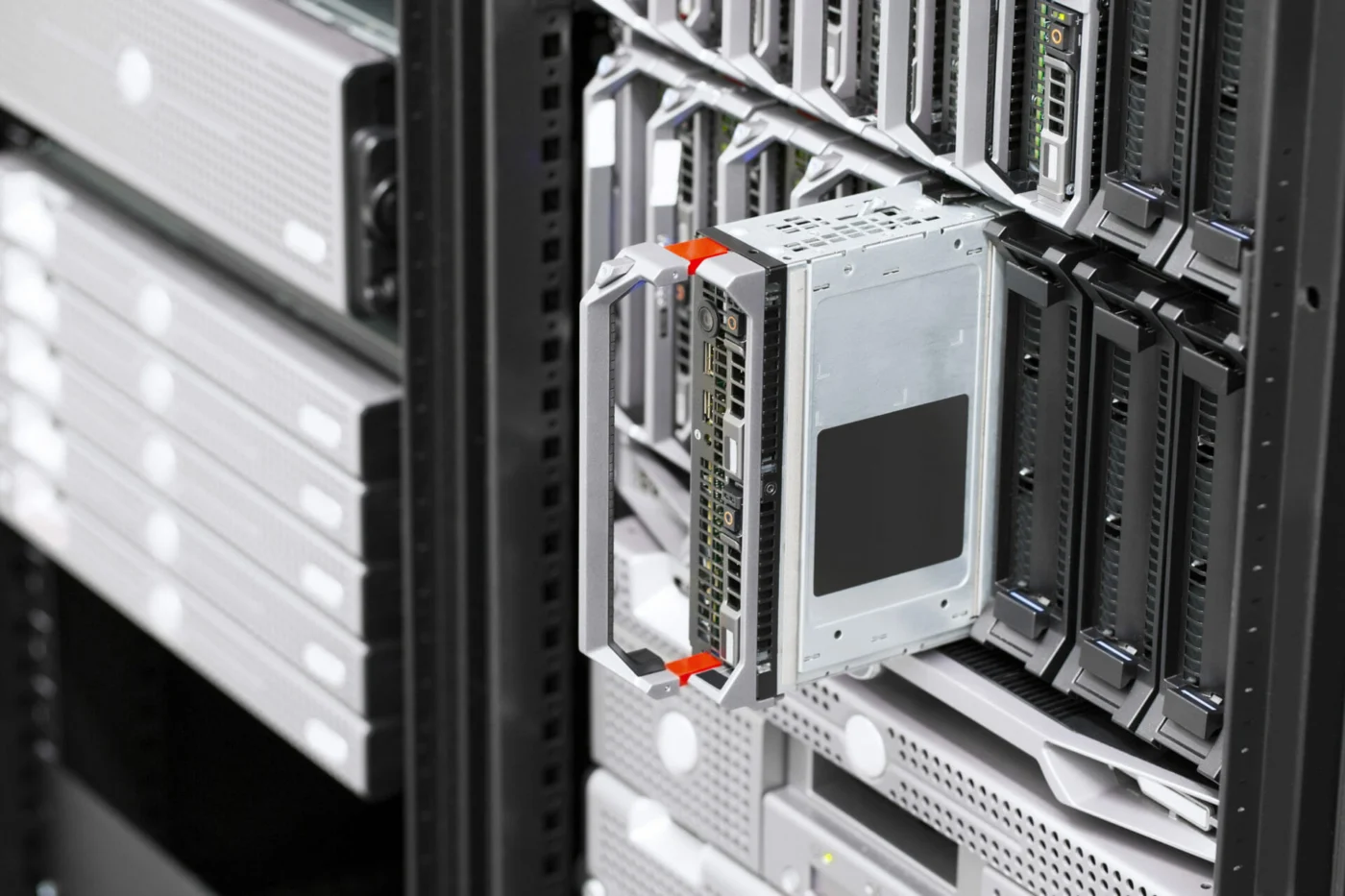
The hybrid approach described here can run on different NVIDIA platforms. The core concept remains the same: place model workloads on GPU-capable machines, and connect them to your OpenClaw control plane.
Option 1: NVIDIA RTX GPUs
You do not need the newest “top of the line” GPU to start. The strategy works with older RTX hardware such as:
- RTX 30 series
- RTX 40 series
The trade-off is model size. Local models are limited by available VRAM and system memory, so teams typically scale capability by choosing models that fit within their hardware budget.
Option 2: DGX Spark
DGX Spark configurations can provide much larger unified memory capacity. In one setup, DGX Spark with 128 GB unified memory can accommodate significantly larger model variants. This enables higher quality use cases, albeit with different speed characteristics.
The essential point for Canadian tech teams is that they can adopt hybrid inference without buying a massive datacenter. Many value-per-dollar decisions are about matching the model size to the task.
Local Models for 90% of Use Cases: The “Right Model, Right Job” Principle
A frontier model is a hammer. Using it for everything is expensive and unnecessary. A local open-source model can cover most daily production tasks with excellent results.
The recommended approach is to use local models for tasks such as:
- Embeddings: converting text into vectors for retrieval and search
- Transcription: converting audio to text
- Voice generation: producing spoken output locally
- PDF extraction: pulling structured content from documents
- Classification: routing or tagging content
- Summarization: producing article summaries, CRM summaries, and more
- Chat for many agent interactions when orchestration or coding excellence is not the top requirement
At the same time, some tasks are still best done with the most capable hosted models, particularly:
- Coding and complex implementation work
- Complex planning and decisioning
- Orchestration that benefits from top-tier tool calling and long-horizon reasoning
- Building and refining the OpenClaw agentic workflows themselves
This separation is what makes the hybrid design effective. It is not “local everything.” It is “local what does not need the frontier.”
LM Studio as a Practical On-Ramp for Canadian Tech Teams
Model orchestration can get complex quickly. The hybrid concept only helps if teams can implement it with minimal friction. For that reason, LM Studio is presented as a recommended starting point.
LM Studio is positioned as “by far the simplest to use” because it provides:
- An interface to run models locally
- Capabilities to determine which models can fit the machine
- Simple model selection and execution
In practice, Canadian tech teams often want a local inference stack that is stable and quick to validate. LM Studio helps teams test and iterate before building more complex production routing.
The Hybrid Architecture: Cloud for Frontier, Local for the Rest
The architecture described here includes two “model planes.” One plane uses frontier models hosted in the cloud. The other plane uses open-source models served locally via the organization’s GPUs.
Cloud plane: frontier models that are too large or not open-weight
Some hosted models are expensive and do not provide open weights. That makes them impossible to host locally, and it also means they should remain in the cloud for specific high-value tasks.
Examples mentioned include models described as “front-tier” and referenced in the workflow as:
- Opus 4.6
- GPT 5.4
In the hybrid approach, these models are primarily used for tasks like coding, advanced planning, and other high-complexity reasoning.
Local plane: open-source models on RTX or DGX Spark
Local inference runs open-source models such as those from the following families mentioned:
- Qwen
- LLaMA variants (referred to as “Lama” in the transcript)
- GLM
- NVIDIA’s Nemotron family (referred to as “Nemetron” in the transcript)
These models can handle many tasks, including text extraction, summarization, classification, and many chat-based agent interactions.
How to Think About When to Use Cloud vs Local
Hybrid inference should not be a guessing game. The approach can be organized into three practical phases: experimentation, productionizing, and scaling.
Phase 1: Experiment with frontier models only
During the experimentation phase, the priority is learning. Teams test different workflows, data formats, and integrations. A common strategy is to rely on frontier models to validate that the workflow produces acceptable outputs.
In this stage, there is little benefit in premature optimization. The cost is acceptable because the point is to ensure the system works.
Phase 2: Productionize with frontier, then identify offload candidates
Productionizing means the workflow is stable, repeatable, and ready for real or representative data. It is also the point where cost and privacy constraints begin to matter.
At this phase, teams start replacing the “small but frequent” components with local models. The workflow begins transitioning from “all cloud” to “hybrid.” The best candidates are those with:
- High frequency (they run constantly)
- Lower sensitivity (less exposed to critical failures)
- Tasks that do not require frontier-level long-horizon reasoning
Teams also test edge cases and build confidence using real production data.
Phase 3: Scale by moving repeated use cases fully to local
Scaling focuses on repeatability. Once a use case is stable and has proven parity with hosted outputs, it is moved to local inference whenever possible. This is when savings compound.
From a Canadian tech perspective, this is where teams create internal governance patterns: clear criteria for “local-ready” tasks, local model validation pipelines, and operational monitoring for inference quality.
Implementing the Architecture with GPU Access via SSH
A key engineering detail is how model serving infrastructure is connected to the OpenClaw controller. The described method uses SSH access to treat GPU machines as remote inference resources.
The core idea is that SSH is used like a control channel. Your laptop or server running OpenClaw does not need to host the models directly. Instead, it can “attach” to a remote GPU machine for inference.
Multi-machine model hosting: MacBook control, remote GPUs for inference
One example setup has OpenClaw hosted on a MacBook, with model serving on multiple GPU machines (an RTX machine and DGX Spark). OpenClaw is then able to route inference requests to the GPUs via SSH.
The model weights “live on” the GPU devices, while OpenClaw manages the workflow on the control machine.
Single-machine model hosting: everything on one PC
For smaller deployments, teams can run OpenClaw and local models on the same workstation. The architecture remains hybrid because cloud models are still available for high-value tasks, but local inference is centralized.
How to avoid manual SSH configuration complexity
Rather than expecting teams to master SSH parameters, OpenClaw can be used to discover and connect to local network machines. The described process is:
- Ask OpenClaw what machines are reachable on the local network for SSH
- Provide the required credentials (username, password, and IP address)
This reduces setup friction and accelerates experimentation for Canadian tech teams that want a working system quickly.
Adding a Local Qwen Model to OpenClaw: A Practical Example
To make the hybrid strategy concrete, the described workflow integrates a specific local model into OpenClaw configuration.
In the setup, LM Studio is used with a Qwen model variant, described as:
- Qwen 3.5, 35B parameters with 3B active parameters
The model is tested on DGX Spark to verify it runs efficiently. Performance is noted in terms of token generation speed, with the system reported to generate tokens at a rate described as 65 tokens per second, which is sufficient for many real-time tasks.
Configuring OpenClaw model routing
The process in the example includes:
- Adding the remote local model to OpenClaw’s available model configuration
- Running a smoke test to confirm routing works
- Routing specific use cases to the local model
In the example environment, Cursor is used for development and configuration. However, the message is that code is not required for all setup steps. The approach emphasizes natural language configuration and OpenClaw’s ability to manage routing.
Local vs Hosted Speed and Cost: Why It Matters for Canadian Tech Teams
Speed is not the only factor. In many systems, the time-to-response impacts user satisfaction and operational productivity. Hybrid design often improves both cost and responsiveness for frequent tasks.
One example compares response generation for a 100-word story:
- Local model completion takes a couple seconds
- Hosted frontier response for similar tasks can take roughly 5 to 8 seconds
The example also includes a longer 1000-word story comparison, reinforcing that local inference can be meaningfully faster depending on the model and hardware.
Canadian tech leaders should treat this as an operational KPI opportunity. If local inference reduces latency for internal workflows, it can support higher throughput for support operations, sales enablement, and internal knowledge management.
Real Use Cases to Offload Locally (and Why They Work)
The hybrid framework is only valuable if it maps to actual workflows. Several use cases are described as being replaced or enhanced by local models.
Use case 1: Knowledge-based article ingestion and summarization
Many OpenClaw setups use a knowledge pipeline: ingest links, scrape content, transcribe or extract relevant parts, generate embeddings, store content, and provide retrieval for later question answering.
In the example environment, a knowledge-based article ingester was previously powered by a hosted frontier model (named as Sonnet 4.6 in the transcript). The cost and quota limitations were addressed by replacing the summarization step with local Qwen.
The key design detail is that embeddings were already handled locally. That means the “heavy privacy part” of vectorization was already local, and the system needed to offload the summarization and database preparation to local inference as well.
In practice, the described flow is:
- Scrape an article from a link
- Use the local Qwen model to summarize the content
- Store summaries and associated data in the local database
- Use local embeddings for search and retrieval
Because summarization is frequent and does not always require frontier-level complexity, the swap produces immediate cost relief while preserving output quality for the intended use case.
Use case 2: CRM functionality and conversation summarization
CRM workflows are another frequent source of token usage. If a hosted model summarizes emails, transcribes call notes, and generates CRM updates for every interaction, costs can become significant.
In the described production setup, CRM summarization previously relied on a frontier model costing an estimated $12 to $20 per month. The system then replaced that step with local Qwen.
One operational advantage highlighted is privacy. When the local system holds prior transcripts and email data, it can generate summaries without sending that information to a hosted model for every query.
The practical outcome is a CRM assistant that can answer questions like:
- Summarize the last conversation with a sponsor
- Summarize emails and video transcripts from prior interactions
- Provide retrieval-based context for follow-ups
For Canadian tech businesses operating in regulated or security-sensitive contexts, this “nothing leaves my office” framing is especially compelling.
Quantization and Model Right-Sizing: The Real Tuning Knobs
Local model performance depends on right-sizing and quantization. The practical guidance is to match model size to the hardware, and quantize models to fit within memory constraints and performance goals.
A recommended starting point mentioned in the example is that the roughly 30B parameter range often provides a strong balance of size and quality. It also fits on consumer-grade GPUs more commonly available to Canadian tech teams.
The DGX Spark can support larger variants (for example Nemotron 3 Super 120B or larger Qwen variants) due to its unified memory capacity, but these larger models may run slower. That creates a natural trade-off:
- Speed-first tasks: choose smaller models
- Quality-first tasks: choose larger models when latency is acceptable
This trade-off perspective helps Canadian IT teams build a predictable cost-quality curve rather than treating local inference as a fixed monolith.
How Local Embeddings and Retrieval Drive Privacy Benefits
Embeddings are often one of the most overlooked parts of the pipeline. They determine how well your system can search and retrieve relevant context later.
In the hybrid architecture, embeddings can be generated locally. That matters because embeddings represent your internal text data in a transformed form. Keeping embedding generation local reduces the amount of raw content and derived representations sent to external services.
Another important distinction is that embeddings enable “searchable memory.” Once your organization builds an internal vector database, it can answer questions using local context retrieval followed by local or hybrid generation.
That is why hybrid architectures often create better governance outcomes than “hosted-only.” Data stays closer to where it belongs.
Why This Is More Than a Hobby Hack: Enterprise-Grade Thinking
Local inference is sometimes dismissed as a tinkering exercise. The workflow described here is explicitly about production readiness.
Two principles support that claim:
- Workflow phases: experiment with frontier models, productionize, then scale with local replacements
- Selective offloading: replace high-frequency low-complexity tasks with local models, keep frontier only for the hard parts
In other words, the hybrid approach is treated like a system engineering effort, not a one-off optimization.
The article also highlights that NVIDIA is investing heavily in open-source models and local inference. NVIDIA released a third version of Nemotron (as referenced) and also announced an enterprise version of OpenClaw called “Nemoclaw.” This aligns with the broader industry direction toward hybrid AI infrastructure where local models become more accessible and production-ready.
A Cost Model Canadian Leaders Can Use: Cloud Tokens vs Local Inference
Cost discussions only matter if they translate into decision-making. The example provides a clear contrast:
- Fully hosted approach: approximately $300 per month
- Local approach: approximately $3 per month for electricity, with the understanding that hardware costs are separate
These numbers are illustrative and will vary based on hardware, utilization, model selection, and workload intensity. However, the directional message is consistent: local inference can reduce the recurring variable cost of tokens paid to hosted providers.
For Canadian tech teams, the financial lens should include:
- Monthly variable costs (token spend)
- Hardware amortization (capex and lifecycle)
- Operational costs (maintenance and monitoring)
- Risk reduction (privacy, quotas, latency)
Hybrid systems often deliver the best balance, especially during transition periods when local model quality still evolves month over month.
Canadian Tech Roadmap: Moving Toward Hybrid Inference Without Disruption
For organizations in Canada, especially those with distributed teams or regulated data requirements, hybrid inference can be rolled out safely with an incremental roadmap.
Step 1: Identify your “token hog” tasks
Start by auditing which parts of the pipeline run the most tokens. In many cases, the frequent tasks include summarization, extraction, classification, and embeddings-based retrieval preparation.
Step 2: Pick local candidates that align with model strengths
Local models are particularly suitable for:
- Embeddings generation
- Transcription
- Summarization and extraction
- Classification and routing
- Chat for “good enough” assistant behavior
Keep frontier models for:
- Coding
- Complex planning
- Orchestration requiring high-precision reasoning
Step 3: Validate output quality on real data
Do not rely solely on synthetic tests. Use real documents, real transcripts, and real user inputs. Validate edge cases, formatting needs, and tool calling compatibility.
Step 4: Scale only after production confidence is established
Hybrid deployments work best when teams treat local model swaps as controlled releases. Scale after confidence is built.
FAQ
What does a hybrid OpenClaw architecture mean in practice?
Which tasks should stay in the cloud versus run locally?
What hardware is required for local models on Canadian tech setups?
How does LM Studio help with running models locally?
Can local inference improve privacy compared with fully hosted models?
How can teams connect OpenClaw to remote GPUs without heavy SSH expertise?
A hybrid OpenClaw architecture runs two kinds of models in parallel: cloud-hosted frontier models for the hardest tasks, and open-source models hosted locally on an organization’s GPUs for the high-frequency, lower-complexity work. The system routes each request to the appropriate model based on the workflow step.
The approach described keeps frontier models in the cloud for tasks like coding, complex planning, and orchestration that benefits from top-tier reasoning and tool calling. It pushes tasks like embeddings, transcription, summarization, classification, PDF extraction, and many chat interactions to local open-source models.
Local models can run on NVIDIA RTX GPUs (including older RTX 30 and 40 series) or on DGX Spark. The main constraint is available VRAM and memory, which determines the largest model that can run locally. Teams can choose smaller models when they need speed or cost efficiency, and larger models when quality matters more.
LM Studio provides a simplified interface for running open-source models locally, including model selection and helping determine what fits the machine. This reduces the setup burden and makes it easier to test models quickly before integrating them into an OpenClaw routing configuration.
Yes. When embeddings, summarization, and transcription are performed locally, the organization reduces the need to send sensitive content to external hosted services. The result is a stronger privacy posture and improved control over what leaves the environment.
OpenClaw can be used to discover reachable machines on the local network and to manage connection details using the required username, password, and IP address. This reduces manual configuration and lets teams focus on routing models and validating workflows.
The Future Is Hybrid for Canadian Tech
OpenClaw costs do not have to be a runaway problem. The hybrid path is a direct response to a common inefficiency: using frontier models for everything instead of reserving them for tasks that genuinely require their capability.
Canadian tech teams can reduce spend, improve privacy, and increase workflow responsiveness by implementing a system design where:
- Cloud frontier models handle complex coding, planning, and orchestration
- Local open-source models handle embeddings, transcription, summarization, classification, and many chat tasks
- GPU resources powered by NVIDIA RTX or DGX Spark deliver fast local inference
As open-source models evolve and local tooling matures, more use cases will move to the local plane. The immediate takeaway is strategic: offload what you can, validate on real production data, then scale replacements in phases.
Is your Canadian tech stack paying for frontier intelligence when a local model would do the job just as well?