
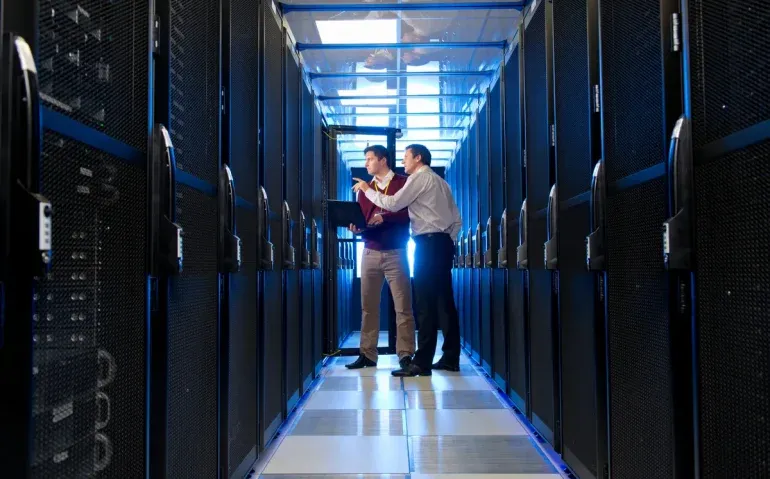
As the appetite for artificial intelligence grows, so does the physical infrastructure that powers it. Massive AI-oriented data centres now concentrate unprecedented amounts of computing equipment—and therefore heat—in relatively small footprints. Recent modelling suggests that neighbourhoods situated down-wind of these facilities can experience average temperature increases of up to 9.1 °C. Below, we unpack how this happens, who is affected, and which technical and policy measures could stem the heat.
1. Why AI Workloads Run Hotter Than Traditional Cloud Tasks
• High power density: Training large language models packs far more graphics-processing units (GPUs) into each server rack than conventional web hosting. Power densities above 80 kW per rack are becoming common, compared with 5–10 kW only a decade ago.
• Sustained utilisation: AI training jobs frequently occupy the hardware at 90–100 % utilisation for days or weeks, leaving little time for thermal recovery.
• Specialised accelerators: Tensor Processing Units (TPUs) and custom AI chips are highly efficient but still convert most of their input electricity into waste heat that must be rejected continuously.
2. From Server Rack to Sidewalk: The Heat Pathway
1. Electrical energy enters the facility.
2. Servers convert it almost entirely into heat.
3. Chilled-water or direct-to-chip cooling systems absorb the heat.
4. Heat is expelled outdoors by cooling towers or dry coolers, warming the ambient air.
5. Prevailing winds transport the warmed plume into adjacent streets, parks, and residential zones.
3. Deconstructing the 9.1 °C Figure
• Study parameters: The referenced simulation combined computational-fluid-dynamics models with real-world meteorological data from 104 metropolitan regions.
• Peak vs. average: 9.1 °C represents the highest hourly anomaly under worst-case meteorological conditions. Typical annual average increases fall between 0.3 °C and 1.4 °C, still significant when layered onto existing urban-heat-island effects.
• Population exposure: Roughly 460 million people live within a 5 km radius of an AI-optimised data centre large enough to create measurable heat islands.
4. Human and Ecological Implications
• Public health: Elevated night-time temperatures limit the body’s ability to cool, increasing heat-stress hospital admissions by up to 14 %.
• Energy feedback loop: Local air-conditioning demand rises, indirectly causing further electricity use—and thus more data-centre heat—unless grids decarbonise.
• Urban biodiversity: Higher ground and water temperatures stress tree canopies and aquatic ecosystems, reducing their capacity to provide natural cooling.
5. Cooling Tech Choices Matter
• Air cooling: Cheapest to deploy but releases the most waste heat directly into the atmosphere.
• Liquid immersion: Reduces cooling energy by ~30 % and allows heat reuse, but retrofit costs are high.
• Heat recovery to district heating: Scandinavian pilots show up to 90 % of server waste heat can warm homes, turning a liability into an asset.
• Geothermal and aquifer storage: Store excess heat underground in summer and retrieve it in winter for building heating, flattening thermal peaks.
6. Water Stress: An Overlooked Side Effect
Chilled-water systems can consume 5–10 million litres per day for a hyperscale facility. In drought-prone regions, this directly competes with municipal needs. Dry coolers avoid water use but increase local air-temperature discharge, exacerbating heat issues.
7. Policy and Urban-Planning Levers
• Zoning setbacks: Minimum buffer zones and height restrictions for exhaust stacks can disperse heat plumes before they reach homes.
• Mandatory heat-reuse quotas: Jurisdictions in Denmark and the Netherlands already require new data centres to feed waste heat into district networks where feasible.
• Integrated environmental impact assessments: Extending beyond carbon accounting to include thermal footprints and water consumption.
• Time-of-day incentives: Align AI training jobs with cooler night-time hours or periods of surplus renewable generation to flatten thermal peaks.
8. Looking Ahead
The same algorithms that enable AI breakthroughs can optimise the physical infrastructure that serves them. Predictive models are being trialled to modulate workload placement across geographically dispersed centres based on real-time weather, grid carbon intensity, and local heat-island thresholds. If widely adopted—paired with aggressive heat-reuse mandates—these approaches could prevent AI from literally raising the temperature of the cities we live in.
The race to build ever-larger AI models is unlikely to slow soon, but the environmental side-effects are not an inevitable by-product. Thoughtful engineering and evidence-based policy can ensure future data centres become neighbourhood heaters in winter, not year-round hotplates.