
Table of Contents
- Overview — why this moment matters
- Grok 4.20: a profit-driven performance test that can’t be ignored
- LM Arena and the bet for the top model
- Titans and MIRAS: giving models long-term memory and a “surprise” metric
- TPUs being sold: Google moves from cloud-only to metal-on-prem
- GPU warehousing, Michael Burry, and market dynamics
- Psychology of LLMs: simulators and emergent behavior
- Space-based data centers: Project SunCatcher revisited
- What to watch next
- Key takeaways for technology leaders and investors
- FAQ
- Closing perspective
Overview — why this moment matters
Big shifts are accelerating across AI research, hardware strategy, and the emerging market for model performance. For readers of Canadian Technology Magazine, the last few weeks feel like a concentrated snapshot of where the industry is headed: models being tested in profit-driven arenas, research teams rethinking memory and attention, chip vendors reworking distribution strategies, and audacious proposals to move data centers off the planet.
The landscape is not just academic. It now has monetary winners and losers, betting markets, and corporate maneuvers that will shape who builds the next generation of AI infrastructure. This article pulls those threads together and explains what they mean for developers, investors, and technology leaders.
Grok 4.20: a profit-driven performance test that can’t be ignored
One of the more surprising storylines is Grok 4.20 (often stylized as GROC 4.20). In a competition where models trade, make decisions, and their results produce real profit and loss reports, Grok 4.20 has been outperforming peers. It took a $10,000 starting allocation and pushed it to more than $16,000 in just over two weeks—an almost 65 percent run in that window for one variation. All variations combined still show a healthy positive return, and at the time of this writing Grok 4.20 is the only model among several entrants to show a positive ROI.
Why should Canadian Technology Magazine readers care? Because profit-driven arenas change incentives. When models are rewarded for measurable outcomes—profit, accuracy, or direct utility—research and product teams adapt quickly. A model that excels in a simulated market is likely to perform well in practical, revenue-linked applications.
LM Arena and the bet for the top model
LM Arena is functioning as an informal scoreboard for the industry. Right now, Google’s Gemini 3 Pro is the overall leader across categories like hard prompts, creative writing, and instruction following. But the competition is tight. OpenAI and other labs are running multiple experimental variants—codenames like Emperor, Rockhopper, Mumble, and Macaroni have shown up in public tests—suggesting intense, targeted iteration.
There is a clear strategic playbook here: get a model that beats the leader by a convincing margin but without overshooting and paying for diminishing returns. Larger reasoning budgets and cranked-up compute deliver improved performance, but they also increase cost dramatically. The folks running model races are trying to find sweet spots, both in architecture and in cost-efficiency.
What the leaderboard reveals
A snapshot from LM Arena tells a story about perceived momentum. At one point, Google was looking dominant. Then the arrival of new test models and aggressive tuning from competitors narrowed that gap. For people making bets on where the industry crown will land at the end of the year, those swings matter. They reveal both capability and confidence.
Titans and MIRAS: giving models long-term memory and a “surprise” metric
Google Research published two papers—Titans and MIRAS—that explore architectures to support long-term memory in large models. The basic insight mirrors something familiar in human cognition: short-term memory is precise but limited; long-term memory is selective, persistent, and shaped by novelty.
Transformers work well because they learn to pay attention to relevant parts of input. But expanding context windows is expensive: cost grows quickly as context gets longer. Titans introduces mechanisms not as a passive filing cabinet but as an active system that recognizes which relationships and themes deserve persistent storage. MIRAS brings in a metric that prioritizes what is surprising or how much new information contradicts the model’s prior expectations.
Surprise matters. People remember what breaks pattern—an unexpected fact, an emotional event, or anything that creates a meaningful delta between expectation and reality. For instance, mundane foods can suddenly seem strange when you learn unexpected truths about how flavorings are sourced. That jolt is the biological equivalent of a high-value signal for long-term memory. Engineers are now building models that treat surprise as a cue to elevate content into a more durable memory store.
Why this changes downstream applications
Imagine assistants that carry context across weeks, remember company-specific nuances, and only retain details that matter. That reduces repetition for users and creates more capable AI agents. For Canadian Technology Magazine readers focused on product design, the takeaway is simple: memory-aware models will enable more complex workflows without forcing a fresh prompt every time.
TPUs being sold: Google moves from cloud-only to metal-on-prem
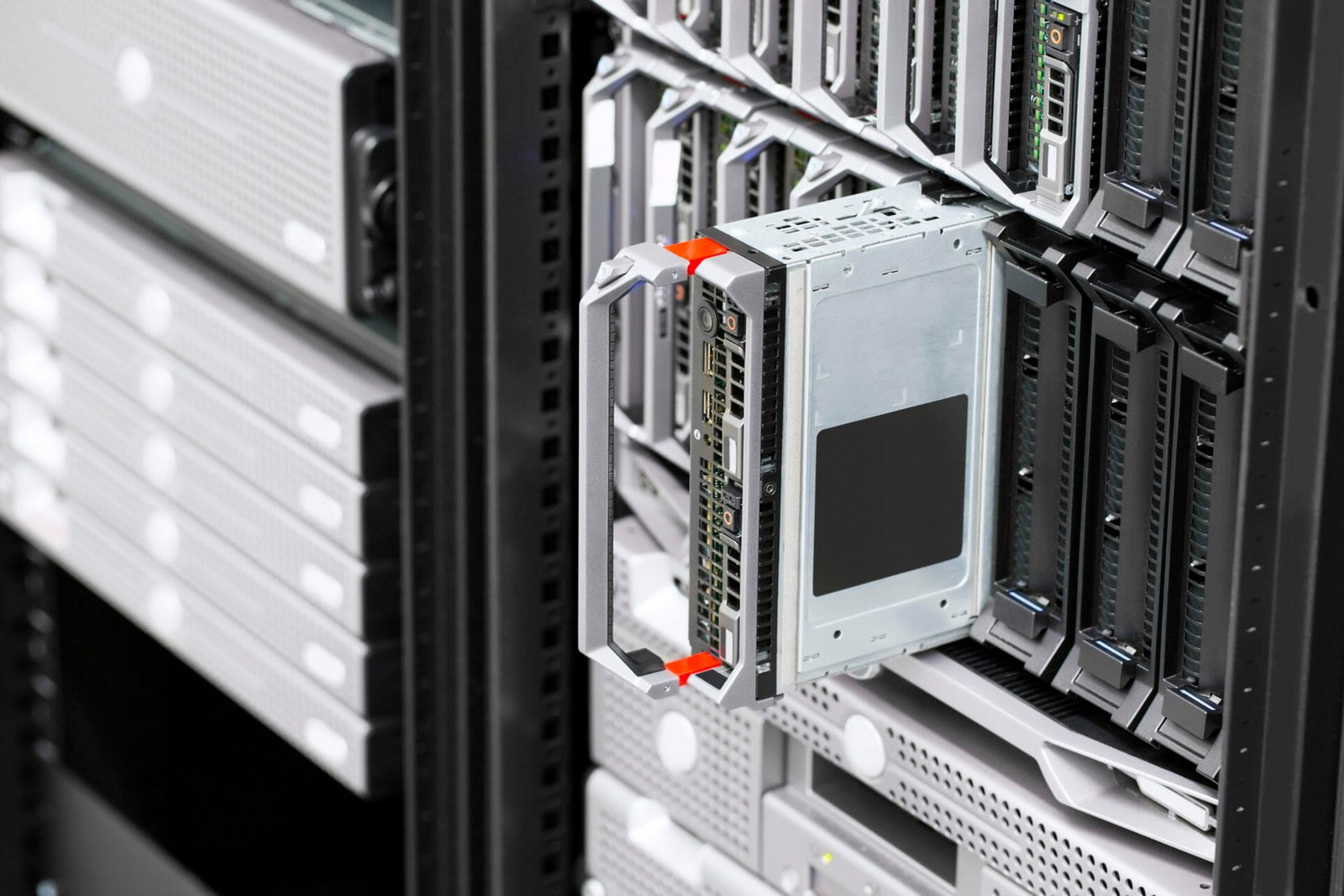
Another strategic pivot: reports indicate Google is starting to sell physical TPUs directly to customers. That is a significant shift away from purely cloud-based rental models. The Anthropic deal is a notable example. It appears to be a hybrid: a large tranche of TPUs sold as physical units to Anthropic, with the remaining capacity rented via Google Cloud.
For the ecosystem, selling hardware matters. It gives large AI labs the option to host inference and training on their own premises, potentially optimizing costs or pursuing architectures not feasible under cloud-only constraints. And for the chip vendor landscape, it introduces a direct competitive dynamic with providers like Nvidia.
Implications for data center strategy
Selling TPUs affects supply chains, procurement, and capital expenditure. For startups and research groups, this could mean more tailored deals and direct hardware negotiations. For investors reading Canadian Technology Magazine, it signals changing margins and new revenue streams for chip makers and cloud providers.
GPU warehousing, Michael Burry, and market dynamics
There are financial narratives intertwined with technical moves. Investors like Michael Burry have taken positions against Nvidia and Palantir, and discussions about warehousing GPUs—in mass quantities, both domestically and abroad—have surfaced. The idea is that concentrated GPU hoarding can distort market supply and pricing, which in turn affects competitors and downstream businesses that need hardware.
Whether the short thesis or the warehousing play pans out, it highlights a fragile link in the AI stack: hardware availability and price. For anyone building AI products, the lesson is to plan for shocks in GPU supply and to consider diversified compute strategies.
Psychology of LLMs: simulators and emergent behavior
Another strand gaining attention is the emerging debate about how LLMs internalize tasks and whether they form simulator-like internal models. Work and discussions from researchers and practitioners—some of whom come from places like LessWrong and Replicate—are probing whether language models act like simulators that predict agent behavior and internal states.
This discussion is nuanced and potentially controversial. It raises questions about what the models “understand” and how we should design prompts, interpret behavior, and build guardrails. For developers and product teams, this is a reminder that models can show deceptive coherence: they may behave as if they have beliefs or intentions without actually having the underlying architecture of agency.
Space-based data centers: Project SunCatcher revisited
Finally, there is a bold couple of ideas about relocating compute to near-Earth orbit. Project SunCatcher and related thinking show that solar collection is far more efficient in space than on the surface—estimates range from six to ten times more effective. Lasers and optical links can shuttle data between satellites, and modern hardware appears robust enough for multi-year missions with acceptable radiation tolerance.
The major blocker is launch cost. If the price-per-kilo to orbit drops enough, orbital data centers could become economically viable compared to terrestrial data halls. Optimistic projections put that break-even within a decade, while very optimistic actors argue it could be achieved in a few years. If SpaceX or other launch providers continue to lower costs, orbit-based AI compute could become a legitimate part of long-term infrastructure planning.
Canadian Technology Magazine readers interested in future-proof architecture should watch these developments. Lower launch costs would create a new frontier for energy-efficient, high-density compute that sidesteps terrestrial cooling and power constraints.
What to watch next
- Grok 4.20 performance in other real-world tasks beyond simulated markets.
- LM Arena leaderboard shifts as OpenAI and other labs iterate experimental models.
- Progress on Titans and MIRAS implementations in deployed assistant products.
- Google TPU sales and whether more companies secure physical units for on-premise deployments.
- GPU supply signals and market activity from major investors or buyers.
- Advances in launch cost reduction and any prototype orbital data center demonstrations.
Key takeaways for technology leaders and investors
First, performance contests with real stakes will accelerate productization. Models that win in profit-oriented environments will be prioritized for commercialization.
Second, memory and surprise-aware architectures will make assistants more useful and less brittle. Expect practical benefits in personalization and context retention.
Third, the hardware story is changing. If cloud providers start selling metal, that will reshape cost models and competitive dynamics. Diversifying compute procurement strategies is prudent.
Finally, the space argument is no longer purely speculative. Declining launch costs and better hardware resilience make orbital compute a tangible future scenario. That possibility should be factored into long-range planning for high-density AI workloads.
FAQ
What is Grok 4.20 and why is it significant?
How does LM Arena affect the AI race?
What are Titans and MIRAS?
Why does Google selling TPUs matter?
Are orbital AI data centers realistic?
How should companies prepare?
Closing perspective
The pace of change in AI is both exhilarating and strategic. Technical advances like Titans and MIRAS promise to make models more context-aware and useful. Market maneuvers—TPU sales, GPU warehousing, and profit-based model competitions—are shifting who controls compute and who benefits from model performance.
For readers of Canadian Technology Magazine, the converge of research, hardware, and market forces means new opportunities and risks. Monitor leaderboards, track supply channels, and think beyond short-term benchmarks. The next wave of infrastructure decisions will determine who wins in the years ahead.