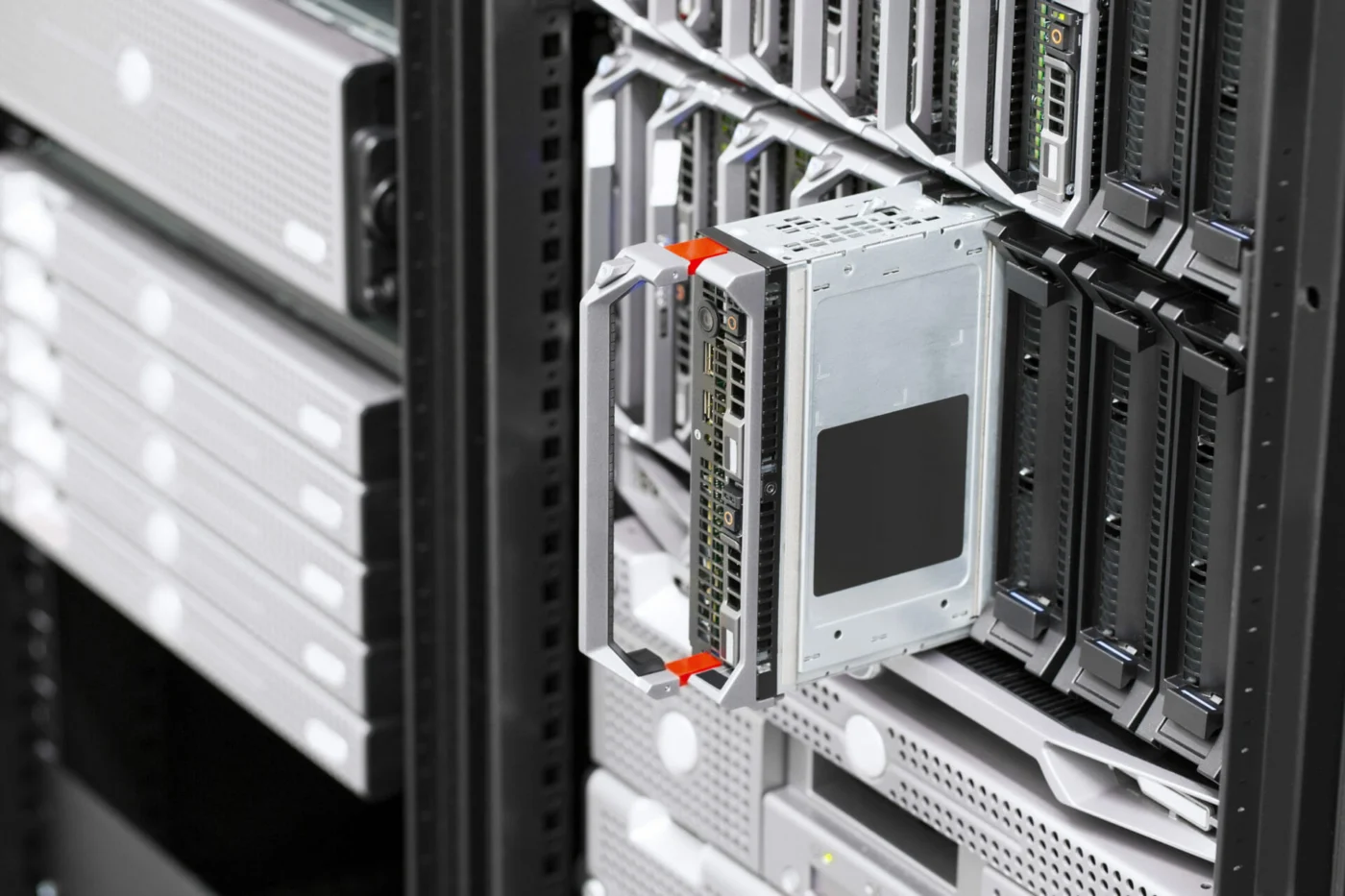
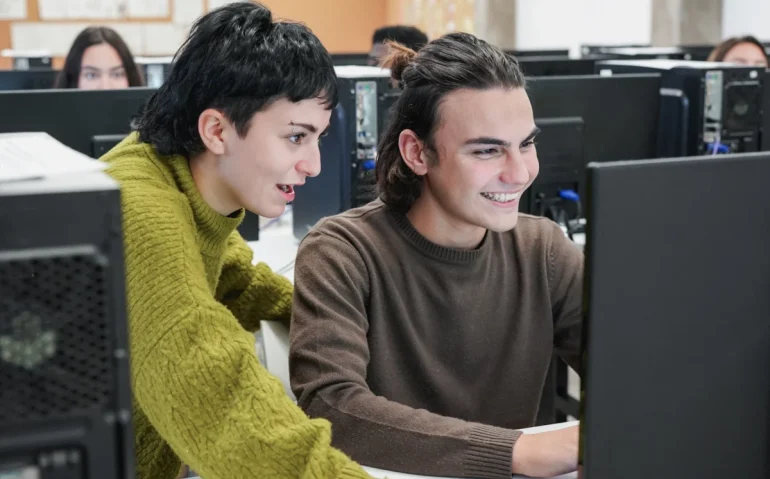
When classes resume after winter break, Skyview High School in Fairfax County, Virginia, will become one of the first U.S. public schools to place an actual quantum computer—albeit a small, research-grade model—inside a K-12 classroom. The project is more than a flashy headline; it marks a meaningful shift in how tomorrow’s technologists might first encounter the next computing revolution.
Beyond Bits: Why Quantum Matters
Traditional computers manipulate bits, which are always a 0 or 1. Quantum computers rely on qubits, which can exist in a blend of 0 and 1 simultaneously (a property called superposition) and can influence one another instantaneously over distance (known as entanglement). These attributes allow certain problems—factorization, molecular simulation, complex optimizations—to be tackled exponentially faster than is feasible with classical hardware.
Although today’s quantum processors are still error-prone and limited in scale, the field is advancing quickly. Introducing students to its principles early may demystify the technology and widen the future talent pool.
How Skyview Secured a Quantum System
The initiative began two years ago, when Skyview’s STEM department partnered with the Virginia Quantum Alliance, a consortium of universities, private firms, and state agencies. A $1.4 million grant—half from the state’s innovation fund and half from corporate sponsors such as Quantinuum and Honeywell—covered:
- Purchase of a five-qubit room-temperature photonic quantum processor
- Installation of a vibration-isolated optics table and dedicated lab space
- Teacher externships at partnering university quantum labs
- Curriculum development stipends
Rewriting the Curriculum for Quantum Literacy
Rather than offering a stand-alone elective, Skyview folded quantum content into existing math, physics, and computer science tracks. Highlights include:
- AP Physics “Quantum Fridays”—hands-on labs demonstrating wave–particle duality and probability amplitudes.
- Linear Algebra for Computer Science—modules on tensor products and complex vector spaces, taught through qubit state manipulations.
- Capstone Coding Projects—juniors and seniors write simple algorithms (Deutsch–Jozsa, Grover’s search) in Qiskit and run them on the in-house processor.
Hands-On Hardware Experience
Students will not merely remote-submit jobs; they will:
- Calibrate lasers and photon detectors under technician supervision
- Measure coherence times and graph error rates over temperature fluctuations
- Compare in-lab results with cloud-based superconducting qubit systems to analyze architecture trade-offs
Overcoming Real-World Challenges
Running even a small quantum processor in a school is non-trivial. The district had to address:
- Environmental isolation: vibration-damping flooring and blackout curtains were installed in the former AV closet housing the device.
- Cybersecurity: the quantum control computer lives on an air-gapped network; students store code on USB keys scanned daily.
- Teacher readiness: four faculty members completed a summer boot camp at Virginia Tech’s Center for Quantum Information Science and Engineering.
A Ripple Effect on STEM Education
Early exposure helps demystify quantum mechanics and may diversify the field. Skyview has already seen a 28 % rise in female enrollment in upper-level physics and a doubling of underrepresented-minority participation in computer science electives since the program was announced. Nearby districts are watching closely, and the state is drafting a framework to replicate the model in other high schools by 2026.
Looking Forward
Industry estimates suggest the U.S. will need at least 500,000 quantum-literate professionals within a decade—engineers, algorithm designers, cryogenic technicians—yet today only a few thousand people worldwide can genuinely program or maintain quantum hardware. By normalizing quantum concepts at the high-school level, Skyview aims to ensure its graduates don’t just adapt to the quantum future—they help build it.
The school’s first cohort will present its quantum research posters at the regional science fair next spring. If the pilot succeeds, tomorrow’s advanced physics class might look less like a lecture hall and more like a quantum startup lab—in Virginia and beyond.