
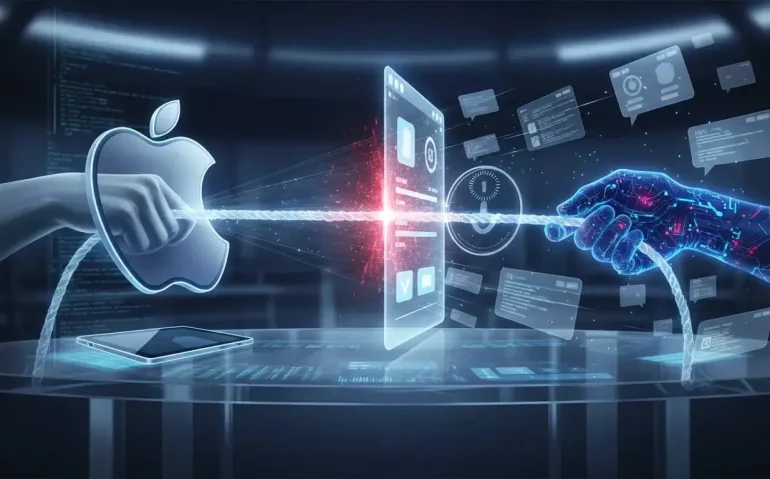
Canadian Technology Magazine is all about what really happens when tech trends collide with real-world platforms. Right now, one of the loudest collisions is between Apple and “vibe coding” apps, tools that let people build working software by describing what they want in plain English. The result is a tug-of-war that is not just about developer convenience. It is about control, revenue, and the future of how software gets created and distributed.
Apple’s position has been framed as “we are enforcing existing rules.” But for developers, the impact has been immediate: popular vibe coding apps have seen App Store update freezes, leaving them in a frustrating review limbo while still working in their current form. And beneath the technical justifications, the bigger question is hard to ignore: is Apple slowing down a new wave of creation because it threatens the App Store model that pays the bills?
Table of Contents
- What “vibe coding” actually means (and why it is spreading fast)
- Apple’s enforcement move: updates blocked, apps stuck
- The policy problem: “self-contained” and “no downloading code that changes functionality”
- Why this feels different: the historical pattern of “enforcing old rules”
- So what is really going on? Money, ecosystem lock-in, and business risk
- The other side of the coin: quality control and an app review bottleneck
- Vibe coding also puts pressure on Xcode and Apple’s preferred developer path
- Why “blocking updates” is such an effective deterrent
- Game theory angle: actions that hurt others without benefiting yourself
- What the likely outcome could be: PR risk, regulators, and a policy showdown
- How developers and businesses should think about vibe coding right now
- Where it leaves Apple: adapting versus resisting
- FAQ
- Related resource: reliable IT support as your AI tooling scales
What “vibe coding” actually means (and why it is spreading fast)
If you have not heard the term, vibe coding is basically software development by description. The idea traces back to Andrej Karpathy, who helped popularize the concept: you tell an AI what you want in simple English, and the AI writes the app end to end.
That is the key shift. Traditional app development assumes you know enough programming to translate your intent into code. Vibe coding tries to remove that translation layer. Instead of coding manually, you “vibe” the requirements into existence. It is not just code completion. Many tools claim they can generate full projects, including the user interface, backend logic, and deployment steps.
Platforms and products have been popping up around this idea, from coding copilots to full app builders. Some of them help you go from idea to publishable app without touching a typical stack like Xcode, compilers, or deployment pipelines.
One of the best-known categories here is “full stack vibe coding.” In plain terms, that means the AI tool is not just generating snippets. It is handling major parts of the build process: front end, backend, payments, deployment. In some cases, it even helps with publishing workflows to distribution channels.
Apple’s enforcement move: updates blocked, apps stuck
Recently, Apple reportedly began cracking down on vibe coding apps. The practical outcome has been blunt. Apple is blocking new updates for certain popular apps (including well-known vibe coding tools), sometimes starting around January or February. The apps continue to work, but developers cannot ship improvements, bug fixes, or new features through the usual update cycle.
Apple’s messaging is that it is not inventing brand-new rules. The issue is that existing App Store policies are being enforced more aggressively now. The apps are allegedly violating long-standing requirements about self-contained applications and downloading executable code.
The policy problem: “self-contained” and “no downloading code that changes functionality”
To understand why vibe coding triggers Apple’s radar, you have to look at the policy logic. One core guideline states that apps must be self-contained. They cannot download, install, or execute code that changes their own functionality or that changes other apps.
There is also language in Apple’s licensing terms about downloaded interpreted code not altering an app’s primary purpose. The intent is straightforward: once an app passes review, it should not morph into something else later through downloaded code paths.
For a typical app, that makes sense. For a vibe coding tool, it becomes tricky. If the tool can generate essentially any app, then the “vibe coded output” can act like downloaded code that expands functionality in ways Apple did not directly approve during review.
Consider a simple scenario. You install a vibe coding app. Inside it, you generate a new app from scratch, such as a calorie tracker. That “generated app” is not the same artifact Apple reviewed when approving the vibe coding tool. Apple is essentially saying: that workflow resembles code downloading and executable behavior that was never part of the reviewed package.
Why this feels different: the historical pattern of “enforcing old rules”
Apple’s defense is that these constraints are not new. But developers and regulators have seen this pattern before. Companies sometimes get hit not because the rule changed, but because enforcement changes. The result can look like a business strategy dressed as policy compliance.
A relevant precedent comes from WeChat mini apps. Apple and Tencent had a long standoff over whether third-party mini apps that function inside WeChat could bypass parts of Apple’s commission structure. Apple reportedly held up WeChat updates for years. The eventual resolution included a revenue share arrangement where Apple took a cut of payments made inside the mini apps.
Another precedent is Epic Games. Epic challenged Apple’s App Store fee model through a major lawsuit. Epic ultimately did not win outright on the fee fight, but it did gain an important ability: informing users about alternative payment methods outside the App Store ecosystem.
In the background, regulators across regions have continued investigating Apple’s gatekeeping power. And enforcement actions frequently become antitrust questions, not purely technical ones.
So what is really going on? Money, ecosystem lock-in, and business risk
The big argument driving most of the concern in this space is simple: vibe coding apps can bypass the App Store review and commission path.
Because the AI can generate apps and sometimes enable deployment on the open web or other hosting options, Apple’s cut may shrink or disappear. If creators can build web-first tools that users access directly in browsers, the App Store becomes less central. And if developers decide they do not need App Store distribution for certain categories of apps, Apple’s profitable commission engine faces long-term pressure.
Even if the App Store commission is only a portion of Apple’s total revenue, it is often described as extremely profitable. Apple’s margins on services are widely known to be strong. So small changes to the App Store inflow can have outsized effects on profit.
There is also a second-layer threat: vibe coding could accelerate the shift away from “mobile apps as the default” toward “web apps as the default.” That transition is not hypothetical. It is already happening as browsers get better, payments get simpler, and tooling reduces the cost of shipping.
In this framing, Apple is not just protecting a revenue line. It is protecting the entire ecosystem shape: users inside App Store distribution, developers inside Apple’s toolchain, and monetization inside Apple’s framework.
The other side of the coin: quality control and an app review bottleneck
It would be unfair to pretend vibe coding is only harmless disruption. There is a real risk of low-quality output, spam submissions, and flooding review queues.
The “vibe coding” concept can empower everyone to ship software quickly, including content that might be buggy, low-effort, or even malicious. When the number of submissions grows faster than review systems can adapt, everyone suffers: genuine developers get slower approvals, and users get more junk before it gets pruned.
Reports suggest the App Store is seeing massive submission volumes, approaching thousands of new apps per day. Even if Apple has pruning and moderation mechanisms, review throughput can become a constraint.
So Apple could be reacting to a legitimate quality-control problem. But critics argue the enforcement should be targeted and proportional, not “freeze updates for entire categories” in a way that stops legitimate tools from improving or complying.
Vibe coding also puts pressure on Xcode and Apple’s preferred developer path
There is another strategic dimension: Xcode.
Apple maintains a developer ecosystem anchored by its tools. When third-party vibe coding platforms let people generate apps without using Xcode, Apple risks losing developers to alternative workflows. That does not only matter for app submissions. It affects developer mindshare and the long-term pipeline of how apps get made.
In a twist, Apple recently added AI coding assistance features to Xcode powered by major model providers. That means Apple is adopting AI assistance inside its own official toolchain while reportedly restricting competing AI coding products on the App Store.
One interpretation is that Apple is trying to keep developers inside its “blessed” environment: use AI in Xcode, not AI to replace Xcode.
Why “blocking updates” is such an effective deterrent
From a platform-control perspective, blocking updates is a powerful lever. It does not require Apple to ban the apps outright. It does not require a total removal from the store. It simply makes it hard for developers to iterate.
That matters because software quality improves over time. Developers fix security issues, improve performance, reduce costs, and refine user experience. If updates stall, a tool can become “stuck” and less competitive, even if it started with legitimate utility.
Apple’s approach can also be defensible in a technical sense. “We are enforcing self-contained code rules” is easier to justify than “we want to kill competition.” Enforcement through policy can be a middle path: not outright censorship, but enough friction to slow adoption.
Game theory angle: actions that hurt others without benefiting yourself
Critics also frame this as short-sighted. There is a game theory idea for when an action helps no one and potentially harms others. In this case, Apple may be harming developers and also shaping how the next generation learns to create.
The learning pipeline is a real long-term factor. People do not get future developer talent by forcing old workflows. They get it by making creation easier and more welcoming. If the next generation uses AI assistance by default, developers will learn through that lens.
Blocking or restricting AI-assisted creation tools may seem like a protection tactic today, but it can backfire if it reduces the number of people who gain competence and interest in building apps for Apple platforms.
What the likely outcome could be: PR risk, regulators, and a policy showdown
This kind of enforcement creates pressure from multiple directions.
First, it can become a public relations issue. Developers will interpret the move as an unfair barrier to innovation. That can turn into more media attention and more political scrutiny.
Second, regulators are already watching Apple closely. In the US and the EU, antitrust investigations and platform governance rules are an ongoing theme. When platform control starts to look like competition suppression, fines and remedies are possible.
Apple may ultimately end up choosing negotiation or settlement over prolonged conflict, similar to previous disputes. A revenue share arrangement is one possible “compromise” model, though the details would matter because vibe coding has different mechanics than mini-app payments.
How developers and businesses should think about vibe coding right now
Regardless of where you land on Apple’s decisions, the trend is not slowing down. Vibe coding tools are increasingly capable, and the demand for faster app creation is only going up.
For Canadian Technology Magazine readers building or evaluating products, the practical takeaway is to plan for platform variance.
- Assume app-store compliance risk varies by workflow. If your product can generate code or update executable behavior after install, expect review friction.
- Build with explicit boundaries. “Self-contained” is not a vibe word. It is a policy concept. Design your system so the user experience cannot be interpreted as downloading executable code that changes functionality outside what was approved.
- Have a web distribution plan. If your value is primarily in “generated experiences,” consider browser delivery strategies where appropriate. The ecosystem is shifting.
- Expect review bottlenecks to worsen. High submission volumes can slow approvals. Your timeline should not depend on instantaneous review cycles.
Where it leaves Apple: adapting versus resisting
Apple is in a bind. It cannot simply ban creation tools outright without escalating the conflict. It also cannot ignore the strategic risk of apps moving away from the App Store model.
So enforcement becomes the “middle path.” It may be legally defensible, but it carries long-term reputation and regulatory risk.
The bigger question for Apple, and for platform owners everywhere, is whether they can integrate AI-assisted creation into a model that still supports their revenue goals. The alternative is to fight a trend that will keep accelerating, with or without them.
FAQ
What is vibe coding?
Vibe coding is creating software by describing what you want in plain language, where AI generates the app’s code and often manages major parts of the build and deployment workflow.
Why did Apple block updates for some vibe coding apps?
Apple’s position is that certain workflows can look like apps downloading or executing additional code that changes functionality after installation, violating self-contained app requirements and licensing terms.
Is Apple’s crackdown purely technical?
Apple says it is enforcement of existing rules. Critics argue it also protects App Store revenue, reduces competition, and slows transitions that threaten the long-term distribution and monetization model.
How does vibe coding affect the App Store economy?
Some vibe coding tools help creators generate and publish apps in ways that may reduce reliance on App Store distribution and commission, and they could accelerate the shift toward web-based app delivery.
What should businesses do if they rely on Apple app distribution?
Plan for compliance differences, design systems to be self-contained, prepare for review delays, and consider alternative distribution paths like web delivery if your product can operate there.