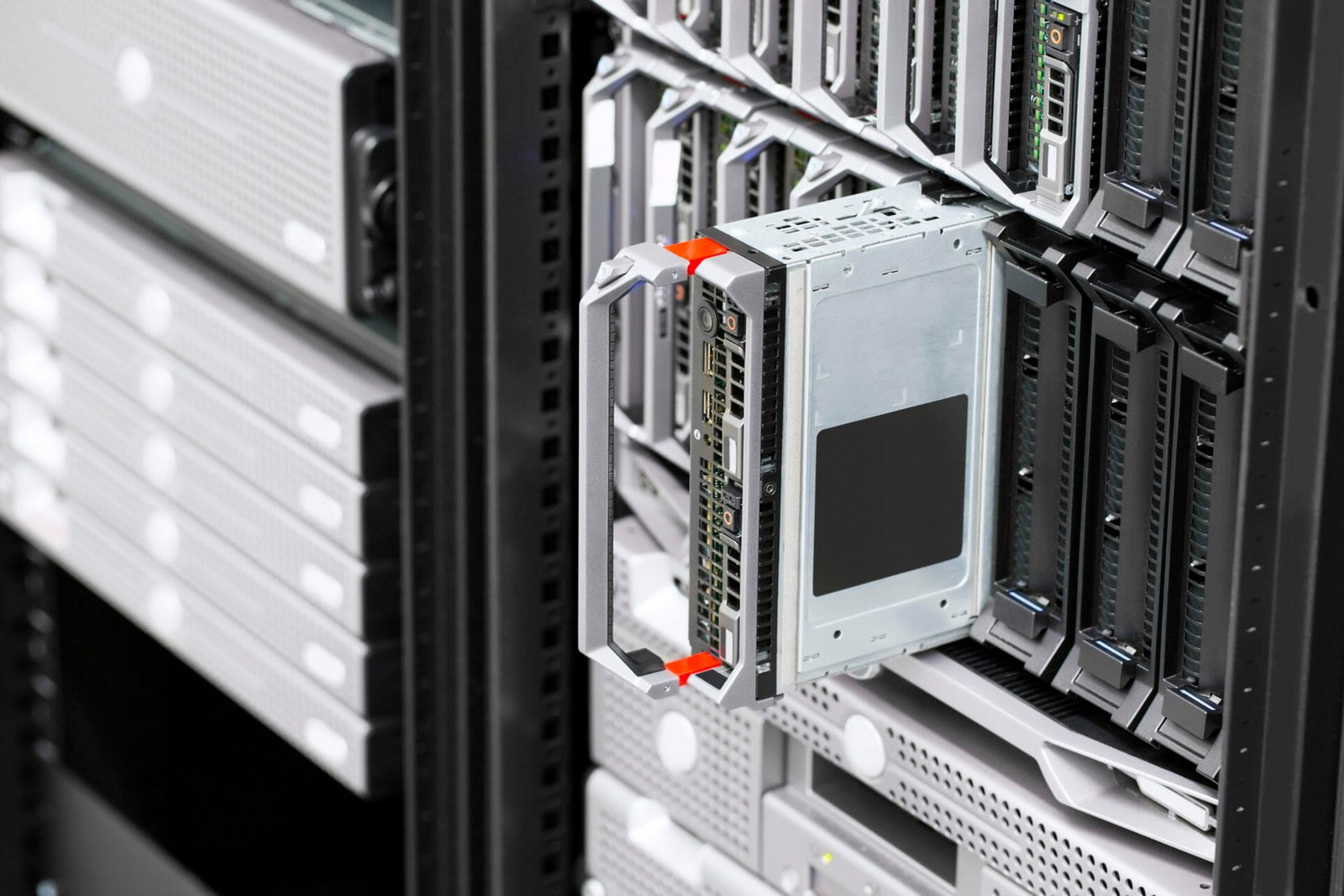
Below the streets of New York City, ordinary telecom fiber now carries something extraordinary: streams of entangled photons generated and managed by Qunnect, a Brooklyn-based quantum networking startup. After a decade of laboratory research and field trials, the company is stitching together the foundational pieces of what many scientists call the “quantum internet.” This post explores how Qunnect does it, why it matters, and what hurdles still lie ahead.
1. Quantum Entanglement in a Nutshell
Quantum entanglement links two or more particles so that measuring one instantly determines the state of the other, no matter how far apart they are. While Einstein famously called it “spooky action at a distance,” today it underpins protocols such as quantum key distribution (QKD) and blind quantum computing. Unlike classical signals, entanglement cannot be copied or intercepted without detection, making it ideal for ultra-secure communication.
2. Why a Quantum Internet Is Different—And Necessary
The looming threat of cryptographically powerful quantum computers jeopardizes today’s public-key encryption standards (RSA, ECC). A quantum network mitigates that risk by enabling:
- Information-theoretic security via QKD.
- Distributed quantum computing, where distant quantum processors exchange entanglement to scale computational capacity.
- Sensor networks that correlate entangled states for ultraprecise timing, navigation, and metrology.
3. Qunnect: From Academic Spin-Out to Infrastructure Company
Founded in 2017 out of research performed at Stony Brook University and Brookhaven National Laboratory, Qunnect chose an atypical path: commercializing hardware that works inside existing metropolitan fiber rather than designing a whole new cable system. The company’s core modules include:
3.1 Entangled Photon Source
Using spontaneous parametric down-conversion, Qunnect’s tabletop source creates photon pairs at telecom wavelengths (around 1550 nm) for minimal fiber loss.
3.2 Quantum Memory & Repeater
A rubidium-based warm-vapor cell stores entangled states for tens of milliseconds—long enough to synchronize distant nodes. Because the memory operates near room temperature, it avoids bulky cryogenics, lowering deployment costs.
3.3 Entanglement-Stabilized Fiber Platform
Temperature swings and mechanical vibrations in city conduits scramble photon polarization. Qunnect’s active feedback modules continuously track and correct these disturbances, ensuring that the delicate quantum states survive kilometer-scale runs.
4. The New York City Pilot Network
Qunnect has lit up roughly 140 km of dark fiber connecting Brooklyn, Manhattan, and Queens. Key milestones:
- 2020: First metropolitan entanglement distribution over 34 km.
- 2022: Field test of quantum memory in live traffic conduits.
- 2023: Multi-node entanglement swapping demonstration, a prerequisite for scalable quantum repeaters.
The network integrates with CENIC’s and Internet2’s research backbones, allowing university labs to run real-time QKD experiments from campus without owning specialized hardware.
5. Security Implications
When two parties share entangled photons, they can perform the Ekert 91 protocol. Any eavesdropper attempting to intercept the key disturbs the quantum correlations, revealing the intrusion instantly. Unlike classical encryption, security isn’t a mathematical assumption; it’s a law of physics.
6. Commercialization and Standards Landscape
Qunnect participates in:
- ETSI ISG-QKD for interoperability standards.
- QED-C (Quantum Economic Development Consortium), shaping U.S. policy and supply chains.
- Working groups at the International Telecommunication Union to define quantum channel specifications.
Early customers are expected to be financial institutions, data-center operators, and government agencies that need forward-secure links today.
7. Technical & Logistical Challenges Ahead
Despite progress, several barriers remain:
- Attenuation: Even at 1550 nm, photon loss limits practical distances to ~80 km without repeaters.
- Quantum repeater maturity: Memories must reach >1 second coherence and multi-mode capacity to be economically viable.
- Integration with classical traffic: Isolating single-photon channels from high-power DWDM signals in the same fiber requires advanced filtering.
- Regulatory approvals: Deploying new inline devices in carrier-owned ducts involves lengthy certification cycles.
8. Outlook: A Decade to Full-Scale Quantum Networking
Analysts forecast that metropolitan quantum links will become commercially routine by 2027, with inter-city links (via satellite or repeater chains) arriving in the early 2030s. Qunnect’s strategy—focus on turnkey products that retrofit legacy fiber—positions it well to capture the first wave of demand.
If successful, the same conduits that once carried copper telegraph wires will soon carry quantum states that no spy can crack, ushering in a new era of provably secure communication.