
The AI era is compressing decades of technological change into months. For Canadian tech leaders, the consequences arrive as strategic choices: how to harness agent-driven productivity, how to secure critical infrastructure, and how to manage the social fallout of automation. This article synthesizes a panoramic view of today’s AI ecosystem—covering government contracts, closed versus open models, compute shortages, and the hard question of who will reach artificial superintelligence first—with a sharp focus on what those trends mean for Canadian tech.
Table of Contents
- Quick scorecard: predictions and where the industry stands
- Anthropic, the Department of War, and the politics of supply chain risk
- Claude in the classified network: what it means when old models run new wars
- Agent orchestration, cloud code, and the death of the junior dev market
- OpenClaw, local models, and the limits of on-prem inference
- Open source versus closed source: where value aggregates
- DeepSeek and distillation attacks: data provenance, ethics, and enforcement
- Compute shortages, Nvidia strategy, and what it means for Canadian hardware buyers
- Is SaaS dead? The agent plus filesystem thesis
- Jobs, inequality, and the case for targeted social policy
- Microsoft, hyperscalers, and the capex conundrum
- Who is likely to reach artificial superintelligence first?
- Action checklist for Canadian tech leaders
- Conclusion: Canadian tech at a crossroads
- Frequently Asked Questions
- Final prompt to readers
Quick scorecard: predictions and where the industry stands
A year of rapid releases, new monetization models, and geopolitical friction has produced a chaotic market. Several predictions that once seemed speculative now look prescient: junior developer roles are evaporating, agent orchestration platforms such as Claude Code and Codex are reshaping how knowledge work is done, and closed-source cloud providers are consolidating commercial usage even as open-source models proliferate for hobbyists.
For Canadian tech companies this moment is double-edged. On one hand, agent tooling can multiply productivity across small teams in the Greater Toronto Area and beyond. On the other hand, Canadian tech employers must wrestle with rapidly rising operational costs driven by compute and energy demand, and the political risk of governments prioritizing national security over vendor neutrality.
Anthropic, the Department of War, and the politics of supply chain risk
A pivotal development reshaped public perceptions: a major AI lab was flagged as a supply chain risk by a government agency, and another lab moved quickly to secure classified contracts. The result is a public debate about whether tech companies can—or should—refuse certain uses, especially in defense applications.
Two competing narratives emerged. One paints the flagged lab as principled: it draws lines against mass surveillance and autonomous weapons. The other views the same stance as politically naïve and operationally infeasible. The reality sits between them. Corporate culture matters; some labs house policy teams steeped in one political tradition, while others hire across the aisle to preserve government access and influence.
For Canadian tech, the lesson is simple: public policy and national security considerations will shape procurement decisions. Canadian organizations that rely on foreign AI providers must map vendor compliance with national standards and preparedness for classified workloads.
Case study: the “nuclear missile” hypotheticals
“If a nuclear missile is heading from China to America, we can use AI to stop it. And Dario was like, ‘well, you can call us. We’ll, I’m sure, we can figure something out.'”
The quote illustrates two vital tensions. First, government actors operate under worst-case assumptions about availability and control. Second, AI companies face reputational and organizational risks when asked to support extreme defense use cases. Canadian tech procurement teams should prepare frameworks that define acceptable use, escalation processes, and clear legal pathways before integrating advanced models into mission-critical systems.
Claude in the classified network: what it means when old models run new wars
One startling disclosure: some classified military deployments still run older-generation models. That suggests a lag between lab releases and field deployment. Governments tend to prioritize stability and certification over bleeding-edge performance, which leads to classified environments operating on older, sometimes hallucination-prone, models.
That lag is a strategic liability. If adversaries deploy more current models faster—coupled with low-cost hardware for mass-produced autonomous systems—the battlefield advantage can tilt. The advantage is not just model quality but volume and manufacturing throughput. Countries that can produce cheap drones and run advanced models at scale could dominate certain theaters of operations.
For Canadian tech suppliers in defense supply chains, this dynamic opens opportunity and responsibility. Suppliers should be ready to:
- Support secure model hosting with audit trails that satisfy national security standards.
- Offer upgrade paths for models and toolchains that reduce deployment lag in classified environments.
- Advise on industrial scaling for robotics and edge compute that can be manufactured domestically or allied.
Agent orchestration, cloud code, and the death of the junior dev market
Agent orchestration platforms represent a structural shift. Tools like Claude Code, Codex, and other agent-mode systems let non-programmers spin up complex workflows via natural language, chaining agents into reusable skills. Outputs that once required teams of engineers can now be produced by small groups or even single operators who instruct agents.
The immediate effect is brutal for entry-level technical roles. Fresh graduates and junior developers face dwindling openings for routine code production. The roles that survive or flourish will require domain expertise, systems thinking, and the ability to supervise agent swarms rather than type out boilerplate.
That reality describes an emerging division across Canadian tech:
- Winners: Firms that integrate agent tooling now and reskill staff to define, curate, and supervise agent skills.
- Losers: Organizations clinging to legacy development models and large, slow engineering teams.
The productive paradox is worth noting—adoption of these tools often increases hiring for high-capacity roles. Companies that move fast capture market share and expand, while slower competitors downsize.
Examples of agent-driven productivity
In practice, agents have been used to:
- Automate data centre permit scraping and validation.
- Generate and refine financial research workflows, such as tone analysis for earnings transcripts.
- Compose end-to-end outbound and inbound sales processes tied into company email and CRM systems.
In each case, the value shifts from producing code to encoding domain knowledge into sharable skills that agents can execute. For Canadian tech teams, mastering skill design and orchestration is now a core competency.
OpenClaw, local models, and the limits of on-prem inference
Open-source local models have exploded in popularity among hobbyists and certain organisations that prioritize privacy and low latency. Running models on high-end local hardware provides control and independence from the cloud. However, practical constraints limit broad adoption.
First, hardware shortages and wafer constraints mean memory and GPU supply are scarce. High memory and specialized accelerators are being allocated to data centres where they deliver the most tokens per dollar. Second, maintenance, security, and prompt-injection risks complicate local deployments. Third, model performance often lags behind cloud-hosted cutting-edge models that benefit from frequent RLHF cycles and optimized harnesses.
For most Canadian businesses, the right approach today is hybrid:
- Use cloud-hosted models for large-scale inference where uptime, latency, and throughput matter.
- Deploy local models for edge cases requiring strict privacy or low-latency inference in disconnected environments.
- Harden prompt-injection defenses for any public-facing agents and keep private data segmentation strict.
Open source versus closed source: where value aggregates
The release of powerful open-source models has reignited debate about who controls the stack. Open-source releases democratize experimentation and lower the barrier for experimentation in Canadian tech labs. Local inference and tinkering are valuable for research, prototyping, and community-driven innovation.
Yet when it comes to production usage, closed-source hosted models are capturing the majority of commercial adoption. There are several reasons:
- Performance harnesses—hosted providers customize prompts, agent orchestration, and tool integrations for superior end-to-end results.
- Scaling and reliability—cloud inference can handle burst traffic and provide SLAs that matter for enterprise deployments.
- Ongoing R&D—modern labs iterate models every few months using automated pipelines that rely on large compute budgets.
In short, the ecosystem bifurcates: open source fuels experimentation, while closed source powers commercial value capture. Canadian tech firms should leverage both paths: use open models to innovate at the edge, and partner with hosted providers for mission-critical services.
DeepSeek and distillation attacks: data provenance, ethics, and enforcement
Tensions have flared between established labs and newer entrants over model distillation and alleged copying of capabilities. Distillation can be legitimate—internal teams routinely distill larger models into smaller, cheaper ones. But when external actors extract large volumes of model responses from hosted APIs, the risks include intellectual property disputes and capability leakage.
For Canadian tech buyers, the implication is clear: vendor diligence should include model provenance audits, licensing and TOS reviews, and technical checks that detect distilled behavior. Policy teams and legal counsel must update procurement templates to include:
- Explicit rights to audit fine-tuning datasets and provenance.
- Clauses around model distillation, derivative works, and export controls.
- Procedures for responding to alleged capability extractions or misuse.
Compute shortages, Nvidia strategy, and what it means for Canadian hardware buyers
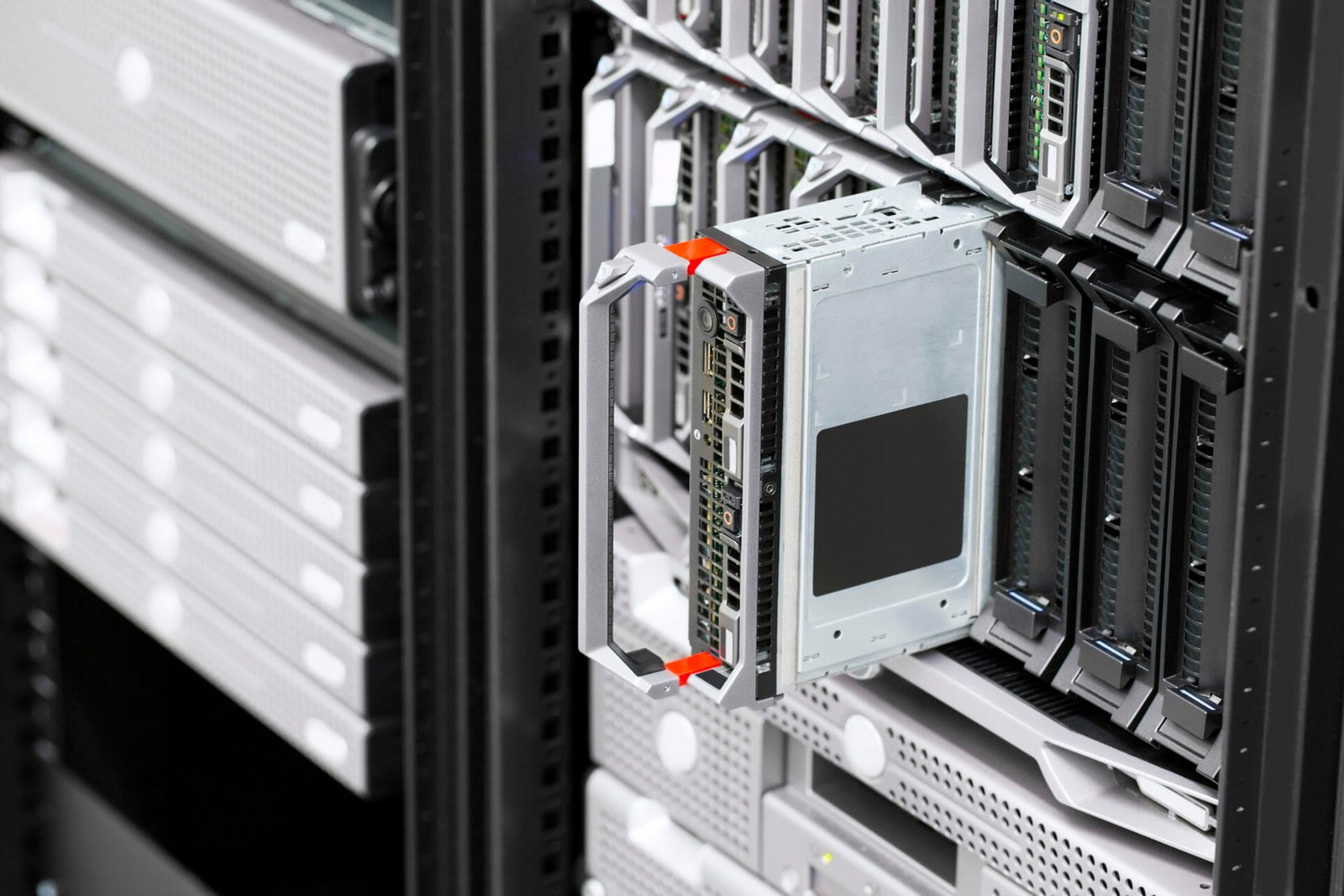
The surge in AI-driven demand has collided with physical constraints: memory, advanced nodes, and accelerator capacity are limited. Manufacturers and hyperscalers now prioritize data centre-class purchases because they yield the highest tokens per dollar. That trend squeezes consumer and small-lab availability of high-end GPUs.
The practical consequences for Canadian tech are significant:
- Capex planning becomes critical. Organizations must design multi-year compute roadmaps and explore cloud commitments or co-location deals to secure capacity.
- Domestic supply chain resilience matters. Canada should consider investments in fab partnerships, memory supply diversification, and incentives for domestic edge compute manufacturing.
- Edge and device makers face higher component costs, potentially raising device prices and slowing adoption cycles for consumer AI features in phones and PCs made or sold in Canada.
For the Canadian tech ecosystem, lobbying for industrial policy that balances data centre growth with consumer device supply will be a pragmatic priority.
Is SaaS dead? The agent plus filesystem thesis
A provocative thesis has circulated: the classical SaaS stack may collapse into a new architecture composed of agents, a persistent file system, and a CRUD layer. In that world, the interface is conversational and the intelligence layer is agent orchestration. The question for incumbents is whether they transform into agent platforms or get replaced by nimble orchestration-first companies.
The answer is nuanced. Not every application collapses into a simple agent. Scalable, high-throughput systems and domain-specific enterprise workflows still require robust backend engineering. However, the user-facing layer is moving fast toward agents that handle orchestration, reducing the need for large front-end teams and reshaping product design.
Canadian tech vendors should:
- Invest in agent APIs to layer intelligence over existing products.
- Reassess product-market fit where conversational interfaces unlock faster adoption.
- Prioritize data governance because agent-driven systems amplify data access and control questions.
Jobs, inequality, and the case for targeted social policy
AI’s productivity gains are real and concentrated. Capital—hardware manufacturers, cloud data centre builders, and lead AI labs—captures a disproportionate share of value, while routine knowledge work and platform-level media jobs contract. That dynamic increases the risk of social unrest and political backlash.
Canadian tech leaders and policymakers should discuss practical mitigations now:
- Retraining and reskilling programs tailored to agent supervision, AI ethics, and domain expertise.
- Regional economic planning to distribute data centre and semiconductor investments across Canadian provinces to create jobs beyond the GTA.
- Exploration of income supports such as targeted basic income pilots for dislocated workers in high-impact sectors.
The debate around universal basic income resurged among business leaders who once opposed it. For Canadian tech, the question is less ideological than practical: how to maintain social cohesion while supporting rapid technological adoption?
Microsoft, hyperscalers, and the capex conundrum
Hyperscalers face a delicate trade-off. Massive data centre investments lock in long-term value if scaling laws hold, but what if algorithmic breakthroughs suddenly collapse the compute curve? Skeptics call continued hyperscaler capex foolish. The reality is that scaling remains the predictable path to improved capabilities for now, and hyperscalers that underinvest risk losing ground.
For Canadian CIOs and procurement leaders, the rubric is clear:
- Negotiate flexible cloud commitments that allow for changes in usage patterns.
- Monitor vendor roadmaps for model efficiency improvements that could change unit economics rapidly.
- Consider multi-cloud and hybrid strategies to reduce vendor lock-in and secure capacity.
Who is likely to reach artificial superintelligence first?
Predicting ASI is inherently speculative, but indicators matter: compute access, research cadence, dataset quality, and organizational ability to iterate at speed. Companies that combine relentless iteration, massive compute, and the cultural willingness to deploy and test novel architectures hold advantage.
The current consensus among many industry watchers favors labs that:
- Invest heavily in R&D compute and private infrastructure.
- Iterate model releases frequently and automate model development pipelines.
- Retain top research talent while maintaining pragmatic policy teams that keep government and defense partnerships open.
For Canadian tech stakeholders, the takeaway is not to place a single bet on any one global lab. Instead, Canada should:
- Bolster domestic AI research with grants and collaborations between universities and startups.
- Encourage partnerships between Canadian cloud providers, telcos, and hyperscalers to secure compute for national priorities.
- Invest in workforce transformation so Canadian tech can capture downstream value regardless of which lab reaches ASI first.
Action checklist for Canadian tech leaders
The AI landscape is volatile but actionable. Canadian tech companies should consider this short checklist:
- Audit vendors for national-security and supply-chain risk.
- Integrate agent orchestration into product roadmaps where it yields user value.
- Establish compute procurement strategies that mix cloud reservations and local partnerships.
- Prioritize data governance, prompt-injection defenses, and skill libraries for agents.
- Engage policymakers on targeted social supports and industrial policies for semiconductor resilience.
Canadian tech at a crossroads
The transformative wave of agent-driven AI, compute scarcity, and geopolitical friction forces Canadian tech to choose between passive adoption and proactive shaping. Organizations that adopt agent orchestration to multiply productivity, secure supply chains, and participate in public policy debates will lead. Those that do not will face disruptive headwinds as markets consolidate and value accrues elsewhere.
The future is not set. Canadian tech can still capture meaningful value by investing in the right infrastructure, skills, and governance today.
Frequently Asked Questions
How should Canadian tech companies approach vendor selection for AI models?
Vendor selection should include a rigorous assessment of model provenance, security controls, and compliance with national standards. Prioritize vendors who provide clear documentation on data sources, fine-tuning practices, and options for isolated or classified deployments. Negotiate audit rights and contingency plans for model extraction or misuse.
Are local models like OpenClaw a viable replacement for cloud models in production?
Local models are valuable for privacy-sensitive or low-latency scenarios, but for high-volume production needs the cloud remains more economical and manageable. Local inference works for specific edge cases; hybrid architectures provide the best balance between control and scale.
Will agent platforms replace traditional SaaS companies?
Not immediately. Agent platforms will displace parts of the user interface and automation layers, but underlying backends and scalable infrastructure remain essential. SaaS vendors that embrace agents and expose robust backend APIs will survive; those that rely solely on legacy UI paradigms risk obsolescence.
What should Canadian policymakers do about AI and jobs?
Policymakers should fund reskilling programs for AI supervision roles, incentivize regional semiconductor and data centre investments, and pilot targeted income supports for high-impact dislocations. A proactive industrial policy can reduce inequality and preserve social stability as automation accelerates.
How urgent is the compute shortage for Canadian tech procurement?
It is urgent. Memory, wafers, and accelerators are being prioritized for large-scale data centre deployments. Canadian tech leaders should develop multi-year procurement strategies, secure cloud reservations, and pursue partnerships with hyperscalers and telcos to ensure future capacity.
What does this mean for startups in Toronto and the GTA?
Startups have a window to capture value by building agent-first products and focusing on domain expertise. The GTA should cultivate specialized talent pools in agent orchestration, data governance, and hardware-software integration to become a hub for applied AI services.
Final prompt to readers
Is Canadian tech ready to lead during this rapid transformation? The choices made this year—around procurement, talent, and industrial policy—will determine who captures value in the decade ahead.