
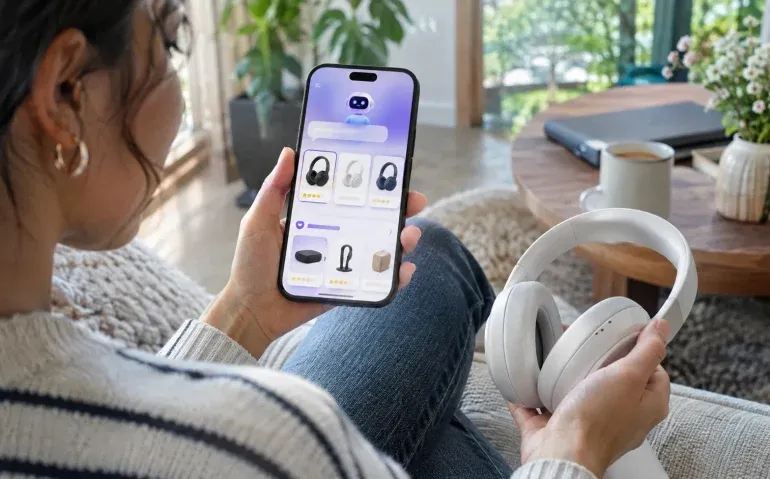
Online shopping once began with a search box and a list of product pages. AI assistants are adding another route: a shopper can describe a need in everyday language, compare alternatives, ask follow-up questions, and receive a short list that reflects their constraints. That changes product discovery before it changes checkout. Retailers now have to consider how their products are described, how recommendations are explained, and whether shoppers trust an assistant’s shortlist.
From keywords to conversations
A conventional search engine works best when a shopper already knows what to call the thing they want. A conversational assistant can begin with a broader request: a quiet laptop for travel, a gift for someone who likes gardening, or a jacket that works in wet weather. It can ask what matters most, summarize trade-offs, and help the person refine the request.
This can reduce the effort of comparing many pages, especially for products with several specifications. The assistant may organize choices by price, size, compatibility, or user-stated preferences. It can also translate technical descriptions into plain language. For retailers, that makes accurate product data and clear descriptions more important than simply repeating popular search terms.
Discovery is moving ahead of autonomous checkout
Research suggests that consumers are more comfortable asking AI to help them research than to make purchases without approval. In a January 2026 survey of 322 U.S. consumers, Gartner reported that respondents were more willing to let AI narrow product choices than make the final purchase decision. The study found willingness to let AI narrow choices for some lower-stakes categories, while only a small minority were comfortable delegating the purchase itself.
NIQ’s Agentic Commerce Tracker reported in September 2026 that 51% of U.S. consumers had used at least one AI-powered tool to support shopping in the previous month. These are different studies with different methods, so the numbers should not be combined into one universal adoption rate. Together, they point to an emerging role for AI as a research companion, with trust and control still shaping how far consumers let it act.
That distinction matters for businesses. Product discovery can influence which brands enter a shopper’s consideration set, even if the final transaction occurs on a retailer’s website or in a store. Brands may need to make product facts easier for both people and machine systems to find, while preserving a clear path from recommendation to a trusted checkout.
What makes a recommendation useful
A strong assistant should explain why it recommends an item, identify meaningful differences, and make it easy to compare alternatives. A recommendation that repeats a product’s marketing claims without checking fit may save little time. Shoppers need to know whether a choice meets the stated budget, is compatible with what they already own, and has the features they care about.
Trust also depends on disclosure. If a recommendation is sponsored, influenced by a retailer partnership, or ranked by a commercial objective, users should be able to understand that. Assistants should distinguish verified product details from generated summaries and avoid inventing availability, specifications, or reviews. Retailers should monitor how their catalog information appears in these systems and correct errors at the source.
Retailers face a new data challenge
AI assistants rely on structured information such as model numbers, sizes, materials, compatibility, stock status, prices, shipping terms, and return policies. If those details are incomplete or inconsistent across a company’s website and product feeds, an assistant may omit the item or present it inaccurately. Catalog hygiene is becoming part of digital visibility.
Retailers also need to decide where the transaction happens. Some assistants send shoppers to a retailer’s site; others may support an in-app purchase or coordinate with a marketplace. Keeping the customer relationship can help retailers understand preferences and service needs, while sharing enough information with assistants can help products remain discoverable. These goals require clear data-sharing terms and a deliberate customer experience.
Measurement is still developing. Traditional analytics track search impressions, clicks, and conversions, but AI recommendations can influence a shopper without producing an immediate click. Retailers may need to combine referral data, customer surveys, product visibility checks, and sales analysis. They should avoid treating every sale that follows an AI interaction as proof that the assistant caused it.
Privacy and fairness need attention
A shopping assistant can become more personal when it remembers preferences, purchases, or household details. That can make results more relevant, but it also raises questions about data collection, retention, and consent. Companies should explain what information is used, provide controls to delete or change preferences, and avoid collecting sensitive details that are unnecessary for a shopping task.
Personalization can also narrow choice if the system repeatedly recommends products similar to those a user already bought. Product ranking can disadvantage smaller brands when the assistant has incomplete data or relies on popularity signals. Testing should examine whether recommendations are accurate, diverse enough to be useful, and consistent with the shopper’s request rather than solely with a commercial ranking objective.
How businesses can prepare
Retail teams can start with product data. Maintain accurate specifications, structured attributes, current pricing, and accessible policies. Make product pages answer common comparison questions in plain language. Monitor errors in AI-generated summaries and offer a clear route to authoritative information. These steps improve the shopping experience whether a customer arrives through a chatbot, a search engine, or a store associate.
Then define the role AI should play. A retailer might use an assistant to help customers compare items, but require explicit confirmation before adding products to a cart or placing an order. It can provide a human support option for unusual situations and log where information came from. Small pilots should measure customer satisfaction, accuracy, returns, and operational cost—not just the number of chatbot interactions.
AI shopping assistants are changing how consumers express needs and narrow choices. The near-term opportunity lies in better research and comparison, while purchases still demand transparency, accuracy, and shopper control. Retailers that invest in trustworthy product data and clear policies can make their products easier to discover without handing the whole customer experience to an opaque recommendation system.