Artificial intelligence is no longer only a software race. It is also a contest over the chips, memory, networking, power, and manufacturing capacity needed to train and run large models. Demand for accelerators has drawn new investment from cloud providers, governments, and technology companies, while putting pressure on supply chains that take years to expand. The result is a market reshaped by a basic question: who can secure enough computing capacity, at what cost, and with what long-term business value?
Why AI workloads need specialized chips
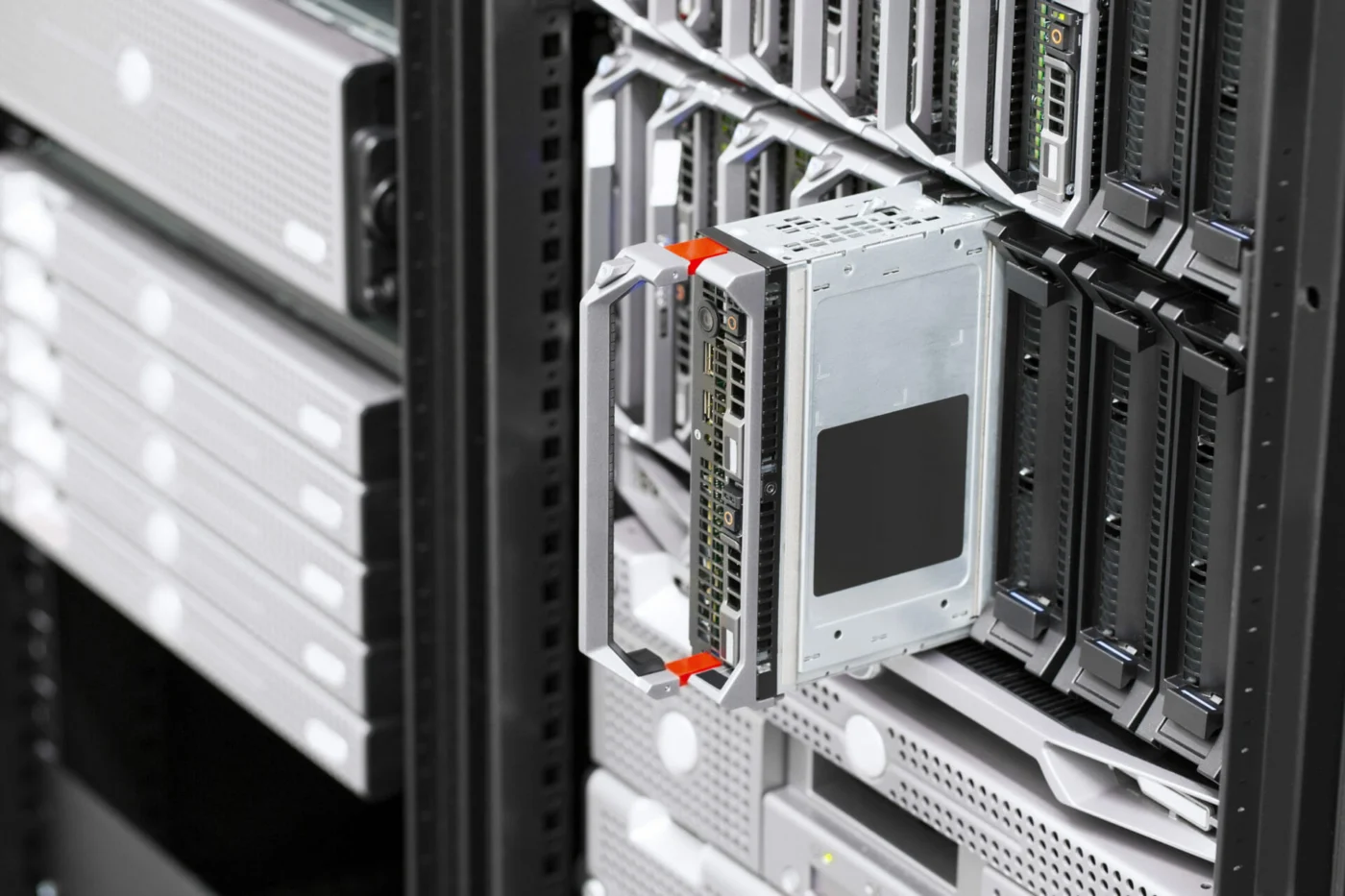
Modern AI systems perform enormous numbers of mathematical operations. Graphics processing units and other accelerators can handle many of these operations in parallel, making them useful for model training and inference. They work alongside general-purpose CPUs, high-speed memory, storage, and networking equipment. A data center built for AI is therefore a complete system, not a room full of standalone chips.
Training a model requires large clusters that keep many processors busy and exchange data quickly. Serving a model to users presents a different challenge: providers need predictable response times, high utilization, and enough capacity for spikes in demand. Inference can become the larger recurring expense as a popular system handles requests around the clock. This is why chip companies and cloud providers are investing in both training hardware and infrastructure optimized for everyday use.
Demand is changing market priorities
Investors watch chip suppliers because their results can reveal how quickly customers are building AI infrastructure. NVIDIA reported second-quarter fiscal 2027 revenue of $96.2 billion for the quarter ended July 26, 2026, according to its investor release. The company said data-center demand remained strong. Those figures are the company’s own reported results, and they describe one supplier rather than the entire semiconductor industry. Still, they illustrate how much spending is concentrated around AI computing.
Large technology companies are also becoming infrastructure planners. They negotiate long-term supply agreements, design custom chips, build regional data centers, and secure power contracts. A company that controls its own hardware roadmap may tune a processor for its software and reduce reliance on external suppliers. But custom silicon requires design expertise, foundry capacity, software support, and years of validation. It does not remove dependence on the wider manufacturing ecosystem.
The bottleneck extends beyond the processor
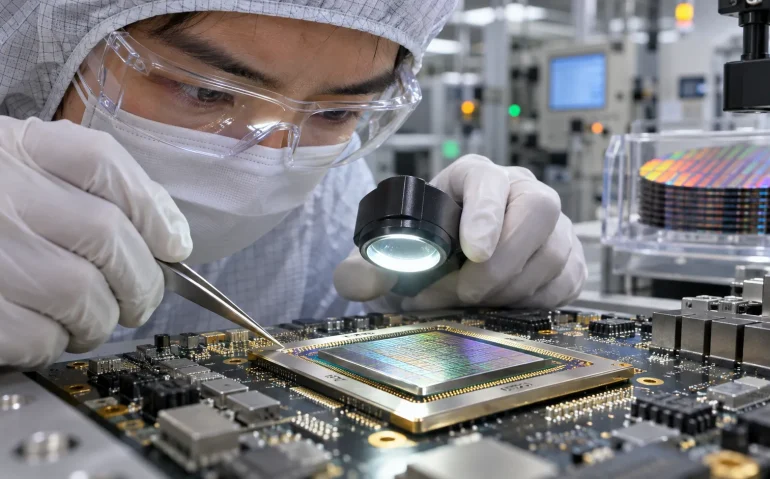
Advanced chips depend on a chain of specialized suppliers. High-bandwidth memory moves data quickly to processors. Advanced packaging combines components so that they communicate efficiently. Foundries need sophisticated equipment, clean-room capacity, materials, and skilled workers. Networking systems connect processors into clusters, while data centers require power, cooling, and backup systems. A shortage at any one of these layers can constrain the whole deployment.
That complexity makes capacity difficult to scale overnight. Semiconductor facilities are expensive, require careful planning, and must achieve high manufacturing yields. Even when a company announces a large capital investment, usable capacity arrives over time. Buyers may therefore compete for the same components, accept longer delivery windows, or redesign systems around what is available.
Energy has become a business consideration as well. More accelerators mean greater demand for electricity and heat removal. Data-center developers must evaluate grid connections, land, cooling, and local permitting alongside hardware procurement. In some markets, access to power can be as important as access to the latest processor. That shifts AI infrastructure planning from a procurement question to a strategic conversation involving finance, operations, and public utilities.
Winners and risks across the ecosystem
Chip designers, foundries, memory producers, networking companies, and data-center operators can all benefit from investment in AI capacity. Software providers may gain an advantage if they can make better use of a fixed amount of compute. Smaller companies can access advanced hardware through cloud services without building their own clusters, although prices and availability can shape which products are viable.
Concentration creates risk. If a small number of suppliers dominate key components, delays or policy changes can affect many customers at once. Geopolitical restrictions, export controls, and regional trade tensions can alter where products are sold or manufactured. Organizations should understand which components are critical to their services and avoid assuming that every supplier or hardware generation will remain equally available.
There is also financial risk in building capacity ahead of proven demand. A data center is a long-lived asset, but model economics can change quickly. More efficient software, smaller models, or different hardware designs could reduce the amount of compute required for a particular workload. Companies need to connect infrastructure investment to actual usage, revenue, and operational needs rather than treating every announced AI project as a guaranteed source of returns.
Efficiency is becoming a competitive advantage
As chips become more capable, organizations will still need to use them carefully. Better model architectures, quantization, caching, batching, and specialized inference hardware can reduce the cost of serving a task. Companies can select a smaller model for routine work and reserve larger systems for difficult requests. Good software engineering can deliver meaningful savings without compromising output quality.
Procurement teams should compare the full cost of a workload: hardware or cloud rental, energy, networking, data transfer, software licenses, engineering time, and utilization. A fast accelerator that remains idle may be more expensive than a slower system that is consistently used. The right choice depends on latency, accuracy, volume, privacy requirements, and how quickly the underlying model changes.
What businesses should watch
Executives should track delivery times, cloud prices, utilization, energy availability, and the supply of memory and networking components. They should ask vendors how capacity is reserved, where data is processed, and what happens if the chosen hardware becomes unavailable. A flexible architecture can make it easier to shift between processors or cloud providers as the market evolves.
For technology leaders, the objective is not to own the largest cluster. It is to secure enough reliable capacity for work that creates measurable value. That may mean using managed cloud services, partnering with a provider, or investing in specialized systems for a workload that justifies it. The strategy should reflect the company’s actual needs and tolerance for supply risk.
AI chip demand is reshaping the technology market because it reaches far beyond silicon. It affects manufacturing investment, memory and packaging supply, data-center construction, electricity planning, and the economics of software products. The companies best positioned for the next phase will pair reliable access to compute with efficient engineering and disciplined investment. In a fast-moving market, capacity matters—but so does knowing what to do with it.