Computing is approaching the limits of conventional silicon, both in terms of power consumption and the complexity of tasks such as real-time pattern recognition. Enter Cortical Labs, a Melbourne-based startup that is fusing living neurons with micro-electronics to create the world’s first data centers built around “bioprocessors.” Below, we explore the science, motivations, hurdles, and potential impact of this audacious project.
The Vision Behind Neuron-Based Data Centers
The company’s core belief is simple: the human brain is still the most energy-efficient, highly parallel information-processing system known. By embedding biological neurons onto electrode-studded chips, Cortical Labs hopes to deliver orders-of-magnitude gains in performance-per-watt compared with traditional GPUs and CPUs. Their immediate goal is to stand up two pilot data centers—one in Australia and one in Singapore—each housing racks of neuron-filled processors that customers can access via the cloud.
What Are Neuron-Filled Chips?
A neuron-filled chip, sometimes called a “DishBrain” or “bioprocessor,” is a hybrid platform where living cortical neurons are cultured directly on a high-density multi-electrode array (MEA). Electrical signals from the MEA stimulate the neurons, and the neurons’ firing patterns are read back through the same grid, functioning as a biological compute fabric.
Harvesting and Culturing Neurons
• Neurons are typically sourced from ethically-approved human stem cell lines.
• Cells are differentiated into cortical neurons, then plated onto MEAs under sterile conditions.
• A proprietary nutrient-rich medium keeps the neurons alive; each chip has integrated micro-fluidics for autonomous feeding.
Interfacing Biology with Silicon
• The MEA contains thousands of electrodes to both stimulate and read signals.
• On-chip ASICs translate neuronal spikes into digital data streams.
• Firmware and software layers apply reinforcement-learning algorithms to “train” the neuron lattice for specific tasks, such as anomaly detection or game-playing.
Why Build a Data Center Around Brain Cells?
Energy Efficiency and Parallelism
The average adult brain runs on roughly 20 W, whereas a modern GPU can draw 300 W or more. Early lab tests by Cortical Labs suggest that neuron-based compute may achieve 1,000× lower energy per inference on selected AI workloads.
Learning Capabilities
Living neurons exhibit innate plasticity. When coupled with digital reinforcement signals, they can self-organize into functional circuits, learning rules far faster than purely digital networks that require massive gradient calculations.
Current State of Development
As of mid-2024, prototypes host roughly 800,000 neurons per chip and have demonstrated simple real-time control tasks (e.g., balancing a virtual paddle in the game Pong). The upcoming data centers will scale this to tens of billions of neurons across hundreds of racks, though Cortical Labs concedes that the system is still in an early-stage R&D phase.
Technical Hurdles Ahead
• Scalability: Keeping large neuron populations alive 24/7 demands industrial-grade bioreactors, precise temperature control, and automated nutrient cycling.
• I/O Bandwidth: Translating millions of spike events per second into usable digital data without bottlenecks requires custom photonic interconnects.
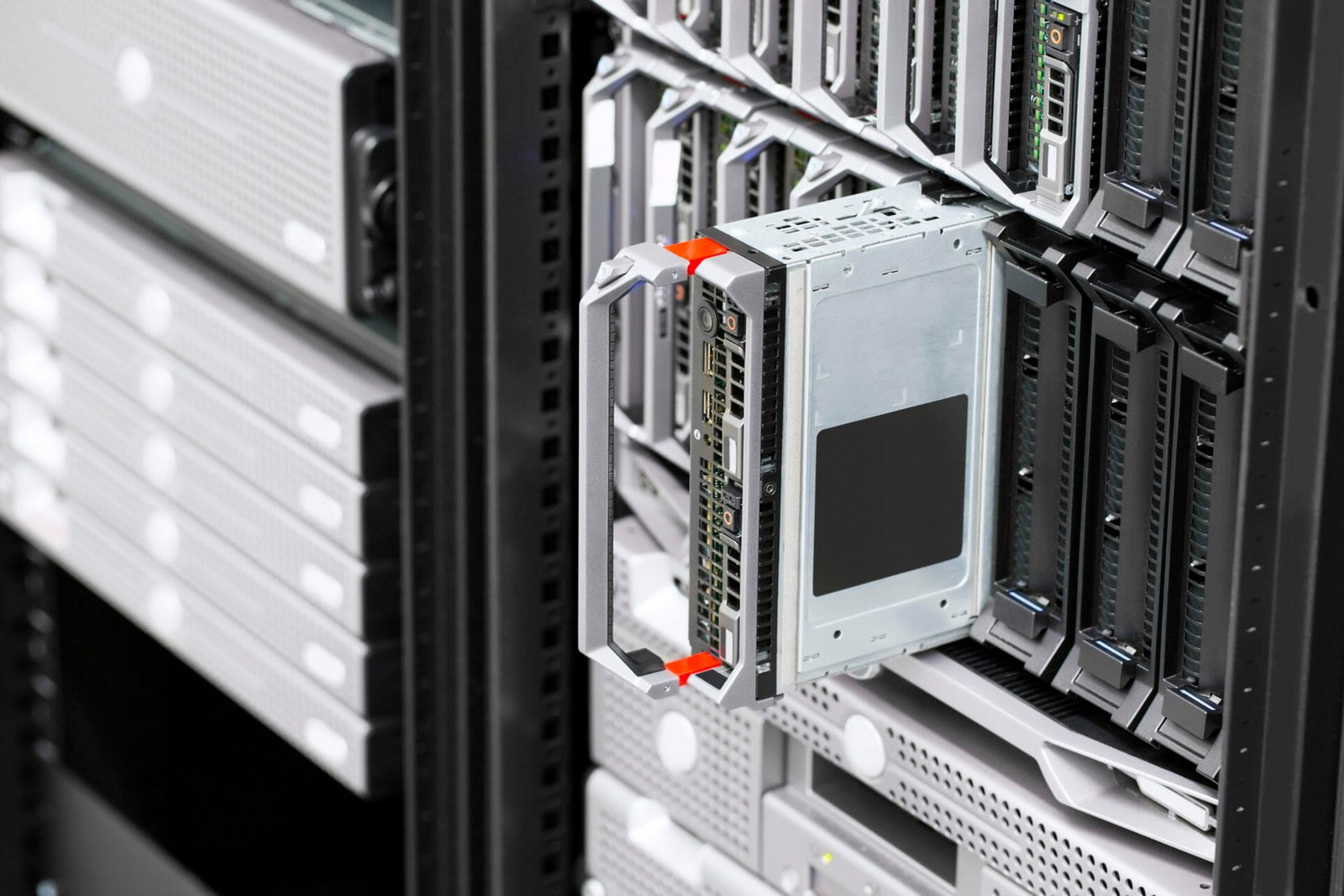
• Reliability: Biological materials are prone to drift and degradation; hot-swapping “living blades” is a logistical challenge.
• Tooling: New programming paradigms are needed; traditional compilers do not apply to living tissue.
Ethical and Regulatory Considerations
The project raises fundamental questions about the moral status of neuron cultures. Although the chips lack any consciousness markers (no organized thalamic loops or sensory inputs), regulators will likely scrutinize:
• Consent and provenance of stem-cell lines.
• Biosafety and containment protocols.
• Potential for emergent sentience as scale increases.
Cortical Labs is working with independent bioethicists and has committed to open audits of its facilities.
Potential Applications
• Low-power edge inference for IoT devices via cloud APIs.
• Continuous anomaly detection in cybersecurity.
• Adaptive control systems in robotics and autonomous drones.
• Research into neurodegenerative disease models, leveraging the same platform for drug discovery.
The Roadmap: Two Pilot Facilities
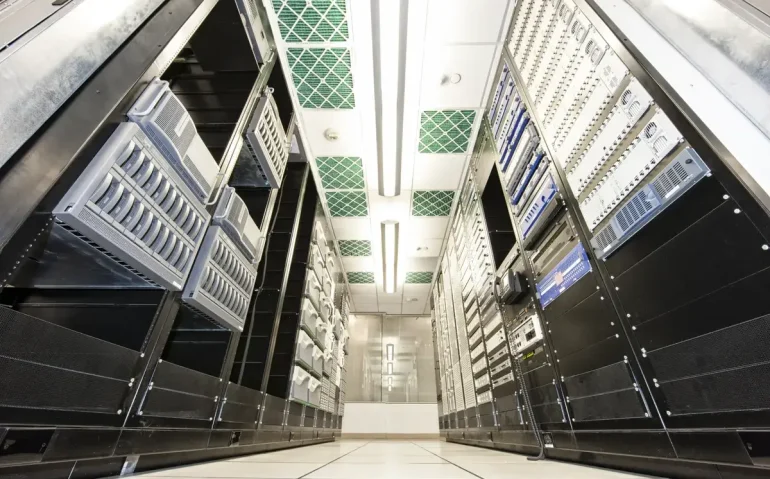
The first pilot site—scheduled for Q1 2025 in Melbourne—will feature approximately 50 “wet racks,” each with 64 bioprocessor modules. A second, larger installation in Singapore aims to reach commercial-alpha status by late 2026. Both centers will be Tier III–equivalent for redundancy, with rigorous biocontainment measures layered into the HVAC and power systems.
Industry Impact and Competition
While still speculative, neuron-based compute could pressure cloud providers to rethink architectures centered exclusively on GPUs and TPUs. Competitors such as Koniku and FinalSpark are exploring similar territory, but Cortical Labs is currently the only player openly targeting full-scale data center deployments.
Cortical Labs embodies a radical departure from the incremental scaling of transistors. If successful, its neuron-powered data centers could herald a new class of hybrid biological-digital infrastructure, redefining the cost and capability envelope of artificial intelligence. For now, the venture remains an ambitious experiment, but one that underscores how convergence between biology and computing may shape the next era of technological progress.