
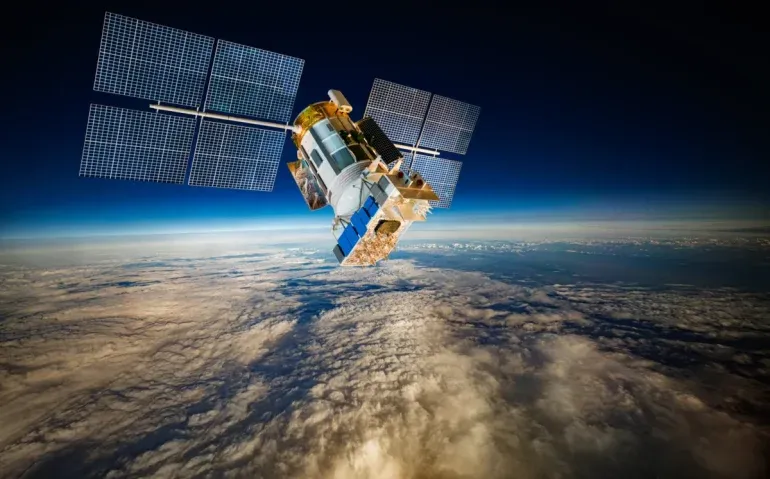
Google has officially launched its first test satellite aimed at transferring data center workloads into Earth’s orbit. This milestone signals a dramatic shift in how the tech industry addresses the escalating power and spatial demands driven by artificial intelligence (AI) workloads and massive data processing.
By testing orbital data processing, Google aims to explore off-grid computing powered by continuous solar energy, reducing reliance on terrestrial power grids and cooling systems.
Why Is Google Moving Data Centers to Space?
The global surge in artificial intelligence models has placed unprecedented stress on land-based infrastructure. Traditional data centers require massive physical footprint, continuous grid electricity, and vast volumes of water for cooling.
By placing computing infrastructure in Low Earth Orbit (LEO), Google is evaluating three core operational advantages:
- Uninterrupted Solar Energy: Satellites in specific orbital paths can harness solar power almost continuously, bypassing night cycles and weather dependencies common on Earth.
- Ambient Thermal Management: The vacuum of space offers unique thermal dynamics, potentially lowering the massive energy overhead currently spent on terrestrial cooling.
- Grid Independence: Operating off-planet mitigates local grid stress and reduces conflicts over municipal power and water resources.
Key Challenges of Space-Based Computing
While orbital data processing presents compelling benefits, several engineering and logistical hurdles remain:
- Latency and Data Transmission: Transmitting massive datasets between ground stations and LEO satellites requires ultra-high-bandwidth laser communication (optical links).
- Radiation and Equipment Lifespan: Cosmic radiation and solar flares can degrade standard hardware, requiring specialized, radiation-hardened components.
- Orbital Mechanics and Maintenance: Unlike ground facilities, hardware failure in space cannot be physically repaired; systems must rely on autonomous fault tolerance and redundant architecture.
What This Means for the Future of AI Infrastructure
Google’s pilot launch represents an exploratory step toward hybrid computing environments—where latency-sensitive tasks remain on Earth while heavy batch processing, deep learning pre-training, or long-term archiving could eventually run in orbit.
As tech giants compete for sustainable power solutions, space-based computing could transform from a speculative concept into a vital pillar of next-generation digital infrastructure.