
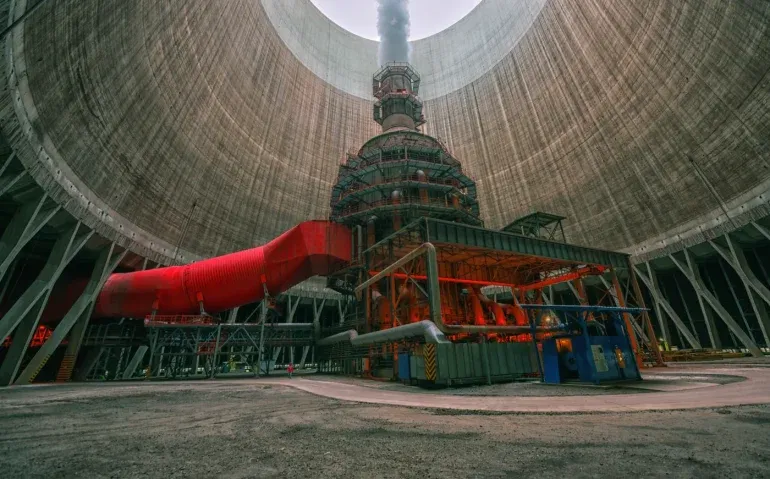
Photographer Eric Lusito has spent years traversing the territories that once formed the Soviet Union, documenting vast scientific complexes now fading into silence. His new book offers a rare glimpse into these forgotten temples of research, engineering, and Cold-War ambition. Below, we unpack the historical context, highlight notable sites, and trace Lusito’s creative process.
The Photographer and His Mission
Eric Lusito is best known for visually chronicling places where political power and architecture intersect. For this project, he followed rail lines, deserted military roads, and word-of-mouth tips to reach remote laboratories, antenna fields, and partially dismantled spacecraft hangars. His goal was not merely to record decay, but to question how collective memory survives when the concrete monuments of an era crumble.
The Age of Soviet Megastructures
Between the late 1940s and the 1980s, the USSR invested staggering resources in “megastructures”—large-scale research facilities intended to project scientific prowess at home and abroad. Budgets were often opaque because projects were entwined with national security or space-race imperatives. Many of these complexes operated as self-contained towns, complete with housing, cinemas, and schools to serve scientists working behind barbed wire.
Drivers of Expansion
• The nuclear arms race demanded high-capacity accelerators and test reactors.
• Competition with NASA fueled sprawling cosmodromes and wind tunnels.
• Ambitious climate-modification schemes created vast radar networks and ionospheric heaters.
• Remote geography provided the secrecy required by Soviet ministries, but also made future upkeep expensive.
Key Sites Lusito Explored
Baikonur Cosmodrome (Kazakhstan)
Still an active launch site, Baikonur also houses rusting launch pads, Buran shuttle mock-ups, and abandoned tracking stations. Lusito negotiated special permits to enter long-sealed assembly halls where dust now blankets forgotten booster segments.
Nyonoksa Naval Test Range (Arkhangelsk Oblast)
Once a hub for liquid-fuel missile experiments, the range features cavernous storage bunkers and a half-submerged pier designed for submarine-launched rockets. After several post-Soviet accidents, large portions were permanently shut down.
“Academic Towns” near Novosibirsk
Known as Akkademgorodok, this cluster of institutes was envisioned as a utopian science city. While many labs remain active, Lusito photographed older wings—now stripped of equipment—where laser-fusion prototypes and computer mainframes once stood.
Crimean Astrophysical Observatory
Perched on a mountain plateau, the observatory’s rotating domes still dominate the skyline. Budget shortfalls after 1991 forced staff reductions, leaving telescopes idle for years before partial restoration began in the 2010s.
Life After Abandonment
The collapse of the Soviet Union in 1991 triggered deep funding cuts. Entire facilities were mothballed almost overnight, their specialized machinery too costly to dismantle. Locals scavenged copper wiring and aluminum panels, accelerating decay. In some regions, new private owners stripped interiors for scrap, while others—lacking funds for demolition—simply posted warning signs and left buildings to the elements.
The Making of the Book
Lusito combined medium-format film with digital capture to balance texture and scale. He often returned to the same structure at dawn and dusk, using available light to carve out geometries hidden by years of neglect. Interviews with former engineers and caretakers accompany many photographs, giving first-person insight into daily life behind security fences.
Why These Ruins Matter Today
• They serve as cautionary tales about the fragility of state-driven scientific ecosystems.
• Their innovative mid-century engineering solutions still inform present-day space and nuclear design.
• Preserving even fragments of these sites can enrich our understanding of global technological history.
• They challenge viewers to confront the political narratives embedded in concrete and steel.
Eric Lusito’s photographs do more than depict crumbling walls—they document an era when science, ideology, and architecture merged on an immense scale. By venturing into abandoned accelerators and silent radar arrays, he invites us to reflect on both the triumphs and the unintended legacies of the Soviet scientific enterprise.