
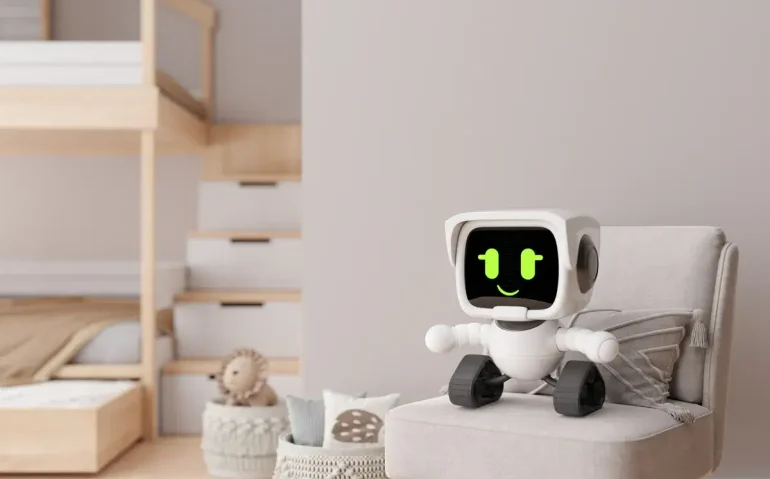
Artificial-intelligence-enabled toys have leapt from science-fiction to store shelves in a few short years. Voice assistants disguised as plush animals, dolls that hold natural-language conversations, and robot companions that personalize their behavior to each child are all already on the market. Yet, for parents, educators, and policymakers, one question looms large: Are these toys actually safe for children? Below, we unpack what makes AI toys different, the specific risks and benefits they present, and why thoughtful regulation—not a blanket ban—should guide their future.
How AI Changes the Toy Landscape
Traditional electronic toys operate on fixed scripts and simple sensors. AI-powered toys, by contrast, adapt in real time through machine-learning models and cloud connectivity. They can:
- Recognize speech and respond conversationally
- Track user preferences and behavior over many sessions
- Generate new content (stories, songs, games) on demand
- Integrate with smart-home ecosystems or online services
This dynamic capability is precisely what excites children—and worries adults. The toy is no longer a passive object but a semi-autonomous agent inside the playroom.
The Emotional Intelligence Gap
Children naturally anthropomorphize their toys, attributing feelings and intentions. When a plush robot responds with fluid language and expressive LEDs, that tendency intensifies. However, today’s AI systems simulate empathy rather than experience it. As a result:
- Responses may be contextually off-base or emotionally tone-deaf.
- Children could develop false expectations about reciprocity and trust.
- Long-term social development might lean on superficial cues rather than genuine human feedback.
Early studies show that kids can’t reliably differentiate between genuine care and algorithmic pattern-matching. This mismatch—an “emotional uncanny valley”—is a central safety concern.
Key Risk Categories
1. Data Privacy and Security
AI toys routinely collect voice recordings, facial images, location data, and usage logs. If these streams are transmitted to poorly secured servers, they create attractive targets for hackers and data brokers. Regulations such as COPPA in the United States provide some safeguards, but enforcement is inconsistent and global coverage is patchy.
2. Bias and Representation
Machine-learning models inherit biases from their training data. Suppose a conversational doll misgenders a child or reinforces negative stereotypes—it could normalize bias during formative years. Auditing and transparency are critical but currently voluntary for most toy makers.
3. Behavioral Manipulation
Because these toys can learn what the child likes, they can also nudge purchasing behavior (“You’d love the expansion pack!”) or extend screen time. The line between entertainment and targeted advertising blurs quickly when personalization algorithms are in play.
4. Safety and Malfunction
Adaptive motion control introduces new physical hazards: a home robot might misinterpret boundaries and collide with a toddler, or a drone toy might fly unpredictably indoors. Safety certifications designed for static electronics don’t fully account for AI autonomy.
Potential Benefits Worth Preserving
Despite the risks, responsible use of AI in toys can unlock meaningful benefits:
- Accessible Learning: Conversational tutoring adapted to each child’s pace can reinforce reading, math, and foreign languages with immediate feedback.
- Special Needs Support: Social robots have shown promise in helping autistic children practice eye contact, turn-taking, and emotional labeling in low-pressure settings.
- Cultural and Linguistic Exposure: Cloud-connected toys can switch languages or share stories from diverse cultures, broadening horizons beyond local curricula.
- STEM Engagement: Programmable robotic kits foster early interest in coding and engineering, especially when combined with narrative play.
What Sensible Regulation Could Look Like
Mandatory Transparency
Parents should know exactly what data is collected, where it is stored, and how long it is retained. Simple, standardized “nutrition labels” for data practices could become as common as safety warnings on packaging.
Age-Appropriate Design Codes
Borrowing from the U.K.’s children’s code, toy manufacturers could be required to disable unnecessary tracking and prevent manipulative design patterns for users under a certain age.
Independent Audits and Certifications
Third-party testing for biases, security vulnerabilities, and emotional safety should be a prerequisite for market access—similar to electrical safety standards today.
Right to Offline Play
A physical switch that severs network connectivity ensures that the toy can function, at least partially, without continuous data collection. Offline modes also add resilience against server shutdowns or company bankruptcies.
Parental Control Dashboards
Parents need granular settings to throttle data sharing, set conversation filters, and review logs. Open APIs could allow trusted third-party apps to monitor compliance.
Guidance for Parents and Educators Today
- Read privacy policies—yes, the whole thing—before purchase, and favor companies with clear data deletion options.
- Co-play during the first week to understand how the toy responds and to set boundaries for acceptable topics.
- Explain to children, in age-appropriate language, that the toy “pretends” feelings but does not actually have them.
- Regularly update firmware and change default passwords to limit security gaps.
- Designate “device-free” play periods to maintain a healthy balance between human and digital interaction.
Looking Ahead
The allure of AI-powered toys is undeniable, but so are their shortcomings. Pretending the technology will vanish is unrealistic; the global toy market is projected to exceed $140 billion by 2027, and AI capabilities are rapidly commoditizing. Instead, the focus should be on evidence-based standards, cross-industry collaboration, and educational outreach that keeps pace with innovation.
If we get regulation right—centered on child welfare, transparency, and accountability—AI toys could evolve from risky novelties into genuinely beneficial companions. The alternative is a market driven solely by hype, leaving parents and children as unprotected beta testers. The window for proactive policy is open now; closing it later will be far more difficult.