Rumors of a merger between SpaceX, Tesla, and the newly-formed xAI have ignited a fresh round of speculation about Elon Musk’s next moon-shot. While no formal filing exists, credible reports point to the billionaire considering a single corporate structure—sometimes referred to as “X Corp”—that would unify his flagship ventures. Below is a deep-dive into what such a consolidation could accomplish, why Musk might pursue it, and the substantial challenges that stand in the way.
The Strategic North Star: Musk’s Unified Mission
Musk has long said his companies share one meta-goal: securing humanity’s future as a multiplanetary, sustainable, AI-enabled species. Consolidation would bring three critical pillars under one roof: clean energy (Tesla), off-planet logistics (SpaceX), and advanced artificial intelligence (xAI). By aligning governance, capital allocation, and R&D roadmaps, Musk could accelerate progress toward this overarching mission.
1. Tesla: Scaling Sustainable Energy and Mobility
Tesla’s battery technology, manufacturing prowess, and network of Superchargers give it leverage far beyond consumer EVs. In a merged entity, Tesla’s energy storage and power electronics could be deployed directly in SpaceX launches and AI data centers.
2. SpaceX: Transportation Infrastructure to Orbit and Beyond
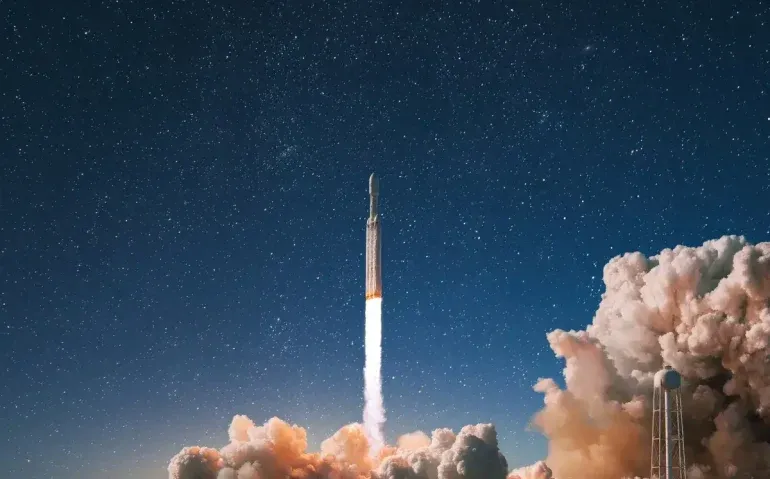
Starship aims to slash the cost of mass to orbit by an order of magnitude. Integrating Tesla battery packs and drive electronics could reduce Starship’s cost per launch while giving Tesla a new, off-world market for its tech.
3. xAI: “Understanding the Universe” via Artificial General Intelligence
AI remains the connective tissue. From autonomous driving to rocket-trajectory optimization and Martian habitat design, a shared AI stack could harvest data across fleets of Teslas and Starlink satellites to train ever-larger models.
Technological Synergies
Vertical Integration of Data: Self-driving Teslas collect petabytes of real-world edge-case data daily. Feeding that into xAI models, then deploying the models for Starship guidance or Starlink network management, creates a virtuous feedback loop unavailable to siloed competitors.
Battery Innovation: SpaceX’s need for high-energy-density power systems dovetails with Tesla’s 4680 cell roadmap. Unified R&D budgets could accelerate breakthroughs such as dry-electrode manufacturing or lithium-metal anodes.
Manufacturing Flywheels: Tesla’s Gigafactory automation expertise can be cross-applied to Starship production lines, while SpaceX’s rapid iteration culture (one rocket every 72 hours at Starbase) can feed back to vehicle-assembly innovations at new Gigafactories.
Financial Considerations
Capital Efficiency: A single balance sheet allows free cash flow from profitable Tesla divisions to subsidize cash-hungry Starship launches and AI supercomputers without raising external capital at punitive rates.
Valuation Upside: Investors often pay a “conglomerate discount” when businesses have unrelated lines. However, a Musk-led umbrella could command a platform premium if markets believe the synergies are tangible and execution risk is manageable.
Liquidity Pathways: Private-market SpaceX shares and any future tokenized equity schemes could merge into Tesla’s public float, giving early employees and VC backers clearer exit routes.
Regulatory and Antitrust Hurdles
Although EVs, rockets, and AI appear distinct, U.S. regulators may scrutinize a unified Musk entity on two fronts:
- National Security: SpaceX’s DoD contracts could conflict with foreign manufacturing footprints of Tesla.
- AI Governance: Concentrating edge-AI compute, global internet connectivity (Starlink), and autonomous vehicle data in one company raises surveillance and competition concerns.
Stakeholder Impacts
Investors
Retail shareholders in Tesla could suddenly own pieces of the world’s largest launch provider and a top-tier AI lab. Portfolio concentration risk climbs, but so does upside.
Employees
Cross-company rotations would expand career paths, yet cultures differ: Tesla’s cost-optimization ethos meets SpaceX’s “failure is an option” velocity. Integrating HR policies, stock compensation, and IP ownership will be non-trivial.
Customers
Expect deeper integration: Starlink antennas factory-installed on new Teslas, or subscription bundles that tie internet + Full Self-Driving + premium connectivity into one monthly fee.
Key Risks and Unknowns
- Execution Bandwidth: Musk already juggles Twitter/X rebranding, Starship milestones, and Model 2 development. Spreading leadership even thinner may slow critical projects.
- Debt Load: Combining balance sheets also means combining liabilities. Large swings in rocket launch cadence or vehicle margins could propagate across the entire entity.
- Technological “Lock-Step”: If any one pillar underperforms (e.g., FSD faces setbacks), the narrative—and stock price—of the combined company could take a systemic hit.
Outlook: Will It Work?
If successful, the merger could create a vertically and horizontally integrated juggernaut—part automaker, part space agency, part AI research lab—that redefines what a modern industrial conglomerate looks like. The upside is an unparalleled innovation engine; the downside is a concentration of technical, financial, and geopolitical risk inside a single point of failure: Elon Musk himself.
Investors and observers should watch for early signals—board approvals, DOJ filings, shared branding initiatives—to gauge whether this consolidation moves from rumor to reality. Either way, the mere possibility shows Musk remains committed to betting the house on his audacious, interconnected vision for the future.