


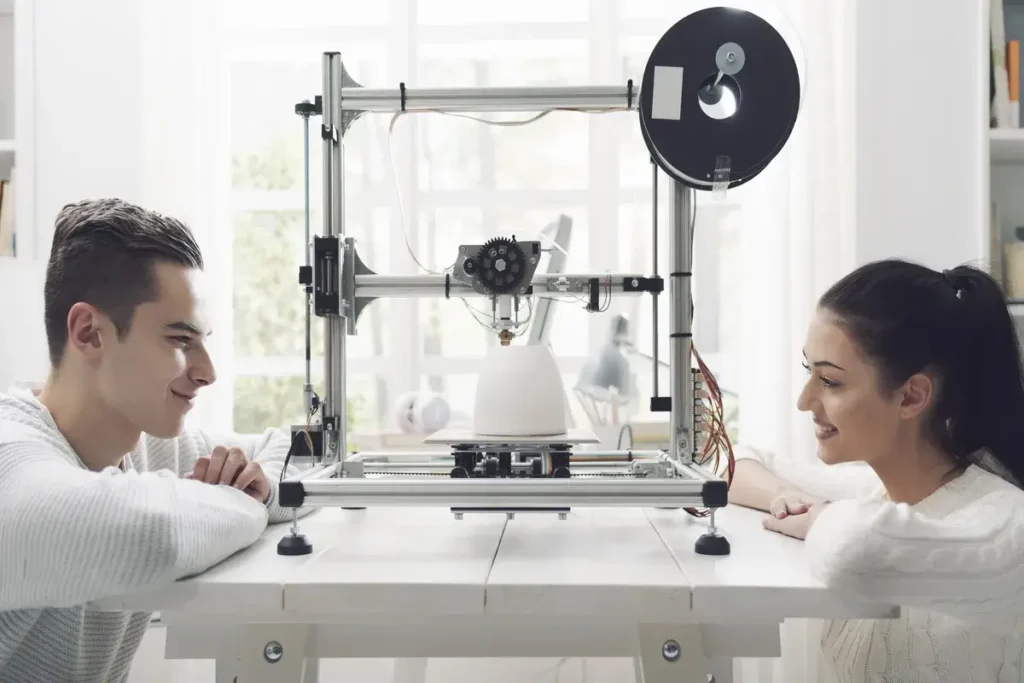
In 2025, a group of open-hardware enthusiasts unveiled the first microscope that can be entirely fabricated on a consumer-grade 3D printer. Costing less than £50 in materials and requiring under three hours of print time, the device has the potential to redefine how students, hobbyists and cash-strapped research labs access high-quality imaging tools.
The Genesis of a 3D-Printed Microscope
The project emerged from a collaboration between university engineers and members of the global maker community. Their goal was clear: strip a standard optical microscope down to its essential mechanical and optical functions, then redesign every non-proprietary part so it could be printed in PLA or PETG on a desktop FDM printer. By publishing the CAD files and assembly guide under an open-source license, the team invited anyone with a printer to replicate, modify and improve the instrument.
Design and Core Components
Although the housing, stage, focus knobs and illumination tower are printed plastic, the microscope still relies on a handful of off-the-shelf parts for precision:
- Standard DIN-compatible objective lenses (4×, 10× and 40×)
- A 10× or 15× wide-field eyepiece
- An inexpensive USB camera module for digital capture
- LED ring lighting powered by a 5 V USB supply
- Metric screws and springs for the Z-axis fine-focus mechanism
These components are easily sourced from electronics suppliers, keeping the total BOM (bill of materials) to roughly £44 at current bulk prices.
Printing and Assembly Workflow
1. Slice: The downloadable STL files are optimized for 0.2 mm layer height and require no supports except for the dovetail slide on the focus block.
2. Print: On a 220 mm × 220 mm bed, the largest part— the base—finishes in about 75 minutes at 60 mm/s.
3. Post-process: Light sanding of sliding surfaces ensures smooth motion; PTFE lubricant further reduces friction.
4. Assemble: All pieces press-fit or fasten with M3 hardware; no adhesives are necessary.
5. Calibrate: Using a stage micrometer, the printed rack-and-pinion is adjusted so one full turn of the fine-focus knob equals 150 µm of Z travel.
Why Sub-£50 Matters
Traditional student microscopes range from £150 to well over £500. In low-resource schools, this often means one microscope per classroom, stifling hands-on exploration. By contrast, a teacher can now outfit an entire lab bench for the price of a single commercial unit. The savings free up budgets for slides, reagents and field excursions—items that directly enrich the learning experience.
Research Applications Beyond the Classroom
Field biologists, citizen-science groups and small clinics have begun using the printer-made microscope for:
- Rapid parasite screening in remote areas
- Plant phenotyping in agricultural trials
- Microplastic particle counts in environmental samples
- Time-lapse imaging of microbial growth with the USB camera
While it cannot yet match the sub-micron resolution of high-end lab scopes, its 400× magnification and 2 µm lateral resolution are sufficient for many diagnostic and research tasks.
Limitations and Future Improvements
• Thermal drift: PLA softens near 60 °C; extended LED use can introduce slow focus drift. Switching to PETG or adding a passive heatsink mitigates this.
• Mechanical backlash: The printed gear train has ~5 µm play. A forthcoming metal-bushing upgrade is in beta testing.
• Optics ceiling: Oil-immersion 100× objectives push the tolerances of the plastic stage. A modular metal insert is under crowdsourced development.
The Broader Impact: A Culture of Open Science
By lowering the cost and sharing the build files openly, the 3D-printed microscope does more than democratize hardware; it cultivates a mindset of iterative, community-driven innovation. Students who build their own instruments gain practical skills in CAD, electronics and optics—competencies rarely taught in traditional biology curricula. The project thus serves as a gateway into a wider ecosystem of open-labware, from centrifuges to PCR thermocyclers, all printable on the same machine.
Looking Ahead
The team is experimenting with a modular fluorescence add-on that uses printable excitation filters and low-cost violet LEDs. If successful, it could enable basic cell biology and genetic engineering workflows at a fraction of today’s cost. In the long term, the convergence of open-source firmware, AI-assisted image analysis and printable optics could shift the balance of scientific capability toward underfunded regions, ensuring that curiosity, not cash, defines the limits of discovery.