


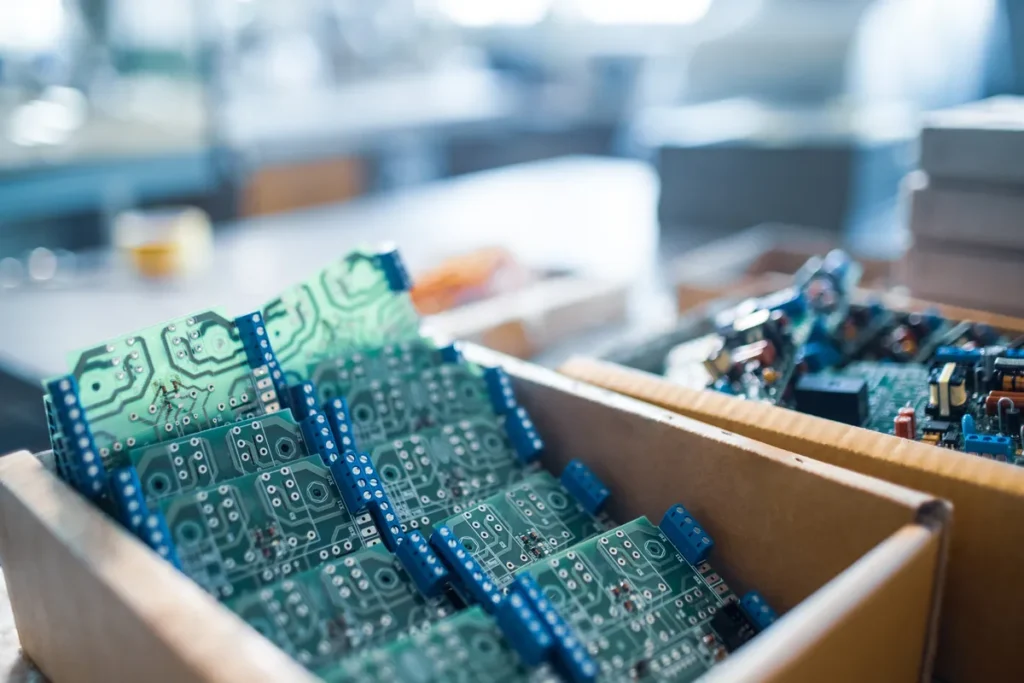
Google is reportedly exploring the idea of selling its in-house Tensor Processing Units (TPUs) to external customers—a shift that, if realized, would ripple across the AI hardware ecosystem. Below is a deep dive into what TPUs are, why Google might open them up, and how this decision could reorder the competitive landscape dominated by Nvidia.
What Exactly Is a Tensor Processing Unit?
A Tensor Processing Unit is Google’s custom application-specific integrated circuit (ASIC) built exclusively for accelerating machine-learning workloads. Unlike general-purpose CPUs or even GPUs, TPUs incorporate massive arrays of multiply-accumulate units, high on-chip memory bandwidth, and a simplified instruction set optimized for matrix math—the bedrock of deep-learning models.
Key Architectural Traits
• Systolic array design with thousands of MAC units operating in lock-step.
• On-package High Bandwidth Memory (HBM) to minimize latency.
• Tight integration with Google’s open-source XLA compiler, quantization tools, and JAX/TF runtimes.
• A software-defined interconnect fabric that allows multiple TPUs to be wired into pod-scale supercomputers.
The TPU Generations at a Glance
• TPU v1 (2015)—Inference-focused, 8-bit integer precision, delivered a 15–30× speed-up over contemporary CPUs.
• TPU v2 (2017)—Mixed precision (bfloat16), added HBM and up to 180 TFLOPS per chip.
• TPU v3 (2018)—Liquid-cooled, 420 TFLOPS, doubled HBM capacity.
• TPU v4 (2021)—Sparse compute support, 275 TOPS per watt efficiency gains.
• TPU v5e/v5p (2023-2024)—Disaggregated architecture, scales to 8,960 chips per pod, targets both training and inference.
Why Would Google Sell TPUs Externally?
1. Monetizing sunk R&D: Google has invested billions in its TPU roadmap. Selling silicon recovers costs and broadens revenue beyond cloud services.
2. Expanding the TensorFlow/JAX ecosystem: Wider hardware availability could lock developers into Google’s ML software stack.
3. Counterbalancing Nvidia’s CUDA moat: By seeding the market with an alternative, Google chips away at Nvidia’s API and tooling dominance.
4. Supply-chain leverage: Bulk orders improve Google’s bargaining position with foundries like TSMC and packaging houses.
Implications for Nvidia and Other Incumbents
• Nvidia’s pricing power could erode as hyperscalers negotiate around competing silicon.
• Cloud providers (AWS, Microsoft) may double down on their own custom chips (Inferentia, Trainium, Maia) to avoid strategic dependency.
• AI startups gain a second supplier, which mitigates allocation risk and shortens procurement lead times.
• The broader semiconductor industry could see ASIC-centric data centers become mainstream sooner than expected.
Technical Advantages That Differentiate TPUs
• Energy Efficiency: Google claims up to 1.9× better performance-per-watt than comparable GPUs on large-language-model (LLM) training.
• Interconnect Topology: A 3D torus network links thousands of chips with <1 µs latency, reducing all-reduce overhead in distributed training.
• Bfloat16 Support: Native hardware support avoids loss of mantissa bits, keeping training stable without software emulation.
• Compile-time Optimizations: XLA performs graph-level fusion, buffer reuse, and operator re-ordering tailored to TPU’s memory hierarchy.
Potential Hurdles and Market Barriers
• Ecosystem Lock-in: CUDA’s maturity and libraries like cuDNN are still the default for researchers.
• Software Porting Effort: PyTorch users must rely on XLA integration layers or re-engineer kernels.
• Foundry Constraints: TSMC’s 5-nm and 3-nm capacity is heavily booked; volume production isn’t trivial.
• Regulatory Scrutiny: Export controls on advanced AI chips could complicate overseas sales.
What This Means for AI Developers and Enterprises
• Organizations could purchase on-prem TPU racks instead of relying solely on Google Cloud—helpful for data-sovereignty or latency-sensitive workloads.
• Cost Models Diversify: CAPEX ownership, lease-to-own, or hybrid cloud bursting become viable strategies.
• Greater hardware choice tends to accelerate open-source innovation, as frameworks adapt to be backend-agnostic.
The Bigger Picture: Convergence of Cloud and Silicon
Google’s prospective sale of TPUs signals a tectonic shift: hyperscalers are no longer just cloud vendors but full-stack semiconductor players. If Google executes, the once-clear boundaries between chipmakers and cloud providers will blur, potentially catalyzing faster, cheaper, and more specialized AI infrastructure worldwide.
Bottom Line
TPUs entering the open market would introduce a formidable competitor to Nvidia, diversify supply chains, and hasten the trend toward domain-specific AI accelerators. Whether the industry’s entrenched CUDA ecosystem or Google’s vertically integrated TPU stack ultimately prevails, one thing is clear: the age of AI hardware monoculture is ending.